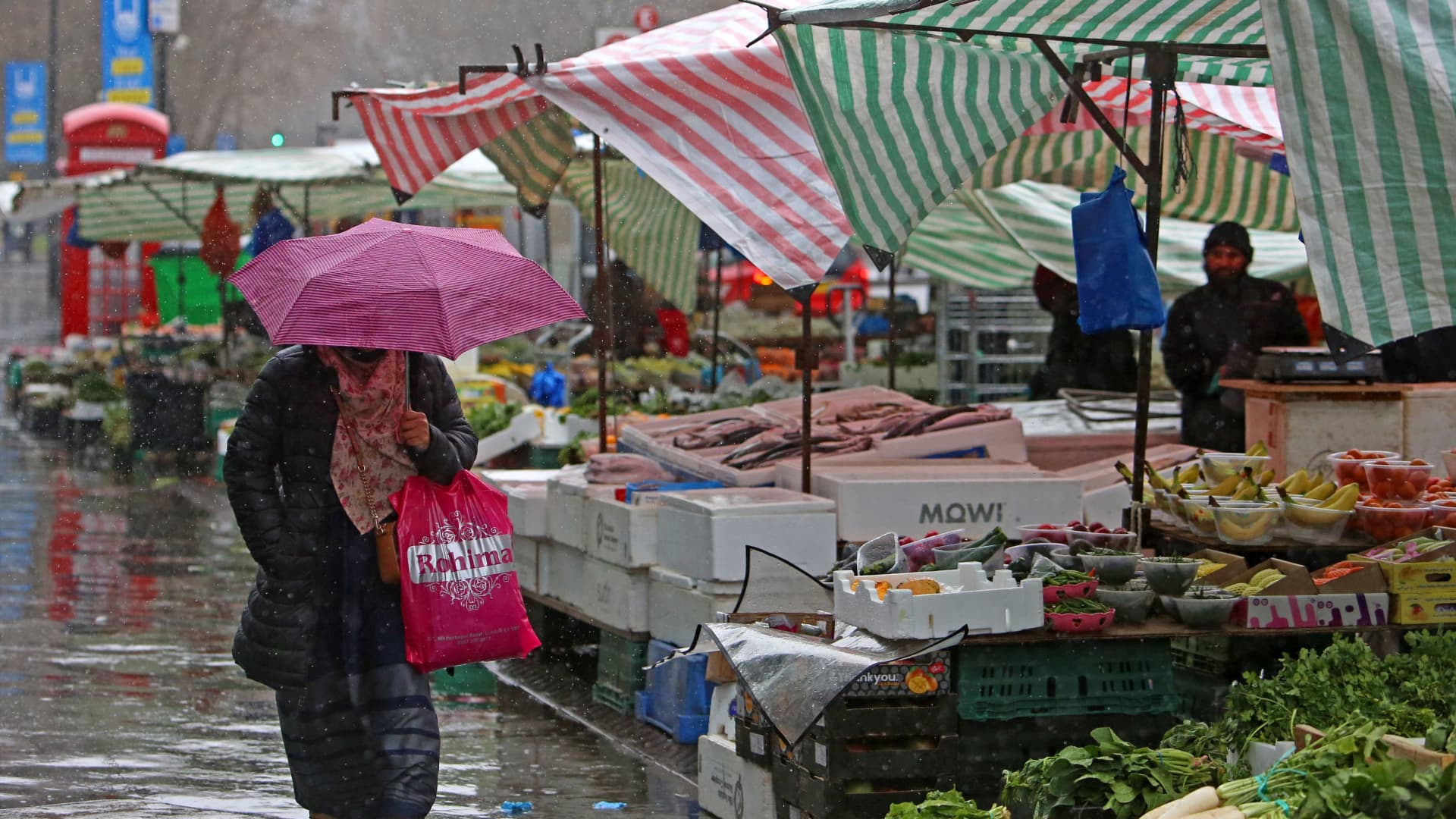
LONDON - March 31, 2023: A pedestrian shelters from the rain as they walk past fruit and vegetables displayed for sale at a market in stall east London. New data released on Weds, April 19 revealed that food and non-alcoholic beverage prices rose by 19.2% in the year to March 2023, the sharpest annual increase for more than 45 years.
LONDON — U.K. inflation remained stubbornly in double digits in March, driven largely by soaring food prices, while the country's cost-of-living crisis shows little sign of abating.
The 10.1% annual headline inflation figure of Wednesday came in above consensus estimates, and the consumer price index rate sits almost a full percentage point higher than the Bank of England's Monetary Policy Committee projected in its February report.
Food and non-alcoholic beverage prices rose by 19.2% in the 12 months to March, experiencing their sharpest annual incline in more than 45 years, the Office for National Statistics said Wednesday.
As British households continue to contend with high food and energy bills, workers across a range of sectors have launched mass strike action in recent months amid disputes over pay and conditions.
The British government still provides residential energy subsidies, guaranteeing a cap on average household energy bills of £2,500 per year until the end of June, along with targeted support to certain vulnerable homes.
Despite this, Dominic Miles, global co-head of consumer at L.E.K. Consulting, said that the Wednesday figures showed "there is currently no respite from cost of living pressures."
"Consumers are doing their best to make savings on essentials in order to maintain discretionary spending — this fragile equilibrium is underwritten by the ongoing energy subsidies without which a tipping point might be reached," he said.
Further monetary policy tightening to come
Though food prices are keeping headline inflation elevated for now, economists expect it to fall sharply in April due the base effects of the spike in energy prices triggered in April 2022 by Russia's invasion of Ukraine, while energy demand will inevitably fall through the summer.
But upward price pressures are currently proving broader and more stubborn than just these two components.
Core inflation, which excludes volatile food, energy, alcohol and tobacco prices, rose by 6.2% over the 12 months, unchanged from the annual climb of February. This stickiness will be a concern for the Bank of England.
The labor market remains tight, reaffirming that risks to inflation are firmly skewed to the upside.
"Today's figure shows that the cost-of-living crisis many Britons find themselves in might not be releasing its grip on families as quickly as first expected," said Tom Hopkins, portfolio manager at BRI Wealth Management.
"The U.K. economy is not out the woods just yet, that said, if economic data continues to come in less negative than expected, it could help stir a revival in business and consumer confidence."