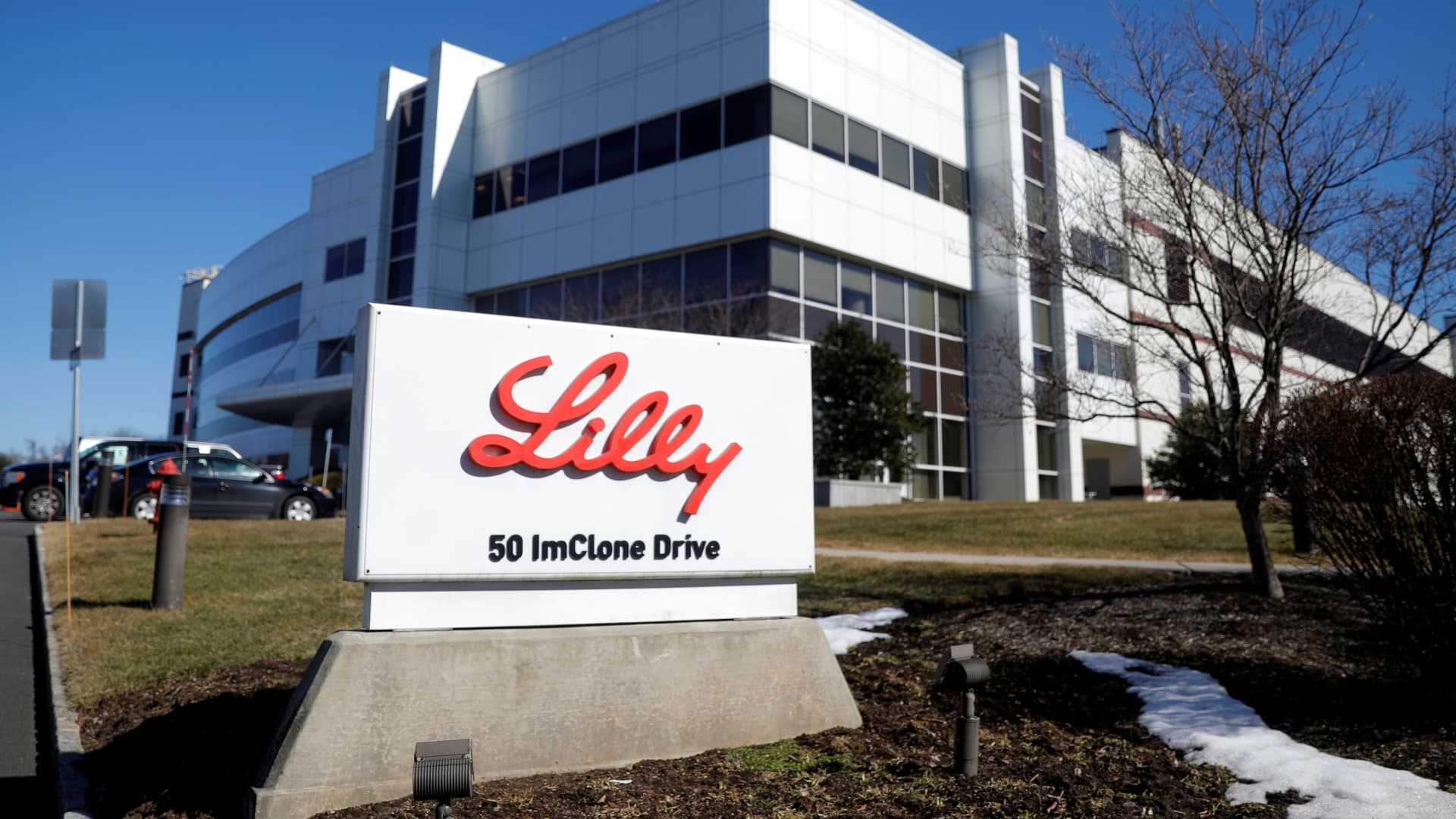
The Alzheimer's treatment donanemab, which is made by Eli Lilly , significantly slowed progression of the mind-robbing disease, according to clinical trial data released Wednesday by the company.
Patients who received the monthly antibody infusion during an 18-month study demonstrated a 35% slower decline in memory, thinking and their ability to perform daily activities compared with those who did not receive the treatment, Eli Lilly's data showed.
Patients who took donanemab were 39% less likely to progress to the next stage of the disease during the study, according to the trial results.
But the treatment's benefits will have to be weighed against the risk of brain swelling and bleeding that can be serious and even fatal in rare cases. Three participants in the trial died from these side effects.
Eli Lilly's stock was up more than 6% in premarket trading Wednesday.
Lilly plans to apply for Food and Drug Administration approval of donanemab as soon as this quarter, according to the company. The trial studied individuals in the early stages of Alzheimer's who had a confirmed presence of brain plaque associated with the disease.
Dr. Daniel Skovronsky, Lilly's chief scientific and medical officer, said donanemab demonstrated the highest level of efficacy of any Alzheimer's treatment in a clinical trial. The company is working to get donanemab approved and on the market as quickly as possible, he said.
And Skovronsky believes the FDA feels the same sense of urgency.
"Every day that goes by, there are some patients who pass through this early stage of Alzheimer's disease and become more advanced and they won't benefit from treatment," he said in an interview with CNBC. "That's a very pressing sense of urgency."
Lilly previously applied for expedited approval of donanemab.
The FDA rejected that request in January and asked the company for more data on patients who received the antibody for at least 12 months. Lilly said the data wasn't available at the time because many patients were able to stop dosing at six months because the treatment cleared plaque quickly.
Nearly half of patients — 47% — who received donanemab showed no disease progression a year after treatment began, compared with 29% who did not receive the antibody, according to the data released Wednesday.
More than half of patients completed the treatment in the first year and 72% completed it in 18 months due to clearance of brain plaque.
In a separate measure, patients who received donanemab showed 40% less decline in their ability to conduct daily activities at 18 months. This means they could better manage finances, drive, pursue hobbies and hold conversations than those who did not receive the treatment.
"These are the strongest phase 3 data for an Alzheimer's treatment to date. This further underscores the inflection point we are at for the Alzheimer's field," said Maria Carrillo, the Alzheimer's Association chief scientific officer, in a statement.