There is a story repeated so often that it has become a truth — that medieval folk drank weak beer to avoid the perils of drinking water — but it’s a myth.
A myth that I also for many years repeated unthinkingly, until I got thinking, about how accurate it is.
The evidence is in fact, often in plain sight, but overlooked.
As it happens, drinking water was commonplace throughout history. We have to remember that the notion that water could carry diseases is a fairly modern one, and even the great sewers of Victorian London were originally designed to carry away the bad airs, which were thought to cause disease, not the polluted water itself.
People certainly understood that water could be good, or bad, but this was limited to smell and flavour. The folk in olden times who could afford it would pay for good clean water.
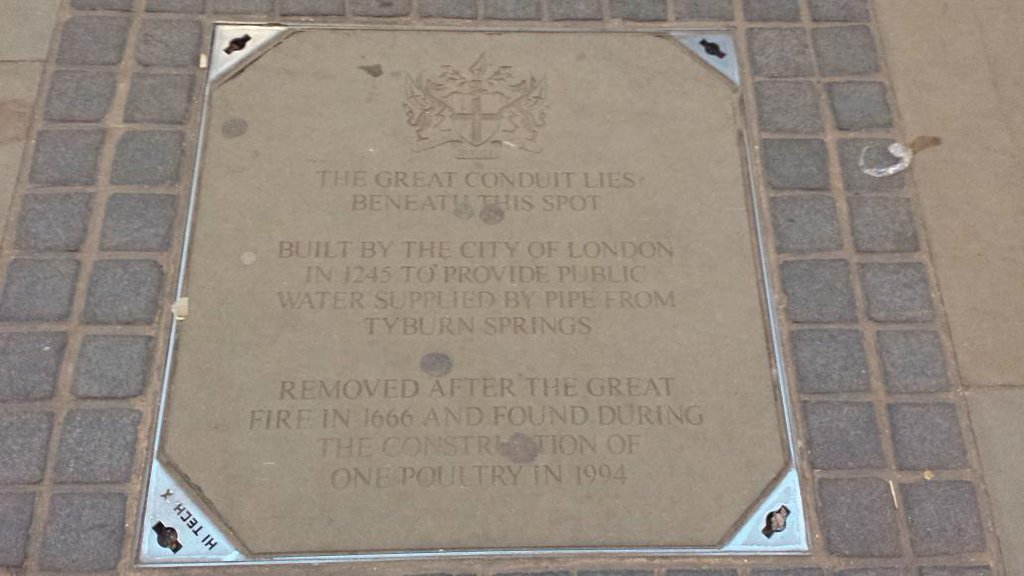
For example, the construction of the Great Conduit in 1237 carried spring water from Tyburn to the city, and on a larger scale, so did the New River, opened in 1613. Within the city, a waterwheel was once attached to London Bridge to pump Thames water around the city.
So medieval folk not only drank water, but put in place the substantial infrastructure to supply it to the populace.
There were also “masters of the conduits” who looked after the pipes, and more importantly ensured those who used the water paid for what they took. The rich could have their own pipes, while most people bought buckets of water supplied by water carriers (cobs).
By 1600 there were some 4,000 water carriers in London, although a petition to Parliament around the late 16th century bemoaned the theft of water and how it deprived the “Company of poor Water Tankard Bearers” of their income.
Such was the seriousness of stealing clean water that one miscreant who was caught was punished by being set on horseback and paraded around with a conduit upon his head.
So important were the conduits to early London life, than the one in Cornhill was for a while used as the point from which all distances to London were measured. The location of the conduit — and hence, the centre of old London — is still marked to this day on the site by a recently restored water pump.
Just as the supply of clean water was seen as a commercially viable business, there were regulations about the use of dirty water.
The majority of people in early London would have used public or communal toilets as a private latrine would have been an unheard of luxury. Most of the toilets, or Houses of Easement as they were known, would have emptied into cesspits, which were periodically emptied by a “gong farmer” who was required to work only at night.
References to early public toilets can be found thanks to their reference in unrelated matters, such as the murder of John de Abyndon in 1290, which took place as he returned from a toilet.
The placement of toilets was also being regulated, and by 1347, it was forbidden to dump rubbish or dung into the Thames.
Two rivers running through London, the Walbrook and the Fleet were however permitted to be used for the dumping of human waste, even though they both flowed into the Thames, where such dumping was forbidden. Crapping into the Wallbrook was however banned by 1462, by an ordinance from the Common Council, and they ordered that the stream be paved over. The long march towards burying London’s streams had begun.
The Fleet was also relieved of its toilet duties around the same time, and much later, also paved over.
The common image of Tudor London home-owners leaning out of their windows to empty their pan into the streets below is probably not entirely without foundation, but would have been seen as the height of bad manners, and often illegal.
Despite that, the rise of plague was certainly assisted by the amount of human waste flowing through the gutters in London’s streets.
In addition to humans, there was human industry.
Industry, at the time far more smelly and dirty than we could imagine today, was allowed to use water for production, and waste. But it was regulated, and no tallow maker or butcher would be allowed to spoil drinking water.
Again, this was not a disease control issue, as there was no notion of separating wastewater from spring water for health reasons — it was simply a matter of taste.
No one wanted tallow flavoured drinking water.
So while water was seen as drinkable and rated less for its disease properties than its wholesome flavour, what did people tend to drink other than water?
Teacher : What did you have to drink?
: What did you have to drink? Boy : I drink ale, usually, if I drink at all, and water if I have no ale.
: I drink ale, usually, if I drink at all, and water if I have no ale. Teacher : Don’t you drink wine?
: Don’t you drink wine? Boy: No, I am not rich enough to be able to buy myself wine: Wine is not a drink for boys or fools but for old men and wise men.
Ælfric’s Colloquy
Aelfric is believed to have been a monk in Dorset and Oxfordshire about the end of the tenth and the beginning of the eleventh centuries.
According to The ‘Anglo-Norman Chronicles of London’, when King Edward I was crowned King at Westminster Abbey, the Cheapside conduit ran with wine for the day.
When King Henry VI returned to London 1432, according to John Lydgate, the same happened again — suggesting that turning water into wine was not limited to Jesus, but was a royal custom for pageants and celebrations.
Wine was evidently not unheard of, and presumably available in such quantities as to be dispensed for an entire day to the populace of the city.
Wine was still however an expensive drink, and predominantly something consumed by the upper classes. Whether English wine, which was quite commonplace during the Medieval Warm Period, or imported from France and the Mediterranean, in later years, it was a regular tipple.
A medieval poem, the Regimen sanitatis Salernitanum, even recommends drinking water to quench a thirst, although it recommends wine with food, for water could chill the stomach.
However regularly it was drunk, that richer folk could buy a personal pipe to the freshwater conduits running under the cities suggested that water was still being drunk by the wealthy.
Wine for flavour, and water for thirst — a bit like modern times.
Why do we think of people drinking small beer?
Calories and hydration pure and simple. Anyone who drinks beer will eventually succumb to the beer belly, as beer contains calories, on average around 200 per pint.
If you are living at a time when most labour was manual and intensive, you needed to consume a lot of calories. A typical male working the fields in the summer months was burning an average of 3,000 calories per day.
You also needed to replenish lost fluids from sweating. As it happens, small beer is really quite effective at delivering both calories and fluids.
Small beer was also cheap, often being made from the third runnings of the mash from brewing ales, with the strong and common ales first, then the small beer last.
It’s also worth noting that while people talk about small beer being low in alcohol, no one actually knows how low. As James Sumner notes, medieval ale brewing was far less efficient than today, and based on crops that were less efficient at converting into fermentable sugars, so it was probably quite low, but how low is an unknown.
It’s unlikely that they drank small beer for its low alcohol content, nor for the oft-cited claim that the brewing process killed bugs in polluted water. as they didn’t know that bacteria and microbes existed. If the water smelt bad, people simply wouldn’t drink it.
People didn’t drink small beer to stay healthy — they drank small beer to give them energy.
As far as medieval man was concerned, there wasn’t anything wrong with plain water — small beer was, put simply, the Red Bull of its time.
Small beer gives you wings!
Sources:
The Time Traveler’s Guide to Medieval England: A Handbook for Visitors to the Fourteenth Century by Ian Mortimer
Springs, streams and spas of London; history and associations by Foord, Alfred Stanley
Latrines and Cesspools of Medieval London by Ernest Sabine
Daily Life in Medieval Europe by Jeffrey L. Singman
Dietary Requirements of a Medieval Peasant
Floregium Urbanum – The Great Conduit
Recreating Medieval English Ales
The Oxford Companion to Beer
Ælfric’s Colloquy
Les Leftovers