Skip Navigation
Markets
Business
Investing
Tech
Politics
Video
Watchlist
Investing Club
PRO
Livestream
Menu
Key Points
Amazon announced the results of this year's Prime Day, which ended Tuesday.
The company's messaging around Prime Day results lacked the kind of sales superlatives it usually offers.
Still, Amazon said third-party merchants' businesses got a lift from Prime Day.
In this article
AMZN
Follow your favorite stocks
CREATE FREE ACCOUNT
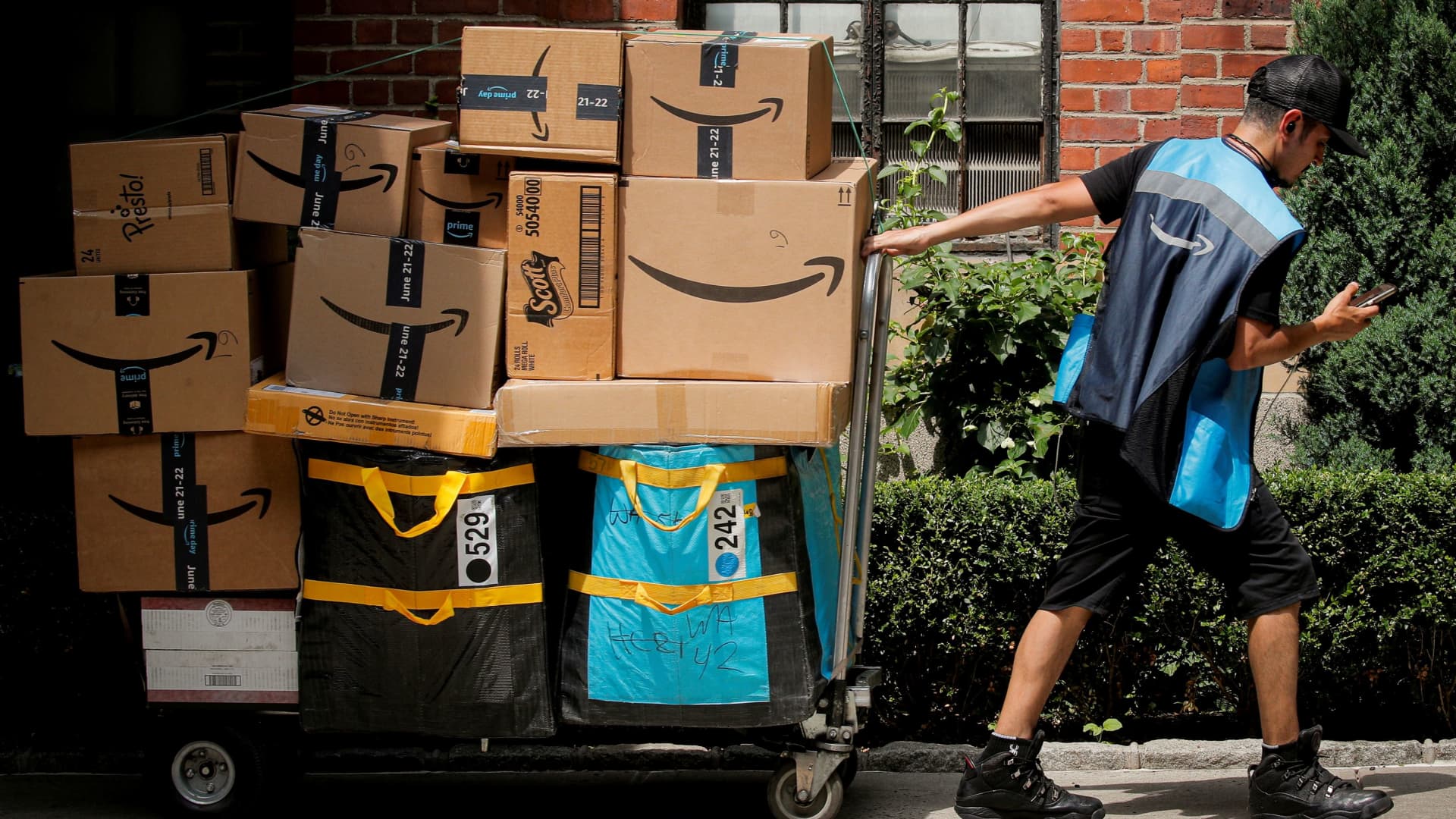
Photographer: Thorsten Wagner/Bloomberg via Getty Images
Bloomberg | Bloomberg | Getty Images
Amazon
on Wednesday
announced the results
of its annual Prime Day sale, which ended Tuesday, highlighting how the event gave a lift to its third-party sellers.
For the second year, Amazon said merchants' Prime Day sales grew more than its first-party retail business. Sellers netted $1.9 billion from pre-Prime Day promotions that gave customers a $10 discount if they shopped with small businesses, the company said.
But Amazon's publicity around the Prime Day results was muted compared with previous years, lacking the sales superlatives it typically offers to show how consumers flocked to the site to snap up heavily marked-down goods.
Amazon has previously characterized the event as its "biggest day ever" or the "largest shopping event in Amazon history." That language was noticeably absent from this year's results, with the company instead opting to note that Prime Day was the "two biggest days ever" for merchants.
Amazon never discloses total Prime Day sales, but last year it took the rare step of disclosing that third-party sellers brought in $3.5 billion during the event. That figure was also missing from this year's results.
An Amazon representative declined to provide more details on third-party merchant sales during this year's Prime Day event.
Amazon Prime Day 2021 coverage
Read more about what Amazon and others have planned for this year's sales events:
Amazon's Prime Day results were more muted than usual this year
Total e-commerce sales during Amazon Prime Day surpass $11 billion, Adobe says
For these retailers, Amazon Prime Day isn't about the deals
Amazon and Walmart dominate apparel sales, but are after more fashion clout
Supply chain snafus could affect what's available to you on Prime Day
Why Target is focused on groceries in its Prime Day rival sale
As e-commerce sales proliferate, Amazon holds on to the top online retail spot
Amazon launched Prime Day in 2015. The multiday discount event helps Amazon attract new Prime subscribers and allows the company to promote its products and services. It's grown to become one of the busiest shopping days of the year for Amazon and other retailers who run competing deals.
It's likely that Amazon still hauled in record sales during Prime Day, but growth could be slower compared with previous years. Adobe Analytics
estimated
that total e-commerce sales surpassed $11 billion, representing 6.1% growth from transactions during last year's mid-October event. According to
Digital Commerce 360
, Amazon sold $10.4 billion worth of goods on Prime Day last year, up 45.2% from $7.16 billion in 2019.
Supply chain issues may have contributed to a more muted Prime Day. Third-party sellers were
under added stress
this year as they tackled widespread supply chain disruptions, ranging from the global chip shortage to a spike in
Covid-19
cases at two of China's busiest ports. Some sellers told CNBC they opted to run fewer Prime Day discounts this year out of concern that they might run out of stock.
watch now
VIDEO
2:45
02:45
Target, Walmart and other retailers compete with Amazon's Prime Day
Squawk Box
Choose CNBC as your preferred source on Google and never miss a moment from the most trusted name in business news.
Amazon's Prime Day results were more muted than usual this year