Humans do no operate on hexadecimal symbols effectively […] there are exceptions. – Dan Kaminsky
When SSH added ASCII art fingerprints (AKA, randomart), the author credited a talk by Dan Kaminsky.
As a refresher, randomart looks like this:
$ ssh-keygen -lv -f ~/.ssh/id_ed25519.pub 256 SHA256:XrvNnhQuG1ObprgdtPiqIGXUAsHT71SKh9/WAcAKoS0 thcipriani@foo.bar (ED25519) +--[ED25519 256]--+ | .++ ... | | o+.... o | |E .oo=.o . | | . .+.= . | | o= .S.o.o | | o o.o+.= + | | . . .o B * | | . . + & . | | ..+o*.= | +----[SHA256]-----+
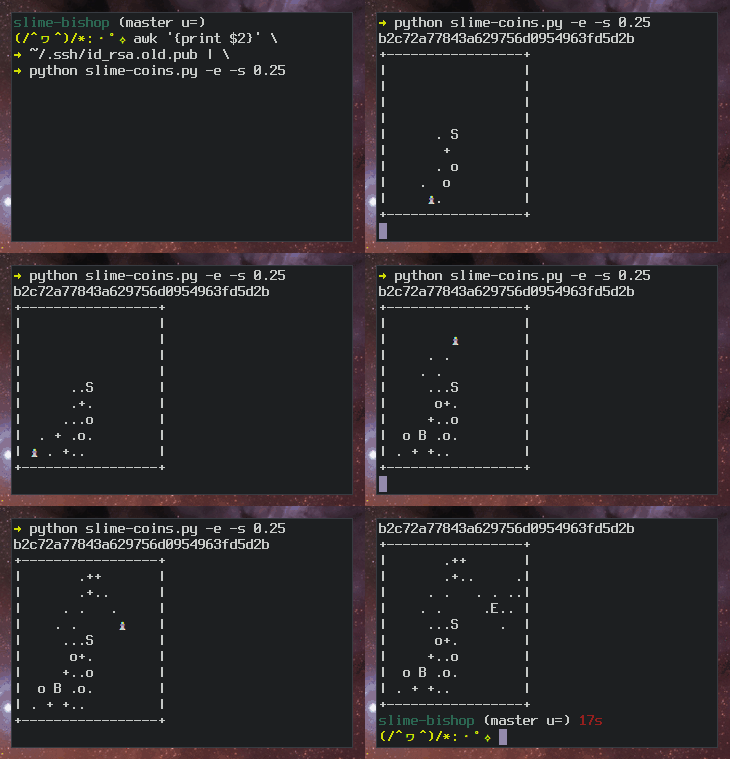
Ben Cox describes the algorithm for generating random art on his blog. Here’s a slo-mo version of the algorithm in action:
ASCII art ssh fingerprints slo-mo algorithm
But in Dan’s talk, he never mentions anything about ASCII art.
Instead, his talk was about exploiting our brain’s hardware acceleration to make it easier for us to recognize SSH fingerprints.
The talk is worth watching, but I’ll attempt a summary.
What’s the problem? We’ll never memorize SHA256:XrvNnhQuG1ObprgdtPiqIGXUAsHT71SKh9/WAcAKoS0 —hexadecimal and base64 were built to encode large amounts of information rather than be easy to remember. But that’s ok for SSH keys because there are different kinds of memory: Rejection : I’ve never seen that before!
: I’ve never seen that before! Recognition : I know it’s that one—not the other one.
: I know it’s that one—not the other one. Recollection: rote recall, like a phone number or address. For SSH you’ll use recognition—do you recognize this key? Of course, SSH keys are still a problem because our working memory is too small to recognize such long strings of letters and numbers. Hacks abound to shore up our paltry working memory—what Dan called “brain hardware acceleration.” Randomart attempts to tap into our hardware acceleration for pattern recognition—the visiuo-spacial sketchpad, where we store pictures. Dan’s idea tapped into a different aspect of hardware acceleration, one often cited by memory competition champions: chunking.