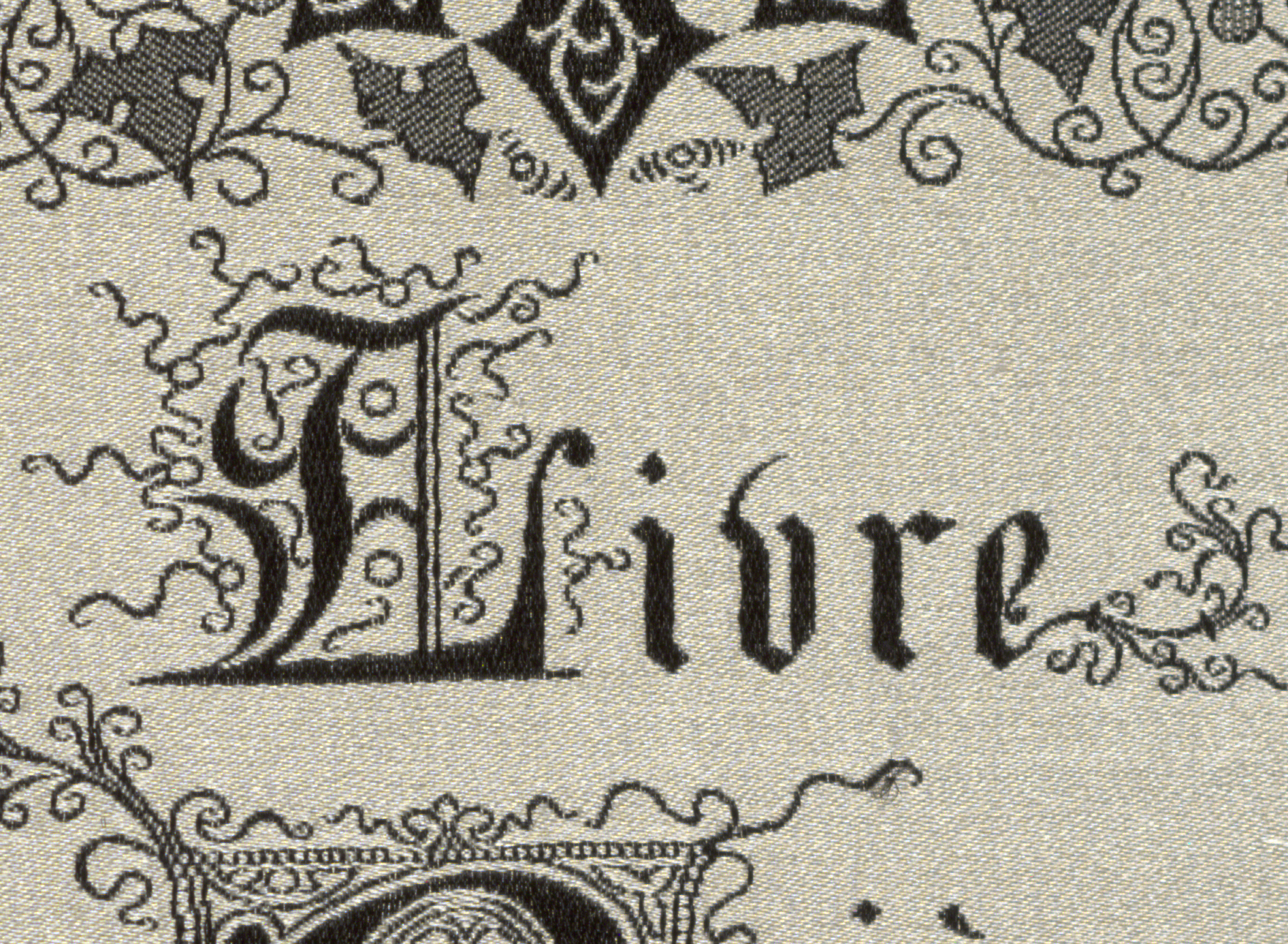
The prayer book is also noteworthy for the eclecticism of its visual sources, drawn from Gothic manuscripts and Renaissance prototypes. In the late nineteenth century, vibrant reproductions of medieval illuminated manuscripts became available via deluxe facsimile editions illustrated with color lithographs. Lilian M. C. Randall has traced some of the prayer book’s figures and ornaments to specific nineteenth-century facsimiles, but also notes that certain decorative motifs recall those in Gothic prayer books in a more general way: the woven book’s margins are replete with lilies, strawberries, roses, and other fragrant plants common in books of hours, especially sections devoted to the Virgin Mary. References to famous Italian artworks also appear in it, including an image of Christ between the Virgin and John the Baptist based on Raphael’s Disputation of the Sacrament in the Vatican Palace. Raphael’s composition was likely known to the prayer book’s makers indirectly, through printed illustrations. Although the Lyon book is based on historical models, Randall rightly points out that its imagery does not directly copy medieval prototypes, but rather is mediated through nineteenth-century aesthetics, and that some leaves in particular “strike a distinctly Art Nouveau note”.
Programming Prayer: The Woven Book of Hours (1886–87)