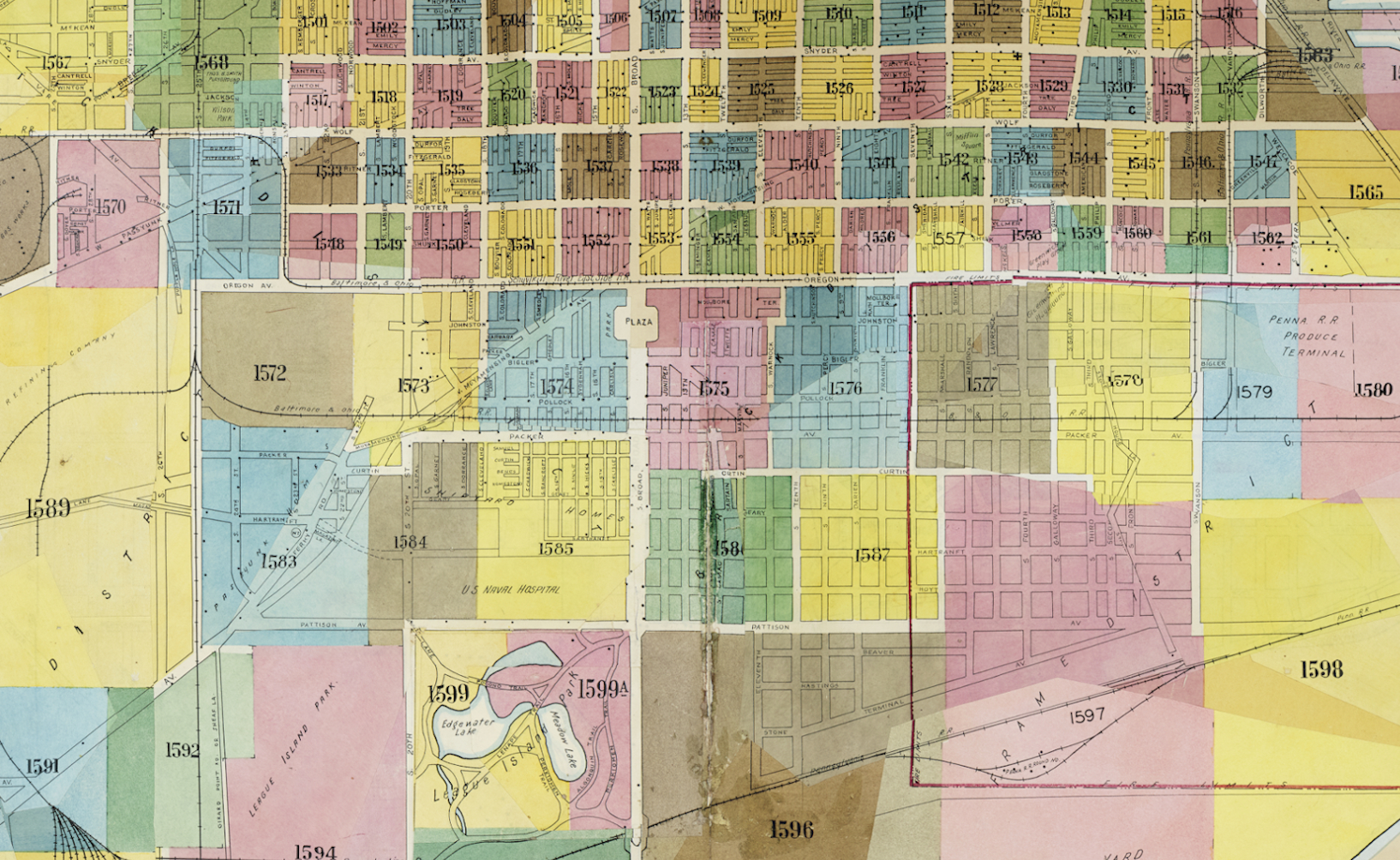
The Sanborn Map Company, as it came to be known, eventually used their system to map more than 12,000 North American towns and cities, covering almost every community with a population over 1000. To do so, the company sent out employees known as “striders” or “trotters”. One or more striders would set up shop in a town for a few months, sometimes renting office space. Following a hundred-page manual supplied by the company, they would sketch, measure, and chart every street and building in the territories they had been assigned. In 1917, during World War I, a Sanborn field surveyor was seen making drawings of the buildings in Fort Wayne, Indiana. Not knowing what the stranger was doing, several residents called the police, worried that he was a German spy. The anecdote paints a vivid picture of what these surveyors had to do. They had to observe. They had to ask questions, possibly intrusive ones. (Outhouses are occasionally discretely noted on Sanborn maps.) They listed illegal businesses (when they could find them) next to legal ones. Making a good map must have required some combination of nosiness, charm, officiousness, tact, and pushiness, depending on the situation.
From Fire Hazards to Family Trees The Sanborn Fire Insurance Maps