Your support helps us to tell the story Read more Support Now From reproductive rights to climate change to Big Tech, The Independent is on the ground when the story is developing. Whether it's investigating the financials of Elon Musk's pro-Trump PAC or producing our latest documentary, 'The A Word', which shines a light on the American women fighting for reproductive rights, we know how important it is to parse out the facts from the messaging. At such a critical moment in US history, we need reporters on the ground. Your donation allows us to keep sending journalists to speak to both sides of the story. The Independent is trusted by Americans across the entire political spectrum. And unlike many other quality news outlets, we choose not to lock Americans out of our reporting and analysis with paywalls. We believe quality journalism should be available to everyone, paid for by those who can afford it. Your support makes all the difference. Read more
Wealthy individuals have been less drawn to the UK in recent years, a wide-ranging new report has found, as Labour’s approach to fiscal policy is blamed for making the country less desirable.
The annual Wealth Report from Knight Frank found that the global population of ‘ultra-high net worth’ individuals, meaning those with assets of $30 million (£22 million) or more, has surged from 551,435 to a record 713,626 in five years.
In the same time frame, the number of billionaires has increased from 2,723 to 3,110 – and could rise to just under 4,000 by 2031.
Liam Bailey, head of research at the Knight Frank said billionaire and millionaire wealth had been “supercharged” by profits the tech industry boom, especially artificial intelligence (AI).
Knight Frank’s figures show that the United States is maintaining the largest share of high net-worth individuals, at 251,1352 in 2026. China, at next highest, has 121,677, while Germany came third with a much smaller 38,215.
Mr Bailey added: “We are witnessing one of the most significant shifts in global wealth distribution in modern history”.
Indonesia is expected to see the fastest growth in high net worth individuals, the estate agency’s research found, increasing by 82 per cent from 3,833 to a forecast 6,966 by 2031. Meanwhile, the share in oil-rich Saudi Arabia is set to rise from 4,388 to 7,162 in the same period, while Poland could see a massive rise from 3,017 to 4,906.
The UK, meanwhile, is forecast to see the fifth lowest growth to 2031, with its number set to rise from 27,876 to 30,942. This will still maintain the nation’s position of fourth-highest, but with a much slower growth recorded than countries like China (23 per cent), Germany (32 per cent), Australia (59 per cent) and the United States (54 per cent).
This will come after growth of only 12 per cent from 2021 to 2026, meaning the UK could be set for a decade of stagnancy in attracting wealthy individuals.
Rory Penn, chair of the private office business at Knight Frank, said that wealth creation was rising against a “more complex global economic backdrop”.
He said: “The ultra-wealthy are becoming markedly more mobile, yet the list of markets where they feel genuinely comfortable investing or basing their families has narrowed.”
Rachel Reeves’ announced non-dom status would be scrapped in 2024 ( Reuters )
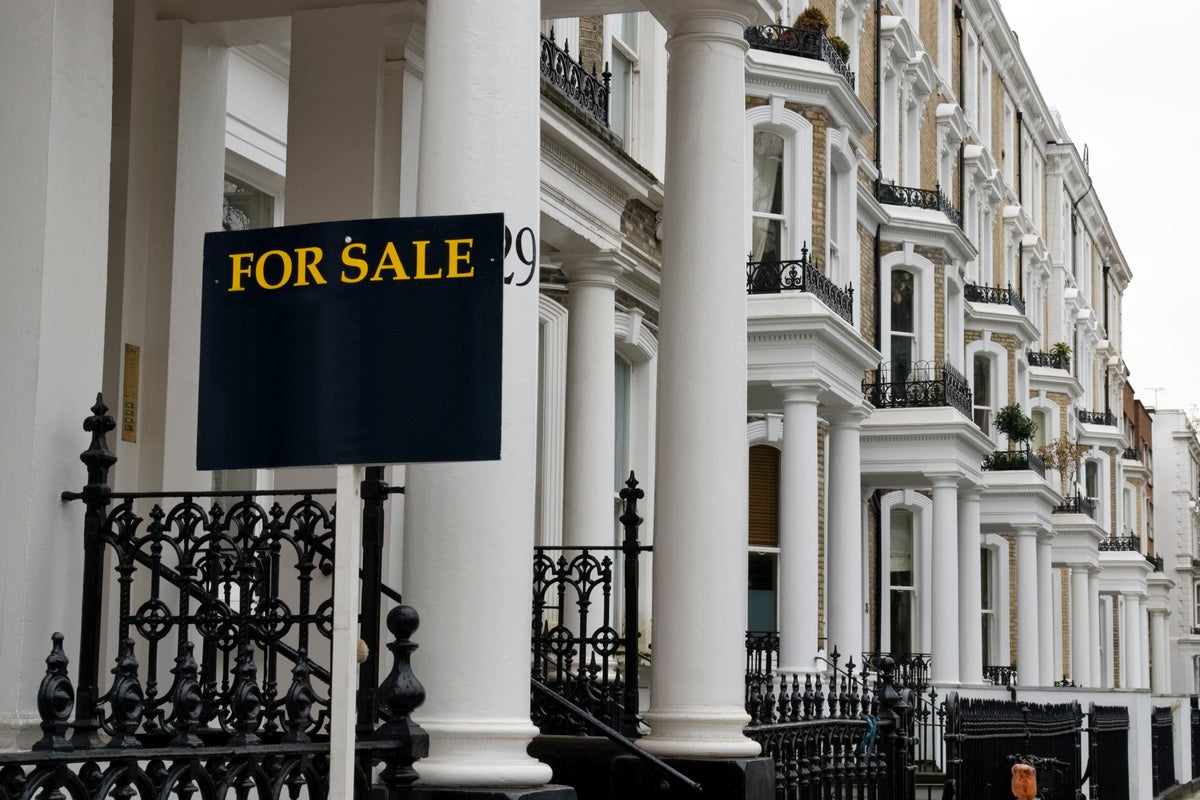
The Wealth Report names chancellor Rachel Reeves’ decision to abolish the non-dom tax status, which came into effect last April, as one of the key reasons that demand for property in London has shrunk amongst wealthy individuals.
Quoting a study from the Centre for Economics and Business Research, the report finds: “Tinkering with wealth and property taxes has continued alongside the rise of low-tax competitors like Dubai.
“October 2024 [when the end of the non-dom policy was announced] prompted a flurry of high-profile wealthy individuals to announce they were relocating. Office for Budget Responsibility projections suggest that as many as 20 per cent of affected non-doms might leave, roughly 1,200 people. The Centre for Economics and Business Research suggests the figure could be closer to a quarter.”
The Treasury was approached for comment.