Your support helps us to tell the story Read more Support Now From reproductive rights to climate change to Big Tech, The Independent is on the ground when the story is developing. Whether it's investigating the financials of Elon Musk's pro-Trump PAC or producing our latest documentary, 'The A Word', which shines a light on the American women fighting for reproductive rights, we know how important it is to parse out the facts from the messaging. At such a critical moment in US history, we need reporters on the ground. Your donation allows us to keep sending journalists to speak to both sides of the story. The Independent is trusted by Americans across the entire political spectrum. And unlike many other quality news outlets, we choose not to lock Americans out of our reporting and analysis with paywalls. We believe quality journalism should be available to everyone, paid for by those who can afford it. Your support makes all the difference. Read more
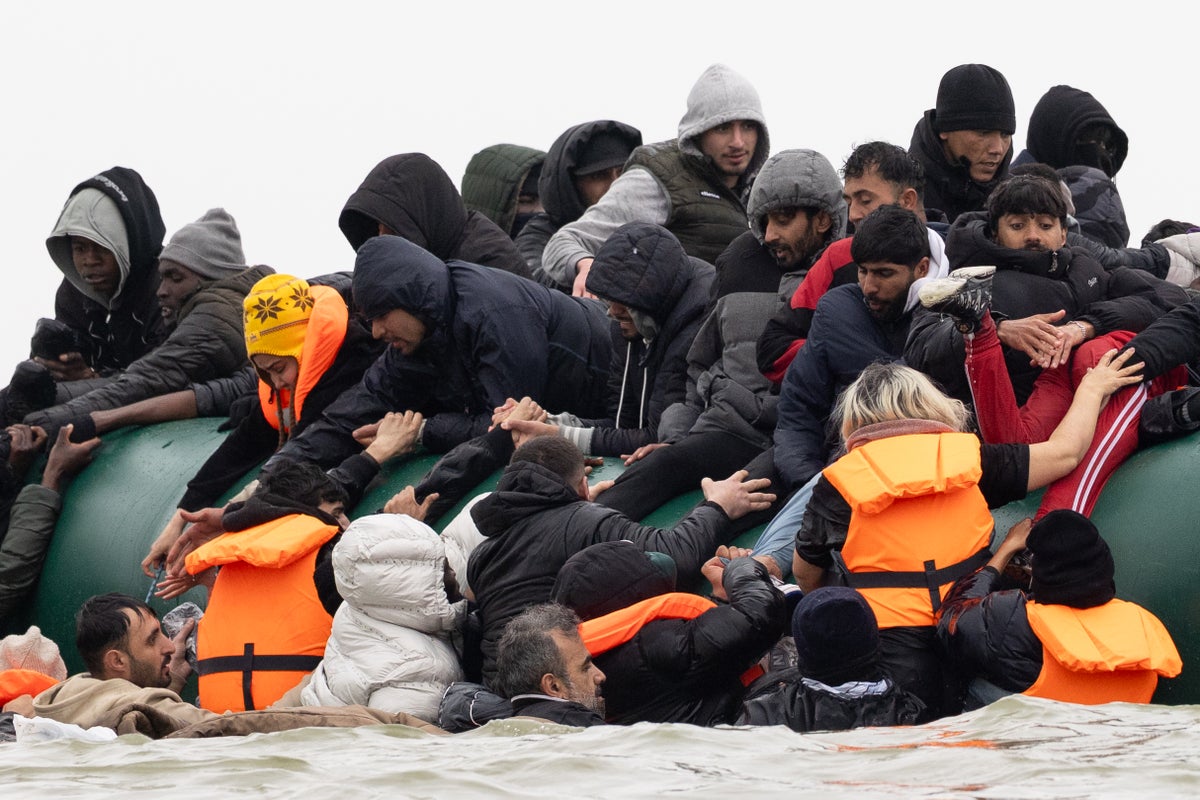
The UK’s deal to pay France £662m to police small boat migrants on beaches will only force more people to make the perilous Channel crossings, charities have warned.
Riot-trained police will be sent to beaches in France as part of the deal that aims to stop migrants from coming to the UK by boat. The Home Office has also promised a 40 per cent increase in the number of enforcement officers on the ground in northern France, bringing the total to nearly 1,100.
The extra cash will be paid to France over three years, with a £160m tranche conditional on enough journeys being stopped.
But charities that work with migrants who make the journey from France have warned ministers that the additional funds will not reduce the number of crossings – and could even increase them.
open image in gallery Migrants board a dinghy before attempting to sail into the English Channel on April 01, 2026 in Gravelines, France. Dinghies have been getting bigger in size with more people travelling on each one. ( Getty Images )
Jo Cobley, chief executive at Safe Passage International, said: “This is a brutal deal for refugees. More violent tactics will only force people, who have fled war and persecution, into taking even more dangerous and fatal journeys across the Channel.
“The children we work with in France, hoping to reunite with family in the UK, have no alternative. With no safe routes and the government’s suspension of refugee family reunion, they have no way to reach protection and family in the UK.”
Steve Smith, CEO of refugee charity Care4Calais, said: “The government continues to do the same thing over and over and expecting different results - whilst ignoring the only solution that will stop crossings.
“All the evidence shows that these UK-France agreements not only cost the public purse huge sums, they also lead to more loss of life in the Channel. They do nothing to deter crossings, they only make the crossings that refugees make more dangerous. We have seen this in recent weeks with reports of small boats launching from Belgium.
“The only way to stop crossings is to open safe routes for refugees to claim asylum in the UK.”
open image in gallery French police officers talk on a radio as they hear that a group of migrants are approaching the beach. The UK will pay France up to £662m over three years for increased policing of the beaches in northern France. ( Getty Images )
Meghan Benton, director at the Migration Policy Institute based in Paris, described Labour’s deal as “more the same”, saying it was “a bigger, tougher version of the existing arrangements, more money, more offices, more fancy kit. It’s very tech forward.”
The Labour deal renews a previous agreement made under Conservative prime minister Rishi Sunak, which saw France receive almost £500m to tackle small boat crossings. Despite the surge in funding and policing, crossings in the Channel have risen, with some 41,472 people arriving in the UK by small boat in 2025.
Ms Benton referred to the UK’s “one in, one out deal” with France, which saw some asylum seekers exchanged for others, saying: “That has really underdelivered on numbers but it has the seeds of a sensible approach that could be more part of a comprehensive solution. What we’ve got here is really something that is enforcement only.”
The Independent reported last month that the flagship one in, one out scheme was returning just 12 migrants a week to France despite initial promises of 50 people a week.
The scheme has also faced numerous legal challenges, with 40 per cent of migrants detained for deportation making trafficking claims.
Immigration minister Alex Norris told BBC’s Today programme on Thursday: “If we don’t see the disruptions that we collectively want to see, we all pay that penalty, they certainly do in northern France as well.”
Analysis from the University of Bristol and Swiss research agency Border Forensics published last month found that the number of migrants who died while attempting to cross the Channel soared after Mr Sunak’s deal with France was signed.