Your support helps us to tell the story Read more Support Now From reproductive rights to climate change to Big Tech, The Independent is on the ground when the story is developing. Whether it's investigating the financials of Elon Musk's pro-Trump PAC or producing our latest documentary, 'The A Word', which shines a light on the American women fighting for reproductive rights, we know how important it is to parse out the facts from the messaging. At such a critical moment in US history, we need reporters on the ground. Your donation allows us to keep sending journalists to speak to both sides of the story. The Independent is trusted by Americans across the entire political spectrum. And unlike many other quality news outlets, we choose not to lock Americans out of our reporting and analysis with paywalls. We believe quality journalism should be available to everyone, paid for by those who can afford it. Your support makes all the difference. Read more
On a sunny Wednesday lunchtime, the City of London is usually teeming with crowds of workers looking for a swift business lunch. But many of the city’s traders are open with empty seats and no queues as their usual customers are working from home.
“It’s dramatically dropped,” says the manager of MuMu Street Food, a restaurant that serves Asian food near Moorgate. “We [usually] have a queue, we’re non-stop working, but now I have nothing to do but sit and wait for customers.”
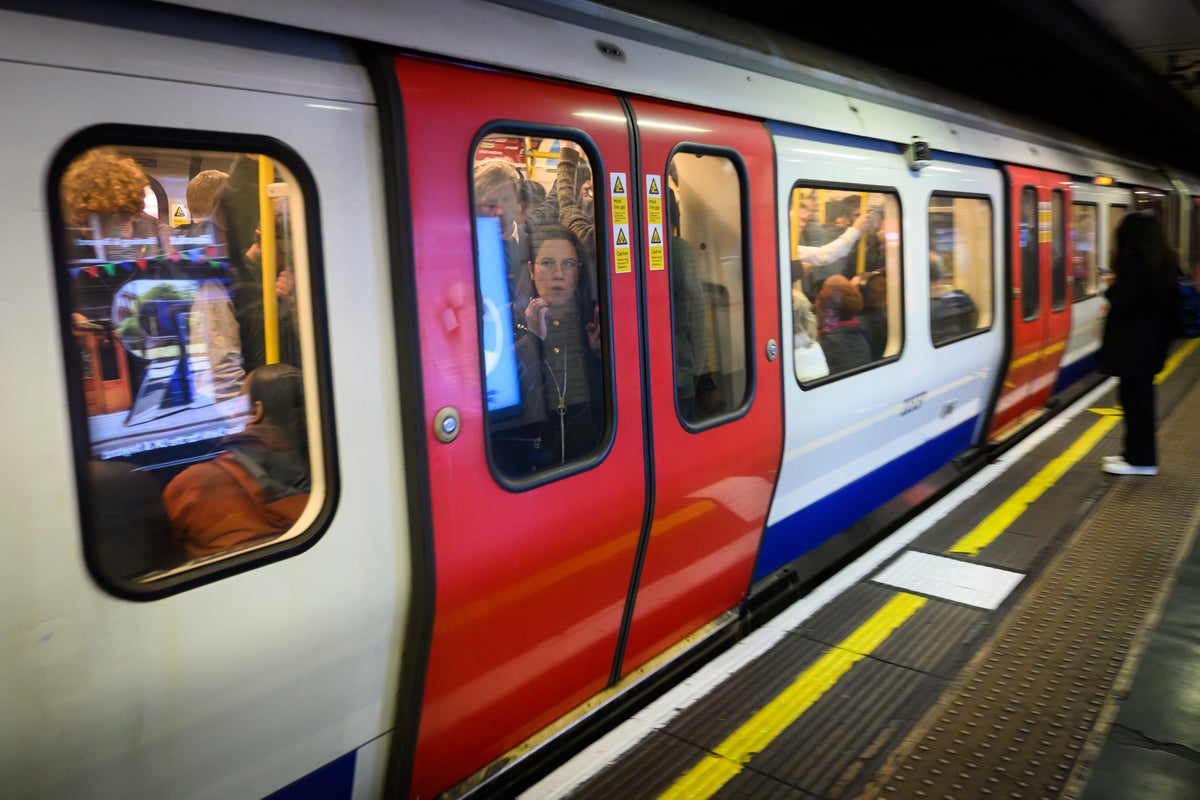
Just two days into The Rail, Maritime and Transport (RMT) union’s tube strikes this week, traders are already feeling the brunt as the hospitality sector braces for a “devastating impact”.
Members walked out for 24 hours from midday on Tuesday, and will do again on Thursday, impacting the commutes of city workers. Those who made it into the office faced longer trips into the capital than usual in crowded buses, taxis or via bicycle.
On a normal day, the team at MuMu would serve nearly 200 customers; since the strikes, they’ve noticed a 50 per cent drop. But not only is it impacting customer numbers, but their workers are struggling to get in.
open image in gallery MuMu’s staff have struggled to get into work due to the strikes ( Bryony Gooch/ The Independent )
“It’s not only about customers, it’s about us as well for travelling to work,” said the manager, who asked not to be named, but said their usual 55-minute route to the restaurant has been lengthened to an hour and 45 minutes each day.
Birley’s sandwich shops have also noticed a drop in footfall since strikes began.
Paul Salter, managing director of Birley’s, said: “Our shops across the city and Canary Wharf have been hit with anywhere between 15 per cent and 20 per cent less footfall and sales accordingly. A huge hit for a chain our size again with this unnecessary strike action.
“It will cost us tens of thousands of pounds this week. Very frustrating and another hit to the hospitality sector, especially the retail sector,” he added. “We can only hope that they solve this before next month’s planned strikes.”
open image in gallery Mesi’s Caffe estimated a 30 per cent drop in customers due to the strike ( Bryony Gooch/ The Independent )
Mesi, owner of Mesi’s Caffe, serving Italian food near Finsbury Circus, estimated a 30 per cent drop in custom: “We have a lot of regular customers... I think they’re working from home.”
Restaurant suppliers are also feeling the pain as restaurants cancel orders due to a steep decline in walk-ins and cancelled reservations.
George Edwards, managing director of London Wagyu Company, which supplies to 60 high-end restaurants and 20 butchers across the country, told The Independent that the company was 18 per cent down on volume this week compared with last.
Additional strikes are planned for May and June, after the RMT accused Transport for London (TfL) of attempting to impose a new four-day working week, with general secretary Eddie Dempsey expressing frustration over the stalled negotiations.
open image in gallery Strikes are planned for May and June ( Reuters )
Hospitality sector experts have said it’s too early to see the exact impact on businesses, but analysis of the impact of 31 days of tube strikes across 2023/2024 saw a 32 per cent dive in average sales for hospitality in Zone 1.
Coffee and sandwich shops saw a 34 per cent drop, sales dropped 38 per cent for pubs and bars, while restaurants experienced 29 per cent less custom.
Kate Nicholls, Chair of UKHospitality, said: “Tube strikes have a devastating impact on London’s hospitality businesses, with sales falling by up to 40 per cent on strike days. Commuter footfall is almost non-existent and families cancel plans to visit the capital.
“The cost of strikes can stretch into the millions – as we saw when strikes hit the sector a couple of years ago. It’s not just lost sales, but the impact on hospitality staff who can no longer get into work.
“I urge all parties to continue negotiations and reach a solution that averts these damaging strikes.”
open image in gallery RMT general secretary Eddie Dempsey said London Underground’s proposals ‘raise serious concerns around fatigue, safety and work-life balance’ (PA) ( PA Archive )
Michael Kill, CEO of the Night Time Industries Association, warned that the new wave of strike action would create yet more uncertainty for businesses in the capital.
“As the sector faces a fresh surge in energy and operating costs, this new wave of strike action creates yet more uncertainty that businesses simply cannot absorb. Margins are being squeezed from every direction, and confidence is increasingly fragile.
“The ongoing disruption to transport services begs the question, who does this actually benefit? Because right now, it’s businesses, workers and the wider public who are paying the price for the reckless actions of the few,” he added. “Without reliable late-night transport, staff struggle to get to work, customers stay away, and businesses lose critical trade. Many venues are already under intense financial pressure; continued disruption only compounds that risk.
“We respect the right to strike, but this situation cannot continue. All parties must get round the table and find a resolution, because sustained uncertainty at a time like this will have serious, lasting consequences for London’s night-time economy.”
RMT have been approached for comment.