Your support helps us to tell the story Read more Support Now From reproductive rights to climate change to Big Tech, The Independent is on the ground when the story is developing. Whether it's investigating the financials of Elon Musk's pro-Trump PAC or producing our latest documentary, 'The A Word', which shines a light on the American women fighting for reproductive rights, we know how important it is to parse out the facts from the messaging. At such a critical moment in US history, we need reporters on the ground. Your donation allows us to keep sending journalists to speak to both sides of the story. The Independent is trusted by Americans across the entire political spectrum. And unlike many other quality news outlets, we choose not to lock Americans out of our reporting and analysis with paywalls. We believe quality journalism should be available to everyone, paid for by those who can afford it. Your support makes all the difference. Read more
A prehistoric species of bug with claws has been discovered in Myanmar based on an intact fossil trapped in amber.
The insect was found trapped in amber from a site in Myanmar’s northernmost state of Kachin, and represents the first fossil bug with a forceps-like leg. The discovery sheds light on the 100-million-year-old forest ecosystem in which it lived.
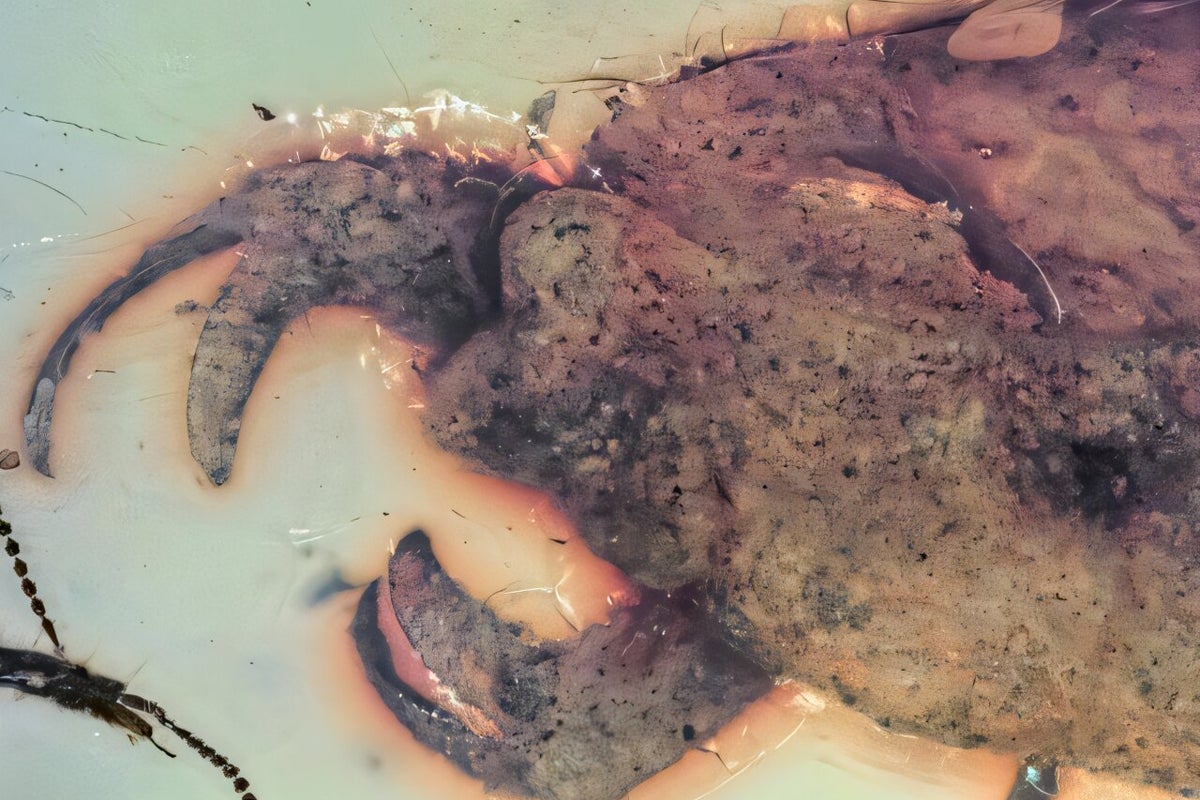
Its features, including large claws – or chelae – on its front legs, are similar to the grasping appendages of crabs, and are extremely rare in insects, researchers say.
"Previously, such chelae were known from only three insect groups. This fossil, therefore, represents the fourth known case of these structures evolving independently in insects," said zoologist Carolin Haug, an author of the study published in the journal Insects.
Due to its distinct features, scientists have placed the fossil insect in a new genus of its own and gave it the scientific name Carcinonepa libererrantes.
open image in gallery Preserved in amber: the newly discovered bug species Carcinonepa libererrantes ( Insects (2026) )
The genus name combines the Latinized Greek word for "crab" (carcino-) with nepa, a reference to the group of true water bugs known as Nepomorpha.
Meanwhile, the species name libererrantes is a Latinisation of the highly successful K-pop group Stray Kids, researchers say.
“The name seemed fitting because the posture of the fossil's chelae strongly resembles the group's trademark pose,” Dr Haug said.
In the study, scientists used CT X-ray scans to examine the fossil and visualise all structures of its anatomy.
Comparing the scans with those of other insects, they found that the chelae of the new species differ markedly from the corresponding structures in other species.
It seemed similarly structured to more distantly related arthropods like crabs, lobsters, and shrimps.
open image in gallery CT scan of the newly discovered insect species with its distinctive claws ( Insects (2026) )
“We compared the shapes of over 2000 grasping structures. We found out that in the forceps-like leg of the new fossil, the part closer to the body has a shape unknown from any other fossil or modern representative,” researchers wrote in the study.
The chelae on its front legs were likely used for catching small insects near the coast, scientists suspect.
Its body structure also shows similarities to living representatives of the group Gelastocoridae, commonly known as toad bugs, which are adapted to life as terrestrial predators.
"The morphology of C. libererrantes suggests that this species had a similar lifestyle," Dr Haug said.