Your support helps us to tell the story Read more Support Now From reproductive rights to climate change to Big Tech, The Independent is on the ground when the story is developing. Whether it's investigating the financials of Elon Musk's pro-Trump PAC or producing our latest documentary, 'The A Word', which shines a light on the American women fighting for reproductive rights, we know how important it is to parse out the facts from the messaging. At such a critical moment in US history, we need reporters on the ground. Your donation allows us to keep sending journalists to speak to both sides of the story. The Independent is trusted by Americans across the entire political spectrum. And unlike many other quality news outlets, we choose not to lock Americans out of our reporting and analysis with paywalls. We believe quality journalism should be available to everyone, paid for by those who can afford it. Your support makes all the difference. Read more
Could life-saving organs be delivered to U.S. hospitals by NASA drones one day? The space agency and the non-profit organ procurement organization United Network for Organ Sharing are in early phases of testing to answer that question.
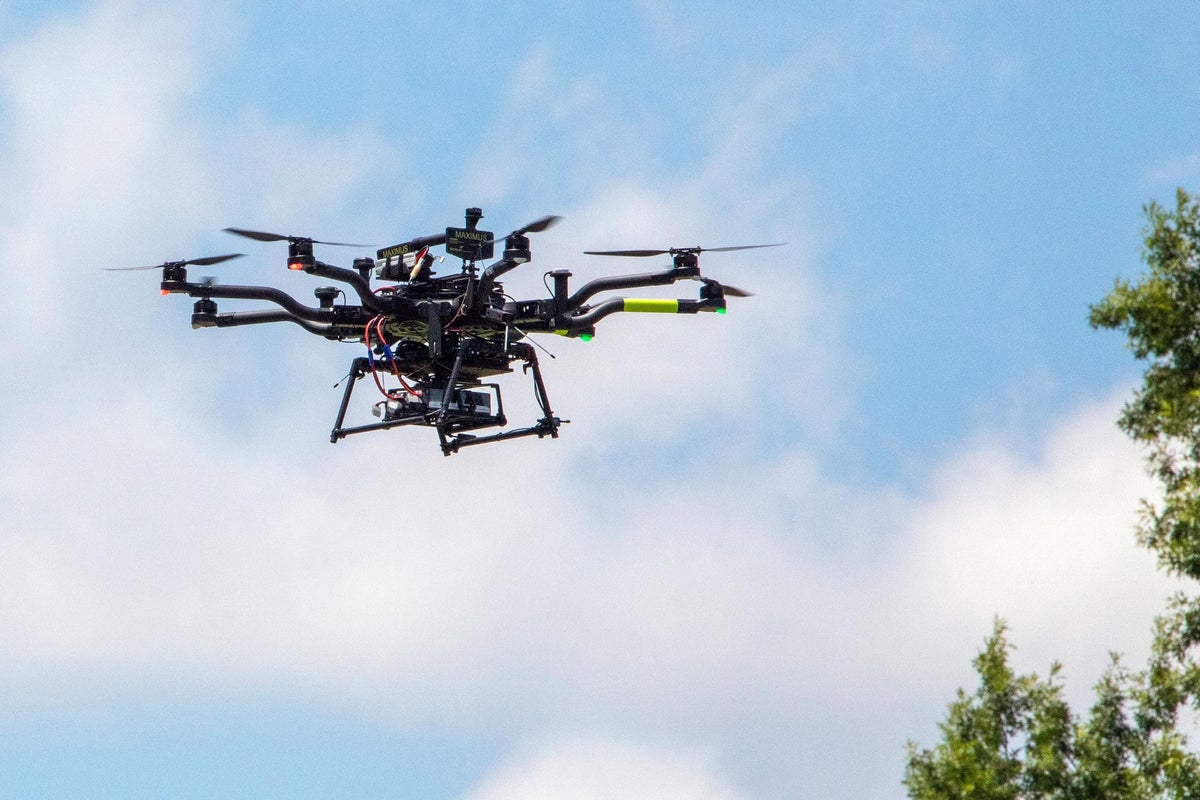
First, the agency is evaluating the flight capabilities of its unmanned drones at the Virginia-based Langley Research Center, NASA said Tuesday. Next an animal’s organ will be assessed to determine whether it remains viable for donation after a flight.
The hope is that drones could be a faster and more reliable method of transportation for donor organs. While organs are often flown between cities by aircraft, logistics on the ground can be challenging.
Although NASA does noes not address potential concerns of drones flying organs, the need for faster transport is great.
More than 48,000 transplants are conducted each year – but 13 people die every day waiting for a transplant and another person is added to the national transplant waiting list every eight minutes, according to federal data.
open image in gallery NASA is once against testing the capabilities of its unmanned drones. After flying self-flying taxis, the space agency is seeing if its tech could help safely transport life-saving organs ( NASA/David Bowman )
UNOS manages parts of the national organ donation and transplant system under contract with the government.
“The idea that something of worldwide benefit could be created in our own backyard is pretty exciting,” NASA’s John Koelling, director of the Aeronautics Research Directorate at Langley, said in a statement.
The researchers will look to see if the animal organs have tissue damage caused by a lack of blood flow and if the temperature remains stable when they are transported.
All organs that are transported need to remain at a chilly temperature of just above freezing and new technology keeps coolers at around 39-46 degrees Fahrenheit.
open image in gallery An image shows NASA’s Langley Research Center in Virginia, which supports the drone tests ( NASA )
But whether this can and should be pulled off remains to be seen. The tests raise further questions about the flight capabilities of drones in inclement weather conditions, whether patients would want their organs flown that way and other logistics.
The transplant system in the U.S. has faced increased scrutiny in recent years and the Trump administration has taken action to reform the nation's organ transplant system following patient safety failures and reports that donors were at risk for having their body parts harvested while still alive.
One 2024 report led to a spike in people revoking organ donor registrations.
Still, NASA is just starting the testing now and it will be a long time before such a program could be piloted.
In 2023, researchers at Langley did similar tests of self-piloting air taxis that the agency said flew successfully.
“If early drone testing proves successful, the partnership may expand to further evaluate operational feasibility and scalability, helping determine whether drones could become a viable option for time-critical medical deliveries,” NASA said.