Your support helps us to tell the story Read more Support Now From reproductive rights to climate change to Big Tech, The Independent is on the ground when the story is developing. Whether it's investigating the financials of Elon Musk's pro-Trump PAC or producing our latest documentary, 'The A Word', which shines a light on the American women fighting for reproductive rights, we know how important it is to parse out the facts from the messaging. At such a critical moment in US history, we need reporters on the ground. Your donation allows us to keep sending journalists to speak to both sides of the story. The Independent is trusted by Americans across the entire political spectrum. And unlike many other quality news outlets, we choose not to lock Americans out of our reporting and analysis with paywalls. We believe quality journalism should be available to everyone, paid for by those who can afford it. Your support makes all the difference. Read more
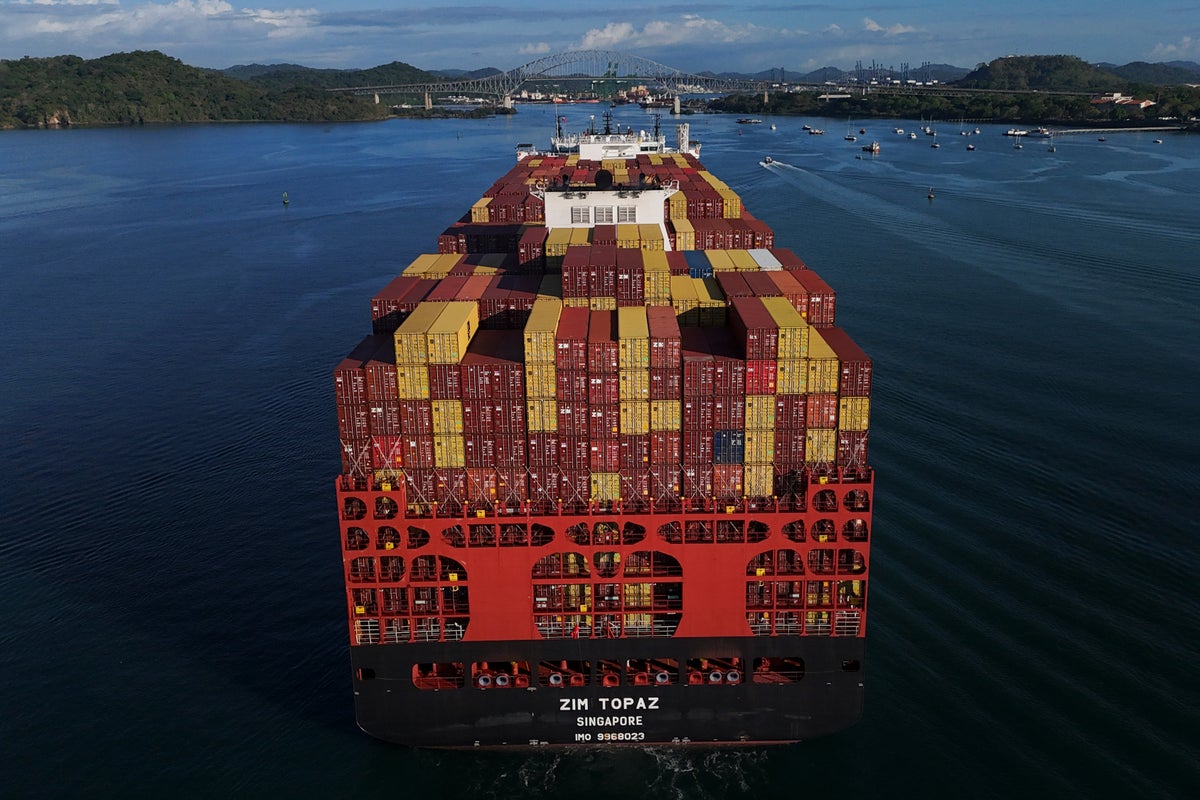
Businesses have doled out up as much as $4 million to move boats through the Panama Canal with the Strait of Hormuz effectively closed, according to the Panama Canal Authority, in a move that has created a seismic shift in global trade flows.
While passage through the waterway usually comes at a flat rate via reservations, companies without reservations can cross by paying an additional fee in an auction for slots, which are awarded to the highest bidder rather than waiting for days off the coast of Panama City.
That price has ballooned in recent weeks as Iran and the United States have bottlenecked the key shipping route, the Strait of Hormuz, and demand for those slots has skyrocketed. Ships have increasingly traveled through the Panama Canal as shipments are rerouted and buyers purchase from other countries to avoid commerce through now-treacherous Middle Eastern waterway.
"With all the bombings, the missiles, the drones ... companies are saying it's safer and less expensive to cross through the Panama Canal," said Rodrigo Noriega, said lawyer and analyst in Panama City. “All of this is affecting global supply chains.”
Meanwhile, Noriega said Panama's government is “maximizing what it can earn from the Panama Canal.”
The average price to cross through the canal ranges between $300,000 and $400,000 depending on the vessel. Previously, to get an earlier crossing, businesses would pay an additional $250,000 to $300,000. In recent weeks, the average additional cost has jumped to around $425,000.
Ricaurte Vásquez, the canal’s administrator, said another company that he would not name paid an extra $4 million when its fuel vessel had to change its destination because of ongoing geopolitical tensions.
"It was a ship carrying fuel to Europe, and they redirected it to Singapore, and it needed to get there because Singapore is running out of fuel,” he said.
Other oil companies paid an excess of $3 million in addition to the crossing fee to accelerate their passage in the face of soaring oil prices.
Vásquez said that ships have not piled up at the canal, but rather the costs can be attributed to last-minute shifts and greater urgency by vessels needing to get from one point to another faster in the wake of larger trade chaos.
Vásquez emphasized that the costs were not a blanket market rate, but rather a temporary toll shouldered by companies.
"They decide how high a price to go,” Vásquez said.
At the same time it's earning more money from the new business, Panama's government has also been dealt a blow by the geopolitical struggle.
On Wednesday, the country's foreign ministry accused Iran of illegally seizing a Panama-flagged vessel from the Italian company, MSC Francesca, in the Strait of Hormuz.
Panama, a country with one of the world's largest ship registries, said the ship was “forcibly taken" by Iran. It wasn’t immediately clear if the boat remained in Iranian custody.
“This represents a serious attack on maritime security and constitute an unnecessary escalation at a time when the international community is advocating for the Strait of Hormuz to remain open to international navigation without threats or coercion of any kind,” it said.
Noriega, the analyst, said that the amount companies are paying to cross the Panama Canal may only go up if the conflict continues to stretch on, as oil prices are already skyrocketing. The price of a barrel of Brent crude oil briefly jumped above $107 this week, soaring from around $66 a barrel a year ago.
“No one really foresaw the potential effects (the war) would have on global trade,” Noriega said.