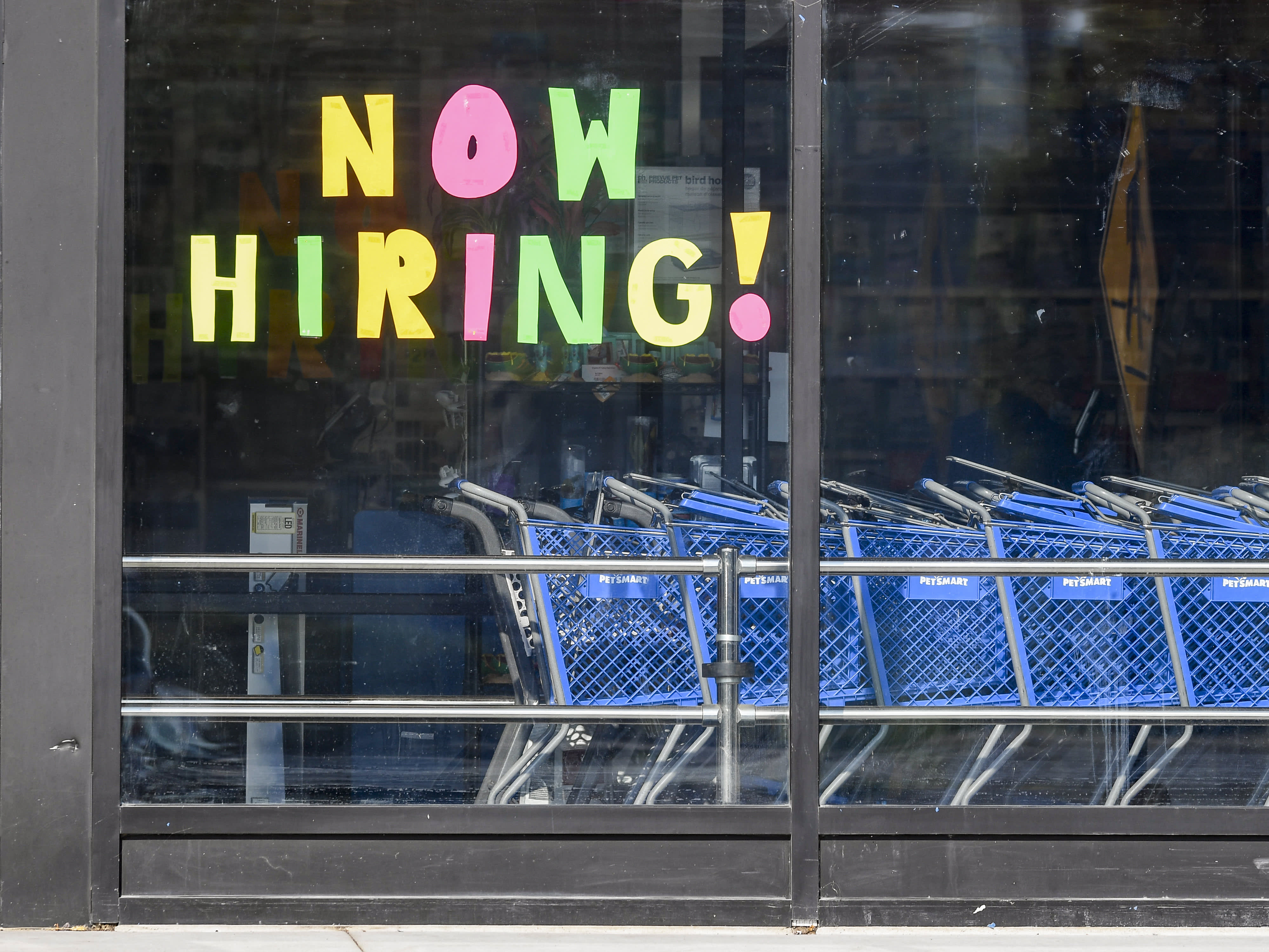
A help wanted sign that reads "Now Hiring!" in the window of the PetSmart location along 5th Street Highway in Muhlenberg Twp. Thursday morning August 26, 2021. (Photo by Ben Hasty/MediaNews Group/Reading Eagle via Getty Images)
A record-high 4.4 million people, or 3% of workers, quit their job in September, according to the Labor Department's latest Job Openings and Labor Turnover Survey released Friday. The tight market, where workers have more leverage to move around and employers are doing everything they can to staff up, is already impacting the holiday shopping season, ZipRecruiter chief economist Julia Pollak tells CNBC Make It. And there's reason to believe quitting will continue well into 2022.
Where people are quitting
High turnover is primarily concentrated in essential frontline industries where jobs can't be done remotely. Some of September's biggest losses come from the already strained leisure and hospitality, retail, manufacturing and health services industries. People left their jobs fastest in the Southern region of the country. With the pace of quitters, Pollak says, "employers are basically having to replace their entire staff in just a couple of months. It's really quite dramatic." Quits increased the most in arts, entertainment and recreation (like people who staff live events); other services (which ranges from auto workers to hairstylists to laundry workers); and local and state government jobs. So far, roughly 34.4 million people have quit their jobs this year, with more than 24 million doing so since April. By comparison, 36.3 million people quit their job in all of 2020.
Where the jobs are
The Labor Department reported 10.4 million job openings in September, consistent with previous months, with the largest increases in health care and social assistance; state and local government, excluding education; wholesale trade; and information roles. But high job openings paired with high quits rates is leading to what Emsi Burning Glass senior economist Ron Hetrick refers to as a game of musical chairs. Employers in strained industries are fighting for the same workers who are quitting at record rates. As of September, there were seven unemployed workers for every 10 job openings — a record low — giving people the upper hand in being choosy with their next role. Of course, those are nationwide averages. Hetrick says some markets, especially in the South and West, could have even fewer available workers for every job opening. The largest gaps in openings versus available workers remain in health care, transportation and warehousing jobs that require in-person work and where the risk of contracting Covid-19 remain high, Pollak says. The U.S. labor market added 531,000 jobs in October, an improvement from a sluggish September, led by roles in leisure and hospitality; professional and business services; manufacturing; and transportation and warehousing.
The tight labor market could impact the holidays
Businesses are doing everything they can to staff up for the holiday shopping season, including offering flashy hiring bonuses, retirement benefits, tuition assistance and other perks not usually offered to lower-wage workers, Pollak says. Still, it may not be enough to get people into the workforce to keep pace with skyrocketing consumer demand. Already, airlines are having to cut flights and manufacturers are signaling shipping delays due in part to staffing shortages. The high consumer demand paired with labor shortages is creating a "traffic jam" that will continue into the holiday season, Pollak says. Workers willing to take on seasonal, often in-person work, could benefit from higher wages and attractive benefits: "That huge additional demand is putting enormous strain on employers to expand their capacity in a constrained labor market," Pollak says.
Will the Great Resignation cool off in 2022?