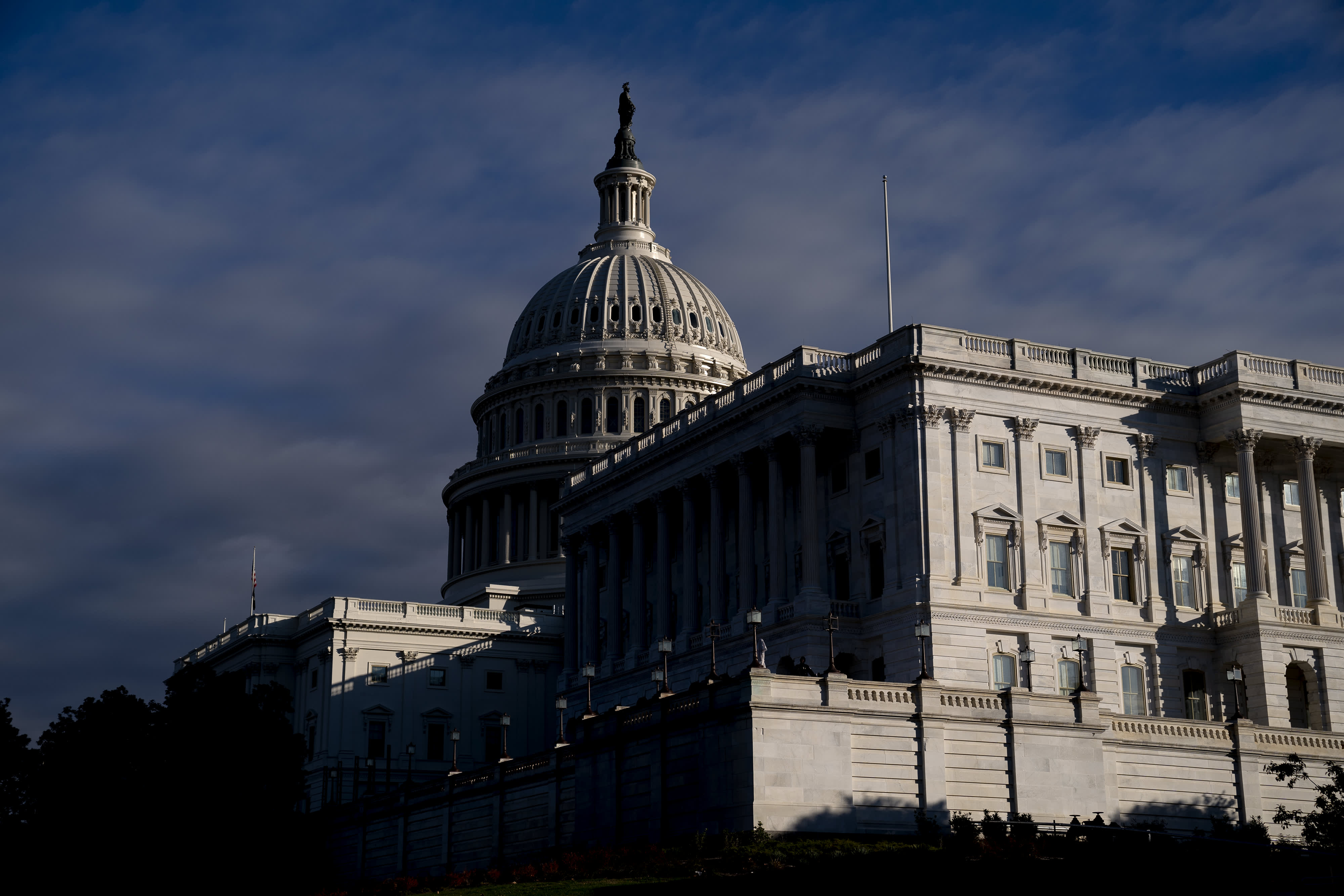
Update: The House passed the social spending and climate bill on Friday morning. A previous version of this story is below.
The House moved toward a vote on President Joe Biden's social safety net and climate plan Friday morning after a key analysis said it would slightly add to budget deficits over a decade.
Following the release of the Congressional Budget Office estimate, House Democrats teed up a final vote on the legislation Friday morning. They intended to pass the bill Thursday night, but delayed the vote early Friday as House Minority Leader Kevin McCarthy gave rambling remarks in which he not only criticized the spending bill but also most aspects of the Democratic-led government in Washington this year. He talked for more than eight hours in a record-long House floor speech.
A handful of centrist House Democrats wanted to see the nonpartisan CBO's projection of how the Build Back Better Act would affect long-term deficits before they voted for the plan.
The $1.7 trillion bill would increase the budget deficit by $367 billion over the years 2022 to 2031, according to the CBO. The topline figure does not include estimates for revenue raised by increased IRS enforcement of tax laws.
The Treasury Department has contended the provision will generate another $400 billion and pay for the plan. The CBO estimated it would lead to only $127 billion more in net revenue, which would leave the bill's spending roughly $250 billion short of being fully offset. That would put it approximately in line with the CBO's estimated deficit impact for the bipartisan infrastructure law Biden signed earlier this week with the support of Republicans and centrist Democrats alike.
The legislation aims to make child care more affordable, extend the enhanced child tax credit for a year, create universal pre-K, speed up the transition to green energy and expand Medicare and Medicaid. At least one part of the House plan — four weeks of paid leave for most Americans — could get cut once the bill goes to the Senate.
Along with the bipartisan infrastructure law signed this week, the package makes up the core of Biden's economic agenda. Ahead of the vote Friday, House Speaker Nancy Pelosi cast the plan as a historic step for households.
"We, this Democratic Congress, are taking our place in the long and honorable heritage of our democracy with legislation that will be the pillar of of health and financial security in America," she said.