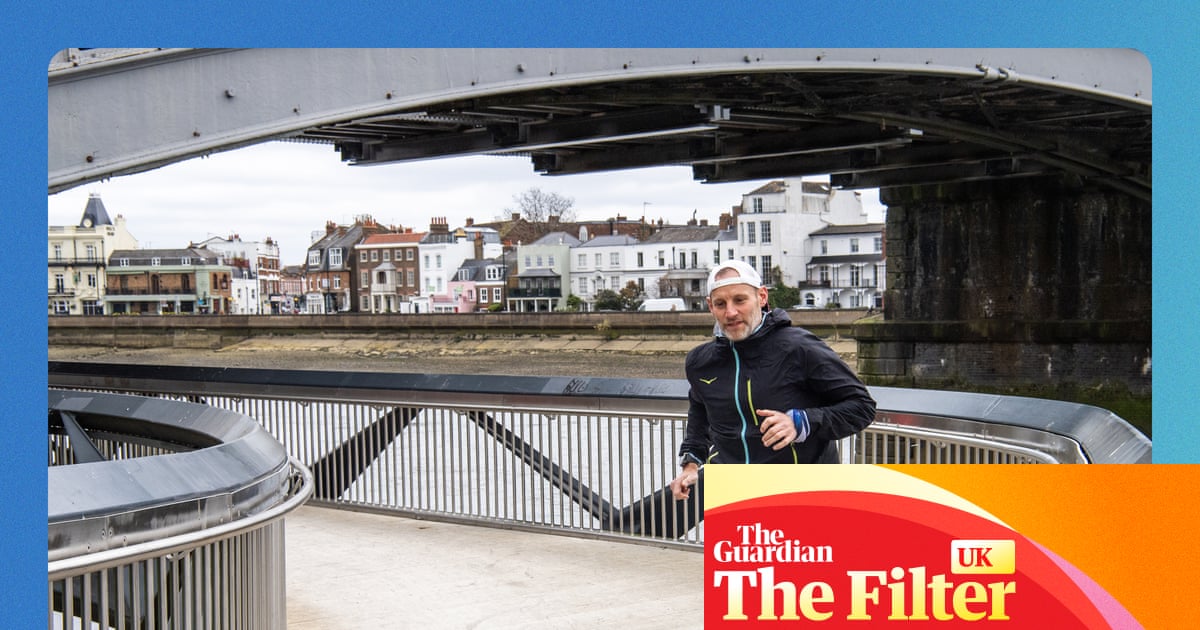
Whether you’re just starting Couch to 5k or well on the way to the 100 Marathon Club, finding running shoes that suit your pace, physique and running style is mission-critical. The right shoes can help you run better, ward off injury and, most importantly, help you to build the consistency that unlocks the biggest fitness and mental health gains.
The Guardian’s journalism is independent. We will earn a commission if you buy something through an affiliate link. Learn more.
The first step out of the door is the hardest, and uncomfortable shoes are just another barrier between you and that sweet endorphin release. Yet with dozens of brands – from Hoka, Adidas and Nike to New Balance, Saucony and On – hundreds of styles, and enough tech jargon to make Susie Dent’s head spin, finding your solemate can be a challenge in itself.
That’s why I’m here to help. I test running shoes professionally, and I’ve laced up hundreds of pairs in the past 18 months, running thousands of miles in pretty much everything from the latest carbon race shoes to cushioned trainers designed for comfort. As a runner closing in on 70 marathons, I can spot the best running shoes for every run and every runner.
At a glance
Best running shoes overall:
Saucony Endorphin Azura
Best value running shoes for speed:
Kiprun Kipride Max
Best value running shoes for comfort:
Kiprun Kipstorm Tempo
Best running shoes for beginners:
New Balance 1080 V15
Best marathon shoe for all-out speed:
Puma Nitro Fast-R Nitro Elite 3
Most versatile running shoes:
Asics Megablast
Why you should trust me
Over the past decade, I’ve tested hundreds of running shoes while on a perpetual personal and professional mission to find the best and weed out the worst. In some cases, I’m on to testing the tenth generation of a particular shoe.
I test running gear to pay the mortgage. So when I’m not training for a race, I’m generally sampling the latest shoes, apparel and other running kit. If I can get somewhere by running, I always prefer to go on foot. I’ve also run close to 70 marathons, including lots of ultras.
How I tested
Our tester ran at least 50km in each pair of shoes, across progression runs and timed events
During the past 18 months, I’ve tested the latest running shoes from all the major brands, as well as smaller brands such as Norda, Hylo, Mount to Coast and Decathlon’s top-value Kiprun.
I ran at least 50km in each shoe, putting them through a series of test runs. That included a progression run where I moved from my easy run pace up to my 5km pace. I used carbon race shoes for timed events where possible, and I often ran solo marathons around London to find out how the shoes would feel when you’re 22 miles deep (the real test).
After all that plodding, I rated each running shoe based on how it lives up to the marketing blurb and whether it’s suitable for the runs and runners it’s aimed at. I looked at fit and comfort, while awarding bonus points to shoes that coped with a wide range of paces and endured big mileage. I love versatile shoes that scream good value.
I’ve selected the standout running shoes across a variety of situations and scenarios. Here are my top picks.
The best running shoes for men and women in 2026
View image in fullscreen Photograph: Jill Mead/The Guardian
Best value running shoes for speed:
Kiprun Kipride Max Kiprun Kipride Max from £119.99 Men’s, £119.99 at Decathlon Women’s, £119.99 at Decathlon What we love
Fantastic comfort, versatility and durability for the price What we don’t love
The grip struggled on some wet surfaces Photograph: Jill Mead/The Guardian Men’s £119.99 at Decathlon Women’s £119.99 at Decathlon Decathlon brand Kiprun is a relative newcomer to the running shoe shelves, but offers some excellent options at affordable prices. The Kipride Max is one of them. Why we love them
I’ve run more than 70km in these trainers, and they’re one of the best pairs of running shoes I’ve tested this year. Straight out of the box, the comfort is excellent. Quality mesh uppers, plush padded tongues and heel collars make for an inviting setup that feels instantly at home on your foot. The midsole deploys a combination of foams and a big rocker for a soft and protective ride – it’s cushy, cradling and soft, but not soggy or laboured. Some cushioned shoes prioritise marshmallowy impact protection over pace, but the Kipride remains pleasantly energetic while smoothing out the road underfoot. That generates some versatility, too. They may not be the first shoes you’d pick to run tempo efforts, but they can handle them if you need them to. They’re also relatively stable and reliable underfoot, though I experienced a little wobble in the softer heel. If you want big cushioned shoes for comfortable daily miles that also bring bounce, energy and fun, the Kipride Max are right up there alongside pricier rivals such as the Nike Vomero 18 and the New Balance 1080 V15. It’s a shame that … the grip isn’t 100% reliable on every wet surface. Suitable for: easy runs and everyday training miles
Weight: 285g (UK M 8)
Size range: 3-8 women’s; 5.5-13.5 men’s
Drop: 6mm Kiprun Kipride Max from £119.99 Men’s, £119.99 at Decathlon Women’s, £119.99 at Decathlon What we love
Fantastic comfort, versatility and durability for the price What we don’t love
The grip struggled on some wet surfaces
Best value running shoes for comfort:
Kiprun Kipstorm Tempo Kiprun Kipstorm Tempo from £99.99 Men’s, £99.99 at Decathlon Women’s, £99.99 at Decathlon What we love
Megablast all-around capability at half the price What we don’t love
Not as propulsive as plated race shoes Photograph: Jill Mead/The Guardian Men’s £99.99 at Decathlon Women’s £99.99 at Decathlon Kiprun has worked magic here, packing bucketloads of Asics Megablast-rivalling performance into an excellent all rounder for less than £100. Why we love them
The Tempo nails comfort, with a unique neoprene-esque stitched-in booty tongue that wraps and locks in your feet without making them feel caged. I used them for a 90-minute run, and they felt good from the first minute to the last. On the move, you get bouncy, high-energy feedback that’s punchy and fun. But there’s a firmness – a snappy edge – that stops the midsole from being overly soft or sinky. The landings offer plenty of protective cushion, but the midsole kicks back quickly with a fast, high-energy return, good responsiveness and an effective rocker. It’s a winning package that bridges the gap between a comfortable daily trainer and a race-day shoe. They’re not as propulsive as a plated racer, but are truly excellent for long tempo and marathon-pace miles. And they’re incredible value – arguably the best road running shoes you’ll find for less than £100. It’s a shame that … they’re not as propulsive as plated race shoes. Suitable for: all training runs
Weight: 232g (UK M 8.5)
Size range: 3-8 women’s, 5.5-12.5 men’s
Drop: 8mm Kiprun Kipstorm Tempo from £99.99 Men’s, £99.99 at Decathlon Women’s, £99.99 at Decathlon What we love
Megablast all-around capability at half the price What we don’t love
Not as propulsive as plated race shoes
Most versatile running shoes:
Asics Megablast Asics Megablast, unisex from £209 £210 at Asics £209 at Amazon What we love
One shot that handles almost every type of run What we don’t love
They’re eye-wateringly expensive Photograph: Jill Mead/The Guardian Unisex £210 at Asics £209 at Amazon From big mileage to faster efforts, the Megablast is built to handle everything you throw at it. They’re some of the best do-it-all shoes you can buy. Why we love them
If you can get past the eyewatering price, the non-plated Megablast is a great pick for speed sessions, long tempo efforts, cruising long Sunday runs and easy recovery efforts. There’s honestly not much they can’t handle, though they definitely move best when you’re running with intent, locking into your most efficient running form. The secret to the Megablast’s versatility lies in the mix of race-ready, lightweight uppers and a giant stack of FF Turbo Squared midsole cushion. They’re light and punchy enough to let you pick up the pace, but cushioned and protective when you rock back to easy. The midsole has a bouncy energy, mixed with a rockered roll from heel to toe that ensures easy and smooth transitions. They also load a good level of assistive spring into each step. I found the shoes a bit oversized for intervals and the fastest sessions, but they’re excellent, energetic asphalt tamers that are ideal for clipping along in comfort for miles. I tested these with a solo marathon, and the roomy toe box, airy uppers and padded heel collars took care of my feet for the four hours I was on the move. The price is high, but if you want one pair of shoes for all of your full or half-marathon training, these have you covered. It’s a shame that … they’re so very expensive. Suitable for: marathon training
Weight: 239g (UK M 8.5)
Size range: 2.5-13 unisex
Drop: 8mm Asics Megablast, unisex from £209 £210 at Asics £209 at Amazon What we love
One shot that handles almost every type of run What we don’t love
They’re eye-wateringly expensive
The best of the rest
View image in fullscreen Photograph: Jill Mead/The Guardian
For more, read our guide to the top trail running essentials (and what to skip)
What you need to know
Your running shoes will be good to go for as long as you feel they are
How do I find the right running shoe fit?
If you slip on a running shoe and it immediately feels like it belongs – what we running-shoe geeks call “instant step-in comfort” – that’s a great first sign.
Look for about a thumb’s-width length at the end of the toe box, good clearance across the top of the toes and a bit of room for your toes to splay. Pay close attention to the areas next to your big- and pinky-toe knuckles – you should feel hugged but not restricted.
The heel collars shouldn’t slip when you walk or run, and there should be no rubbing from the heels under the achilles. It can be useful to go up half a size or even one full size on your regular shoes to allow for any foot swelling that can happen on longer runs. Some brands also do wide-fit options. But if it starts to feel like you’re standing in a canoe, the shoe’s probably too big.
Fancy something a little different? Read our guide to the best barefoot shoes for hiking and running
How long do running shoes last?
The collective wisdom suggests your running shoes should be replaced every 300-500 miles. But this oft-cited rule of thumb appears to come from one 1985 study that found the shock absorption capacity for some shoes dropped to less than 60% between 250 and 500 miles. And things have changed a lot since 1985.
Modern running shoe foams have been completely transformed. And our expectations of what a running shoe should deliver go far beyond taking the edge off the road. We now want impact protection and boosted energy and efficiency. Equally, however, just because a pair of shoes isn’t providing peak performance, that doesn’t mean it’s dead.
If impact protection is your top priority – and you’ve run past 300 miles without any major issues – there’s arguably no compelling reason to replace your shoes.
We runners like hard and fast rules, but the truth is your shoes are good to go for as long as you feel they are. Do your wallet and the planet a favour by tuning into how they feel when you move, not how many miles they’ve clocked.
How should you clean your running shoes?
It’s very tempting to stick your running shoes in a shoe bag on a 30C wash, but if you want them to last – and perform – as long as possible, it’s best to keep them out of the washing machine and the tumble dryer.
Instead, use a soft-bristle brush (I use a toothbrush), damp cloth, some mild detergent and a bit of elbow grease to remove dust and mud. Remember to go easy on the midsole: superfoams don’t like heavy scrubbing. Remove laces and insoles, and stuff wet shoes with newspaper or paper towel to dry out.
Avoid placing them directly on radiators, as prolonged exposure to high heat can harden and damage the midsole foam. I also recommend cedar wood dryer bags to help absorb moisture and keep your shoes smelling fresh(er).
What should you do with old running shoes?
Before you bin high-performance footwear, ask yourself if it could do another job elsewhere in your shoe rotation. That super trainer performance might have petered out, but provided it’s not giving you any trouble, they could have a second life as easy day running shoes.
Once they’ve definitely plodded their last, you could consider a change of use, like lacing them up for easy strolls, walking the dog or gardening, or my favourite: taking the bins out.
You could also send them to JogOn, a scheme that gives donated running shoes a new lease of life by getting them to people who need them. Runner’s Need also has its Recycle My Gear scheme that salvages still wearable and repairable kit.
It’s also worth checking if the shoe brand offers its own “return for recycling” scheme. It’s not easy to recycle running shoes due to the glue and the number of different materials used, but old shoes are often ground down and transformed into things like the base surface for astroturf football pitches.
For more:
The best running watches to hit your fitness goals
The best treadmills for your home
The best moisture-wicking underwear and base layers
Kieran Alger is a running, fitness and health journalist who splits his time between testing, training and tapping out reviews. You’ll regularly find him lacing up brand new running shoes, racking up miles or chasing down lofty challenges while wearing three watches and a whole host of kit that needs putting through its paces