Your support helps us to tell the story Read more Support Now From reproductive rights to climate change to Big Tech, The Independent is on the ground when the story is developing. Whether it's investigating the financials of Elon Musk's pro-Trump PAC or producing our latest documentary, 'The A Word', which shines a light on the American women fighting for reproductive rights, we know how important it is to parse out the facts from the messaging. At such a critical moment in US history, we need reporters on the ground. Your donation allows us to keep sending journalists to speak to both sides of the story. The Independent is trusted by Americans across the entire political spectrum. And unlike many other quality news outlets, we choose not to lock Americans out of our reporting and analysis with paywalls. We believe quality journalism should be available to everyone, paid for by those who can afford it. Your support makes all the difference. Read more
Nearly half of Gen Z is ready to unplug and wish they could go back and live in a time without smartphones and social media, according to a new poll.
A new NBC News Decision Desk Poll found that almost half — 47 percent — of adults ages 18-29 would live in the past if they could choose to do so, with the 1980s, 1990s, and early 2000s especially popular.
About a third of that group said they'd live in a time period that was less than 50 years in the past, while approximately 14 percent said they'd go more than 50 years back.
Only 38 percent of the Gen Z respondents said they would live in the present, and only 10 percent said they'd go less than 50 years into the future.
Though the results remained largely congruent across gender and partisan lines, there were some outliers. Black adults, for example, were less likely to say they'd want to live in the past — with only 33 percent saying they'd want to live there — verses the 52 percent of young white adults or the 47 percent of young Hispanic adults.
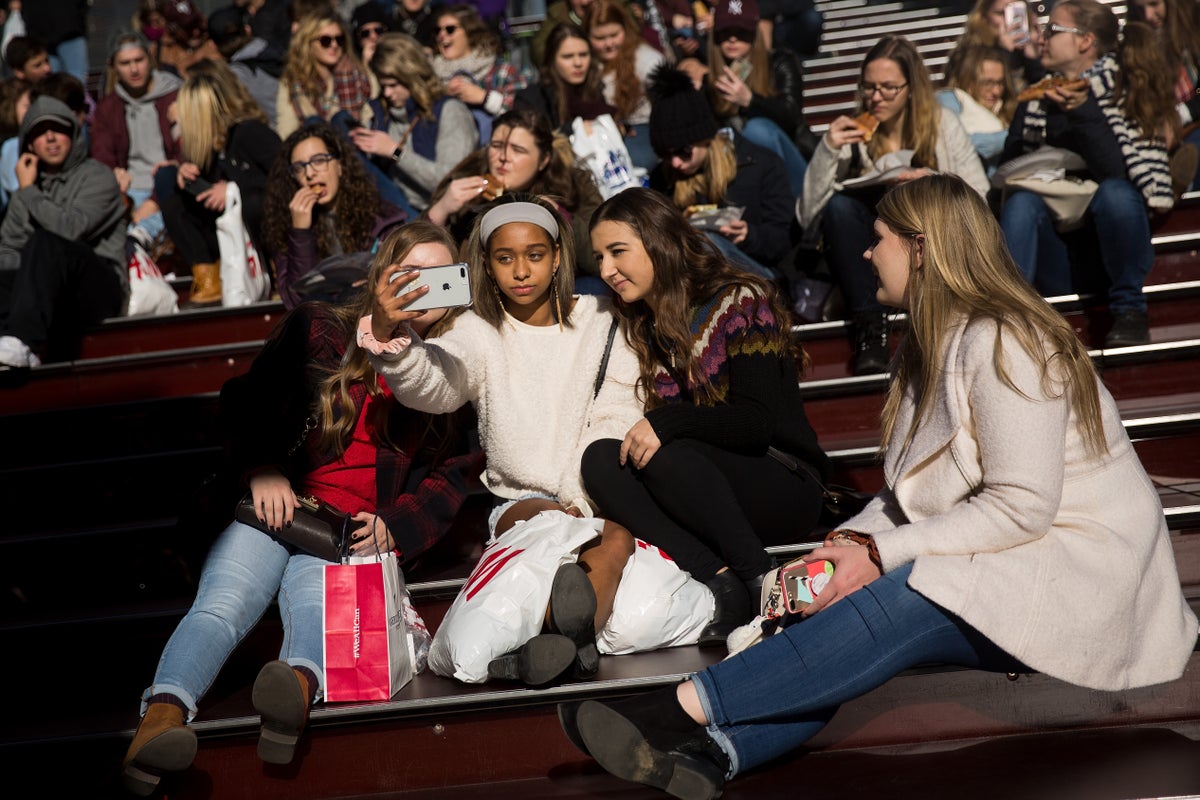
open image in gallery A new poll has found that nearly half of Gen Z respondents said they would prefer to live in a time period before social media and smartphones existed ( Getty Images )
The poll also found that a massive 80 percent of Gen Z adults believe the U.S. is on the wrong track.
According to NBC News, the respondents who spoke to pollsters and reporters said they wanted to live in the past due to a growing discomfort with technology and constant connection to the internet.
It also reflects a broader cultural trend among young adults who have begun taking inspiration from the decades before smartphones and social media became ubiquitous in our society.
One respondent, 20-year-old Ben Isaacs, told NBC News that he'd specifically want to go back to the 1990s, even though he wasn't actually alive to live through it. He said he was drawn to an era with “a lack of phones, more personal experience, but also still some of the ease of modern technology.”
He said that the presence of smartphones “draws away from people’s ability to just look at each other, have a conversation, and exist outside of the realm of the phone and what happens on your phone.”
Skyler Barnett, 28 — putting him at the upper edge of the Gen Z/Millennial divide — told the broadcaster that constant connection to the internet actually makes it more difficult for people to be connected to the world.
“There’s so, so much internet nowadays and so much just bullcrap that goes along with, you know, internet,” he told NBC News. “And these kids today, they got so much stuff going through their heads that’s just not relevant to the outside world.”
open image in gallery Some respondents of the NBC poll said they wanted to live in the past due to a growing discomfort with technology and constant connection to the internet ( Getty Images )
Psychologist Clay Routledge, who has researched nostalgia, told the broadcaster that periods of division and uncertainty can cause some to seek comfort and security in the past.
“When there’s a lot of disruptions — political divisiveness, or, you know, worries about AI or other kinds of societal, technological or social, cultural changes — people tend to become more nostalgic for the past to help them with the things that they’re worried about,” he said.
He said the past was a more popular refuge than the future because the past is static.
“If there’s this fear that [the world is] going in a direction that’s unhealthy or that they can’t control or they don’t understand, then you could imagine it being like, ‘Well, instead of jumping in that hypothetical future … I’d rather take the time machine to the time before it got to that place,” he said. “It’s almost a little bit like a reboot.”