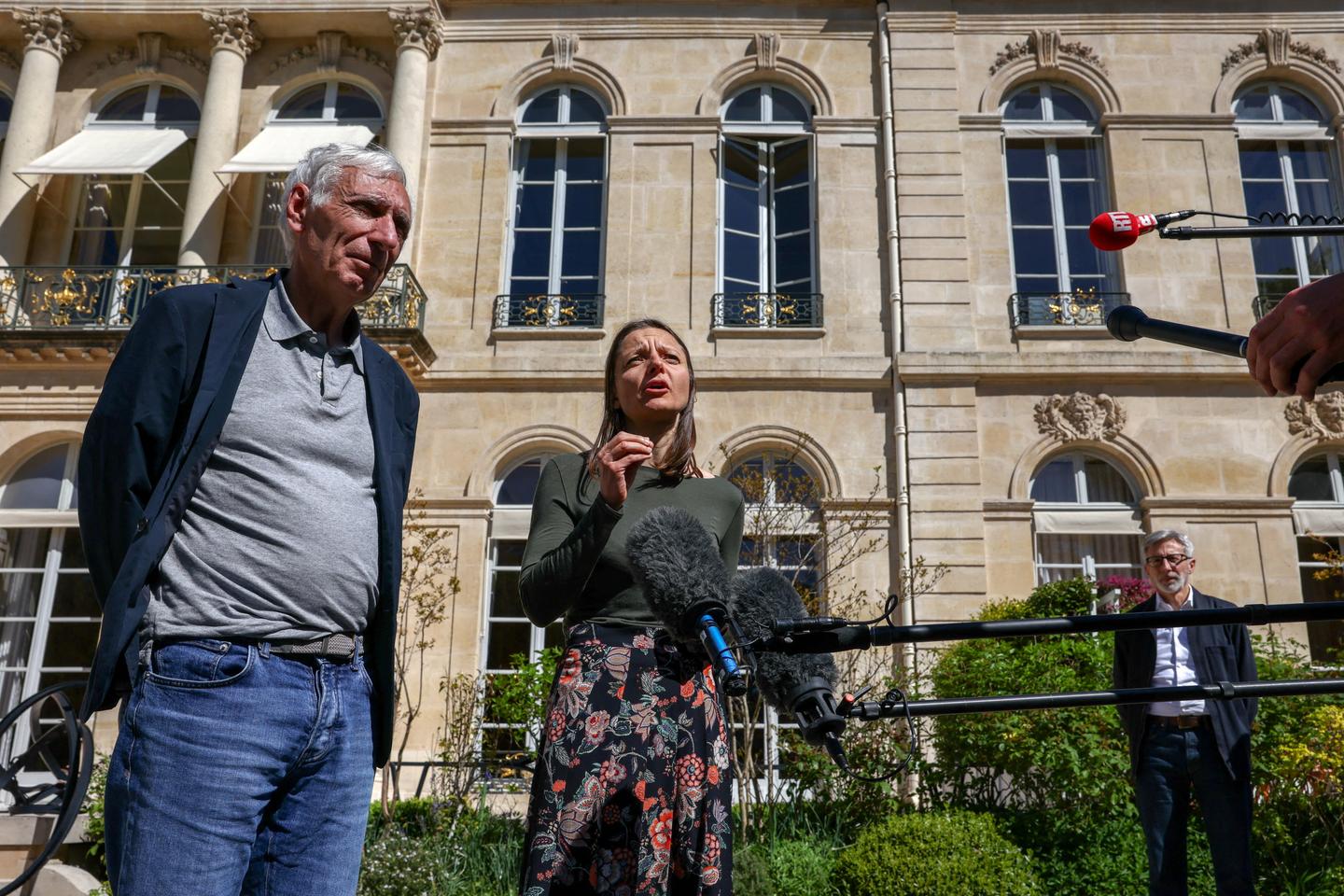
Jacques Paris, right, and Cecile Kohler, French prisoners recently freed from Iran, take part in a ceremony at France's parliament to remove portraits of them that were affixed to the gates of the legislature to urge their release, in Paris, April 14, 2026. CHRISTOPHE ENA / AP
"Long live life!" In the gardens of the Elysée Palace on April 8, Jacques Paris celebrated, alongside Cécile Kohler, the end of nearly four years in detention in Iran. The phrase expressed their relief. But it said nothing about what came next.
"You arrive, you're taken care of. And then, you're left to your own devices." Arrested in 2025 while on a cycling trip in Iran, Lennart Monterlos, 19, described a brutal return after four months in detention. He spent one night at the Bégin military hospital in Saint-Mandé southeast of Paris, then chose to go home the next day to Besançon in eastern France. Psychological support was offered, but spaced out over time. "Coming back was almost as hard as being detained. I felt isolated, with no desire to do anything." Six months later, he slowly began returning to normal life – sports, seeing friends – but without regaining his bearings: "I feel out of sync with everyone."
Others also struggled with this disconnect. Detained from June to November 2025 in Venezuela, yoga teacher Camilo Castro, 41, was greeted on his return by the press and French Foreign Minister Jean-Noël Barrot at Orly Airport. But there was no hospitalization. "They gave him sleeping pills and a number to call," recalled his stepfather, Yves Gilbert. After more than 15 years in South America, he had to rebuild everything. "He's starting from zero, not knowing what he wants to do, carrying the trauma."
You have 79.58% of this article left to read. The rest is for subscribers only.