"Human trafficking." In France, in 2026, in plain sight, right in the heart of cities. And above all, in the criminal sense of the term. On Wednesday, April 22, the food delivery platforms Uber Eats and Deliveroo were targeted by a complaint for human trafficking filed with the Paris prosecutor's office. This is a global first. Never before, despite the many legal actions brought against these multinational delivery companies around the world, has such a charge been brought before a court.
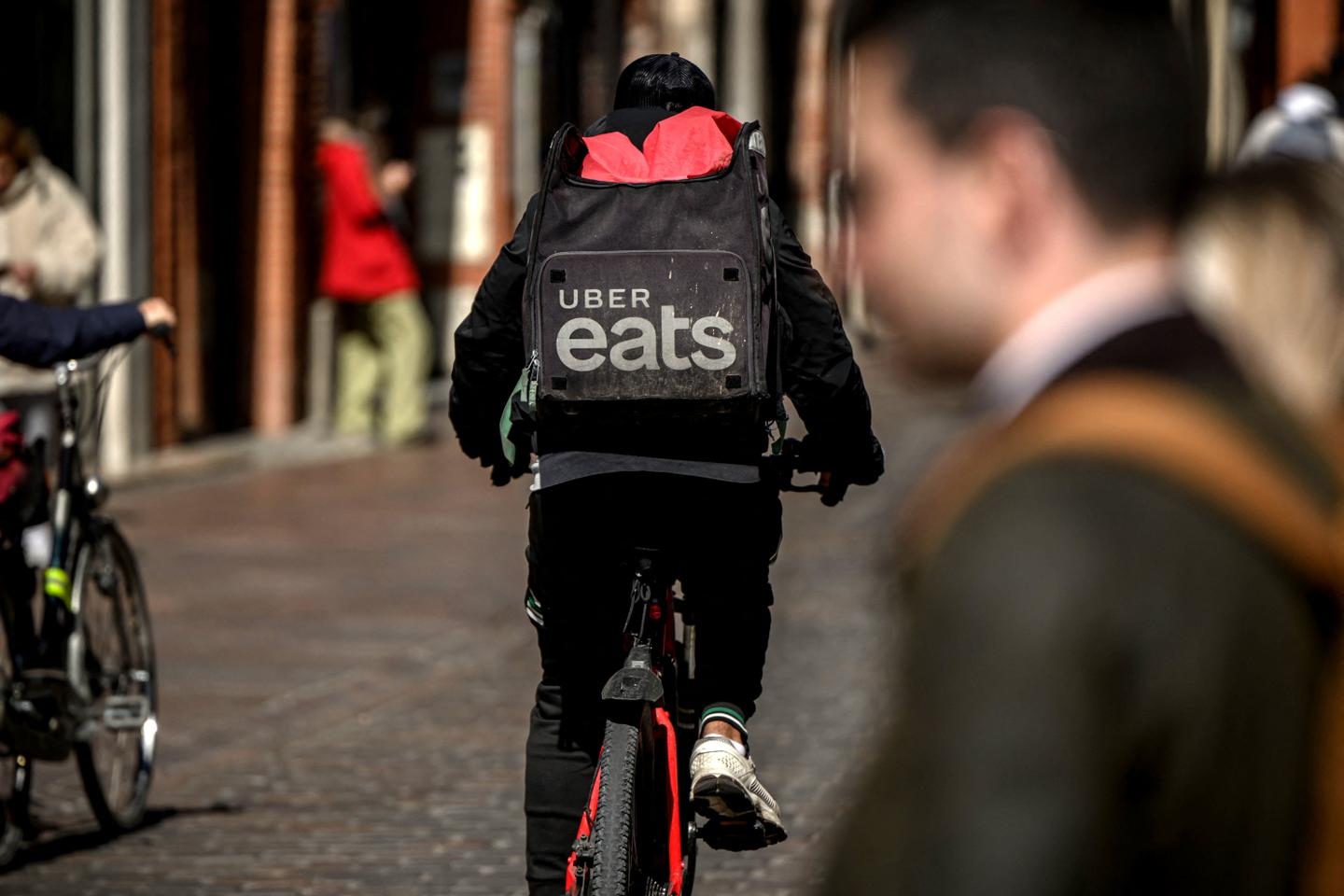
An Uber Eats delivery worker in Toulouse, March 18, 2025. ED JONES/AFP
Four organizations representing delivery workers are behind the complaint first reported by the newspaper Le Parisien on Wednesday and seen by Le Monde: Maison des Livreurs, CoopCycle, the Advocacy and Support Group for Delivery Workers, and the Collective for the Integration and Empowerment of Delivery Workers.
The situation of these 21st-century proletarians, who emerged around 15 years ago and whose numbers have surged since the Covid-19 pandemic, is outrageous. A landmark study by Doctors of the World, conducted with more than 1,000 delivery workers and published on March 30, objectively documented their conditions. Delivery workers reported an average workweek of 63 hours. Eighty-one percent worked six to seven days a week. They earned an average gross hourly wage of €5.83, or €1,480 gross per month. Two-thirds were undocumented. One-third had no health coverage. None, it goes without saying, were employees.
You have 53.85% of this article left to read. The rest is for subscribers only.