Your support helps us to tell the story Read more Support Now From reproductive rights to climate change to Big Tech, The Independent is on the ground when the story is developing. Whether it's investigating the financials of Elon Musk's pro-Trump PAC or producing our latest documentary, 'The A Word', which shines a light on the American women fighting for reproductive rights, we know how important it is to parse out the facts from the messaging. At such a critical moment in US history, we need reporters on the ground. Your donation allows us to keep sending journalists to speak to both sides of the story. The Independent is trusted by Americans across the entire political spectrum. And unlike many other quality news outlets, we choose not to lock Americans out of our reporting and analysis with paywalls. We believe quality journalism should be available to everyone, paid for by those who can afford it. Your support makes all the difference. Read more
The former Foreign Office chief only faced the “everyday pressure of Government” during the vetting process for Lord Peter Mandelson, Sir Keir Starmer has said standing by his decision to sack him.
The prime minister insisted that he would not have made Lord Mandelson his diplomat to Washington had Sir Olly Robbins told him the outcome of the so-called developed vetting process.
Earlier this week, Sir Olly said there was an “atmosphere of pressure” and “constant chasing” from Downing Street while the checks were taking place.
But during Prime Minister’s Questions this week, Sir Keir said that “no pressure existed whatsoever in relation to this case”.
Speaking to The Sunday Times, he made a distinction between “different types of pressure”.
“There’s pressure – ‘Can we get this done quickly?’ – which is not an unusual pressure. That is the everyday pressure of Government,” he said.
He said a pressure “essentially, to disregard the security vetting element and give clearance” would be something different, and that Sir Olly “was really clear in his mind that wasn’t pressure that was put on him”.
open image in gallery Former Foreign Office chief Sir Olly Robbins was appearing before a Westminster committee on Tuesday (House of Commons/UK Parliament/PA) ( PA Wire )
Lord Mandelson was sacked months after his appointment over his links to Jeffrey Epstein and is now facing a police inquiry over claims he leaked sensitive government documents to the paedophile financier when he was business secretary.
The prime minister has told MPs that he and his ministers only found out that UK Security Vetting had advised Lord Mandelson should be denied clearance last Tuesday evening.
But Sir Keir faces questions over how he could have failed to have known about the issue when his communications chief was told directly and the story became headline news.
MPs on the Foreign Affairs Committee said UK Security Vetting (UKSV), the agency responsible for checks on candidates for sensitive posts, had ticked two red boxes on Lord Mandelson’s form – meaning they had “high concern” and recommended “clearance denied or withdrawn”.
Asked if he regretted firing Sir Olly so quickly after information came to light about the vetting, Sir Keir said: “When there’s a double red flag not to give clearance and (showing) high concern, then I’m sorry. I’m sorry.
“But I do not accept the argument that that is something which should not be told to the prime minister.”
He said it was a “fundamental matter” to have told him about the vetting, not just at the time of the appointment, but also later on.
“I was going out saying that (Mandelson’s) clearance has been given. I’m afraid not bringing that to my attention, it’s not a small matter. It’s a fundamental matter.”
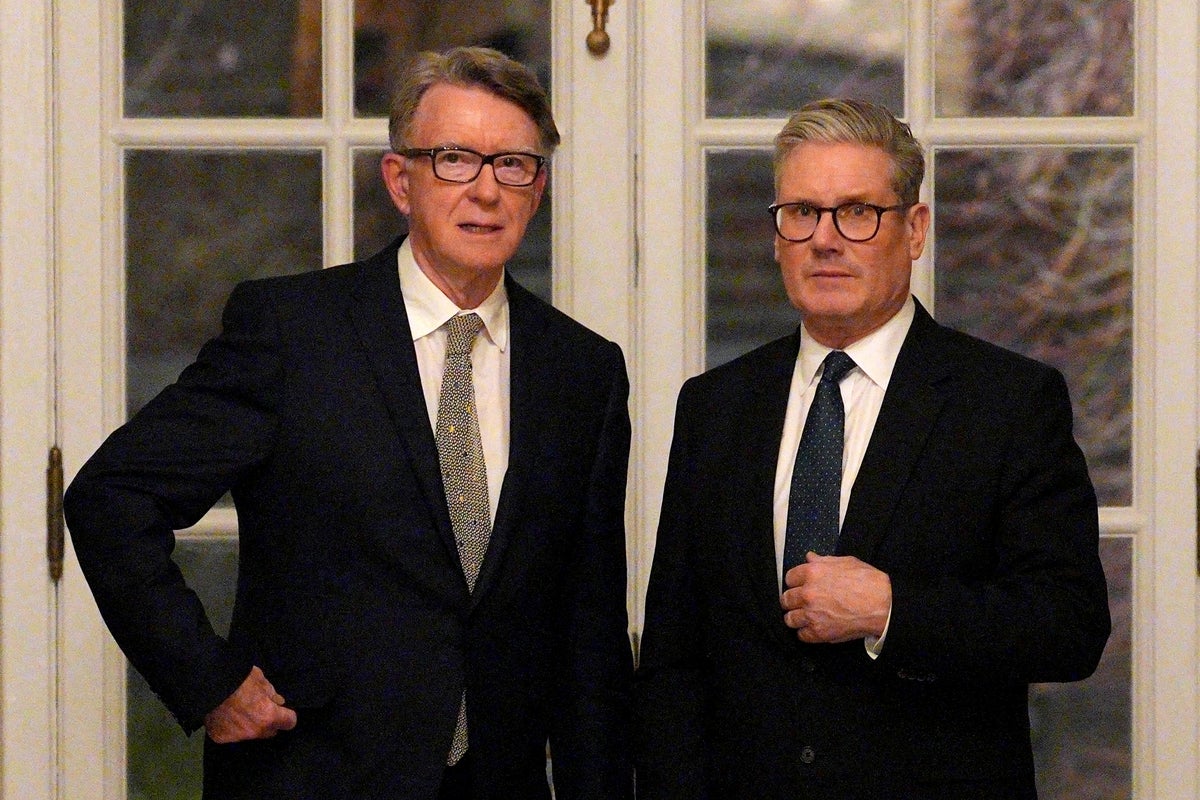
open image in gallery Sir Keir Starmer has insisted he would not have gone ahead with having Lord Peter Mandelson as his top diplomat to Washington had he known about the vetting (Carl Court/PA) ( PA Wire )
However, Sir Keir rejected a suggestion he could have been more curious about the clearance.
“When I’m told there’s security clearance, should I go back and quiz officials and say: ‘Are you telling me the truth?’,” he said.
Questions over the vetting scandal will carry on into next week when Sir Keir’s former chief of staff Morgan McSweeney is due to appear before committee of MPs.
Foreign Office official Ian Collard, who Sir Olly said briefed him on the vetting findings that deemed Lord Mandelson a borderline case and leaned towards recommending that clearance be denied, will give written evidence.
He was asked to appear in person before the committee, but its chair Dame Emily Thornberry said on Saturday that the Foreign Secretary had declined this.
She has set out questions for Mr Collard to answer ahead of Tuesday’s session, including whether he felt under pressure to deliver Lord Mandelson’s clearance and to detail his recollection of the meeting he had with Sir Olly about the vetting.
Sir Keir has faced calls to resign amid the fallout from the Lord Peter Mandelson vetting scandal and Cabinet divisions are said to have emerged over his handling of the process, including his decision to sack Sir Olly.