Your support helps us to tell the story Read more Support Now From reproductive rights to climate change to Big Tech, The Independent is on the ground when the story is developing. Whether it's investigating the financials of Elon Musk's pro-Trump PAC or producing our latest documentary, 'The A Word', which shines a light on the American women fighting for reproductive rights, we know how important it is to parse out the facts from the messaging. At such a critical moment in US history, we need reporters on the ground. Your donation allows us to keep sending journalists to speak to both sides of the story. The Independent is trusted by Americans across the entire political spectrum. And unlike many other quality news outlets, we choose not to lock Americans out of our reporting and analysis with paywalls. We believe quality journalism should be available to everyone, paid for by those who can afford it. Your support makes all the difference. Read more
Britain is failing in its efforts to fight a hybrid war with Russia and is unprepared for a wider-scale global conflict, a top former government aide and senior analysts have warned.
As war in Iran and the closure of the Strait of Hormuz see the world reeling from higher oil, petrol, food and fertiliser prices, and conflict grinds on in Ukraine, fundamental planning to protect the UK is not taking place.
Fiona Hill, former director for European and Russian affairs in the National Security Council in Donald Trump's first administration, describes the UK’s contingencies for dealing with the present and future disruptions as “not fit for purpose”.
As one of the co-authors of the UK’s 2025 Strategic Defence Review, Dr Hill will this week deliver a speech at the Imperial War Museum intended to galvanise Britain's response to threats against its infrastructure.
In a stark interview with The Independent, she warned: “In the UK, our systems are not designed to cope with major disruptions. It is up to the leadership to come up with a plan because, at the moment, what is there is not fit for purpose.
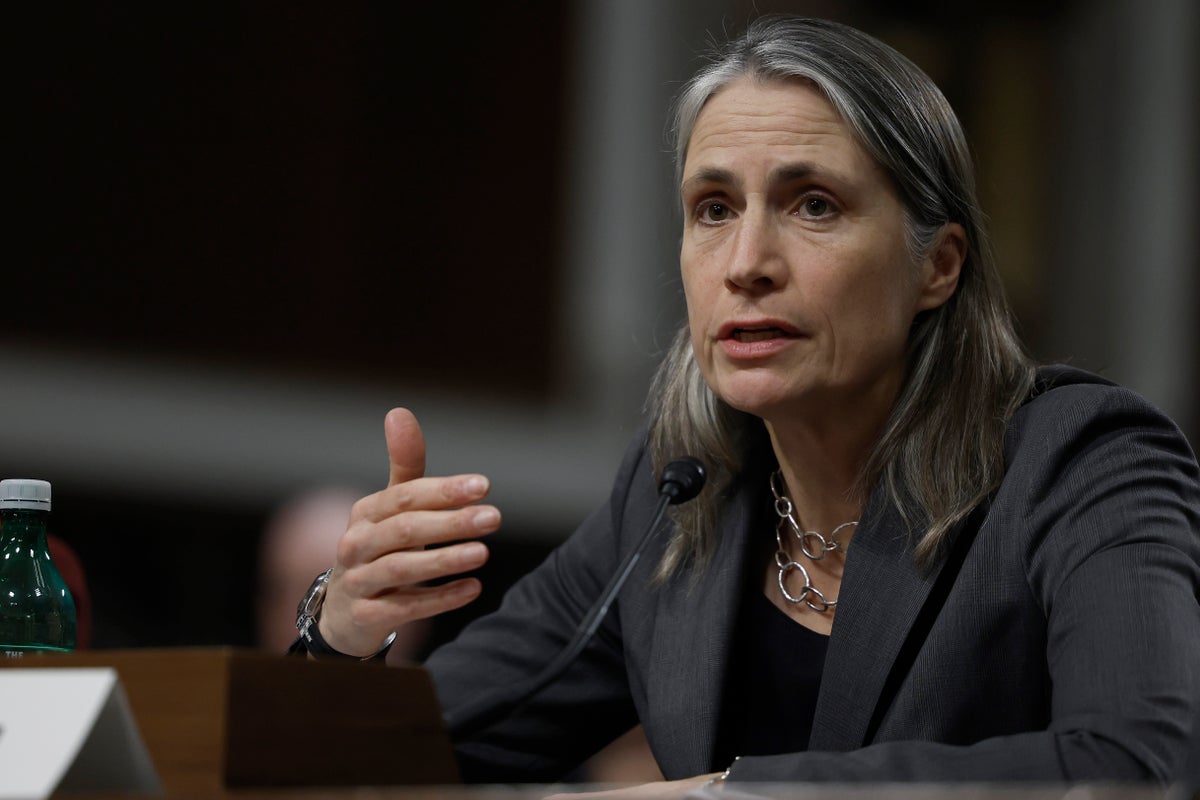
open image in gallery Fiona Hill, former director for European and Russian affairs in the national security council in Donald Trump's first administration, describes the UK’s contingencies for dealing with the present and future disruptions as “not fit for purpose” ( Getty Images )
“We have seen the effects of choke points in the Gulf, disruptions to transport. The NHS cannot cope with mass casualties, and we need to build up food supplies and systems to cope with disruption to imports.
“We don’t have archives of maps digitised and no analogue systems to use if digital systems collapse. This is an urgent national debate that needs to happen now.”
With no single minister responsible for national resilience in times of crisis, Dr Hill, chancellor of Durham University, says there is no sign the government was taking action.
Her intervention comes after her co-author of the Strategic Defence Review (SDR), Lord Robertson, a former secretary general of Nato, accused the government of "corrosive complacency” over what he said was a failure to implement the review's 62 recommendations.
His criticisms largely focused on the political conundrum faced by the government, which is the trade-off between spending on areas such as welfare versus the need to expand military capabilities.
Britain’s security officials have been increasingly warning that the country has been in a form of modern war for months. “We are now operating in a space between peace and war,” the head of MI6, Blaise Metreweli, said last year.
Russia, she said - as have the heads of the British army, navy and air force - is the principal threat.
But Vladimir Putin’s hybrid war is not confined to military targets alone, with supply lines, power grids, cyber attacks and even food all vulnerable.
open image in gallery Russian ship Yantar was recently spotted in UK waters (Royal Navy/PA) ( UK MOD/Crown copyright )
“There are so many soft targets around the UK it’s impossible to count them,” says Dr Hill, highlighting the fact that the nation had no effective system even to monitor small drones that could be weaponised to “fly through the window of the tallest buildings”.
The UK is seen as largely defenceless against long-range missile attacks - or drones - and vulnerable to attacks against its military and civilian undersea communications cables, gas pipelines, and electrical connections to Europe.
In the past two years, there has been a 30 per cent surge in surveillance of some of Britain’s most sensitive undersea strategic communications and supply lines by Russia.
“The preparation moment of sabotage takes years and years and that is what we're seeing,” warns Dr Sidarth Kaushal, senior research fellow in sea power at the Royal United Services Institute.
The Royal Navy and Nato allies recently exposed the work of the Russian Akula attack submarine and two undersea spy boats surveying British cables and other critical infrastructure.
These operations have been going on for decades, led by Russia’s Main Directorate for Deep Sea Research, known as GUGI, and Nato has no dedicated equivalent sea spying system to match.
In the UK, other vulnerabilities include dangers such as the nation’s gas supplies from Norway being cut in times of war. Both Dr Hill and Dr Kaushal highlight attacks on the Langeled and Vesterled pipelines, which supply 60-80 per cent of the country’s gas.
open image in gallery British submarine hunter HMS Portland (top) tracking Akula-class attack submarine Vepr in the North Sea, north west of Bergen, Norway (Ministry of Defence Crown copyright/PA) ( PA Media )
Combined with the dangers posed by tens of thousands of cyber attacks on the UK’s critical infrastructure every day, they warned the nation had little capacity to cope.
The SDR, published last June, said the UK should: “Build national resilience to threats below and above the threshold of an armed attack through a concerted, collective effort involving—among others—industry, the finance sector, civil society, academia, education, and communities.”
Although some private companies build resilience into their systems, there is no national, much less compulsory, programme to survive a disaster or an attack of the kind prepared for by Norway, Sweden and Finland, Dr Hill warns.
She says the UK should devolve authority to local government to build its capacity to deal with disasters that could otherwise overwhelm the country. Ukraine has been a model for its ability to respond to a massive invasion.
Every city’s mayor is responsible for coordinating emergency services. Every provincial governor is responsible for the wider management and resourcing of civilian survival in the face of relentless attacks by Russia and works closely with the military.
In Kharkiv, mayor Ihor Terekov showed The Independent a secret bunker where all civilian emergency responses from energy to fire services worked together alongside military officers running early warning systems so that a response could be prepared when drones and missiles were in the air – before they even landed.
No such system exists in the UK.
open image in gallery Civilians walk by Ukraine residents who use an underground metro station as bomb shelter in Kyiv in March 2022 ( STF/AFP/Getty )
“When you factor in the global external events and the reasonable risk of kinetic war fighting in mainland Europe - if Russia decides to go all in - it becomes significantly challenging for the UK,” adds Stephen Arundell, Vice Chair of the Emergency Planning Society, the professional body for experts in the field.
“Because we've frankly not been investing in resilient matters because we've had a very long, sustained period of peace.”
The UK defence review called for a “whole of society” response to the hybrid and future threats and attacks that the UK faces. Sir Keir Starmer has endorsed the idea and called for more work to be done in the field.
But the experts all agree that the UK is lagging far behind its European allies, and politicians are failing to make the case for more spending to train and equip local authorities and civil defence units – as well as shying away from legislation that will force the private sector to step up its own defence.
In response to the issues raised, the Ministry of Defence said in a statement: “We have the resources we need to keep the United Kingdom safe from attacks, whether it's on our soil or from abroad. The UK stands ready 24/7 to defend itself, and as a founding member of Nato, we benefit from the alliance’s collective defence capabilities, including its integrated air and missile defence systems.
“This government has made air and missile defence a priority after years of underfunding. That is why last June, following the Strategic Defence Review, we announced up to £1 billion in new funding to strengthen our defences and keep the UK secure. This investment also boosts the UK’s contribution to Nato, ensuring we play our part in protecting our allies and ourselves.”