Your support helps us to tell the story Read more Support Now From reproductive rights to climate change to Big Tech, The Independent is on the ground when the story is developing. Whether it's investigating the financials of Elon Musk's pro-Trump PAC or producing our latest documentary, 'The A Word', which shines a light on the American women fighting for reproductive rights, we know how important it is to parse out the facts from the messaging. At such a critical moment in US history, we need reporters on the ground. Your donation allows us to keep sending journalists to speak to both sides of the story. The Independent is trusted by Americans across the entire political spectrum. And unlike many other quality news outlets, we choose not to lock Americans out of our reporting and analysis with paywalls. We believe quality journalism should be available to everyone, paid for by those who can afford it. Your support makes all the difference. Read more
Oil prices have surged to a near three-week high, with benchmark Brent crude climbing 2 per cent to just under $108 a barrel in early Monday trading, as hopes for peace talks between Iran and the United States were dashed.
This rise, returning prices to levels seen before initial discussions began in early April, follows President Donald Trump's decision to cancel a negotiating team's trip to Pakistan, citing a lack of progress with Iran.
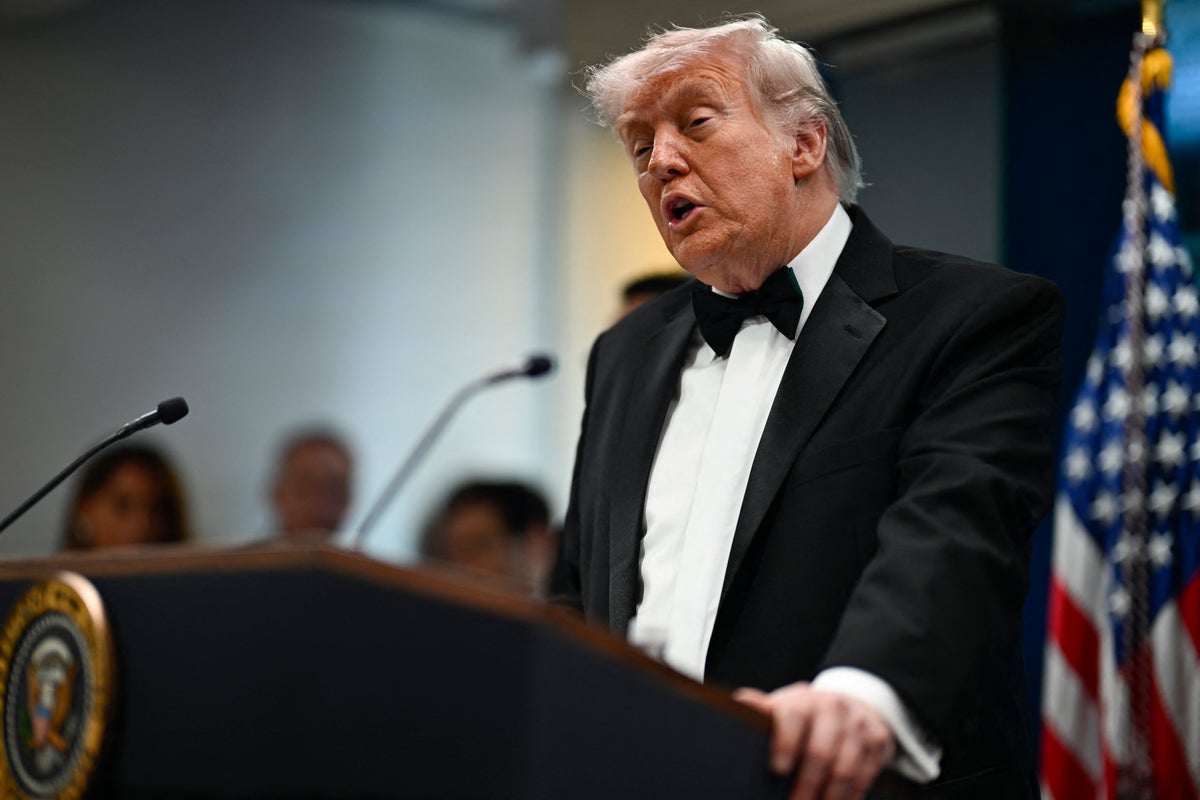
Speaking to Fox News on Sunday, Mr Trump said: “If they want, we can talk but we’re not sending people.”
He added: “You know, there is a telephone. We have nice, secure lines.”
The development comes despite Mr Trump last week indefinitely extending a ceasefire, agreed on 7 April, which largely halted hostilities that began with joint US and Israeli strikes on 28 February.
However, a lasting resolution remains elusive, and the critical Strait of Hormuz, a conduit for a fifth of global oil supplies, continues to be effectively blocked.
The Epaminondas ship is seen during seizure by the Islamic Revolutionary Guard Corps (IRGC) in the Strait of Hormuz ( via REUTERS )
Iranian Foreign Minister Abbas Araqchi departed Islamabad after speaking only to Pakistani officials, but has since returned to Pakistan despite the absence of US counterparts.
Oil prices fell below $87 a barrel in mid-April when both sides said the waterway was back open for commercial tankers, but the Strait was soon impassable once more as talks faltered, sending crude soaring back up.
Susannah Streeter, chief investment strategist at Wealth Club, said: “The president said negotiators would be wasting their time heading to Pakistan and the lack of progress has hit sentiment at the start of the week.
“But some hopes of a resolution are being kept alive, with reports that Iran has put another proposal on the table which aimed at de-escalating the conflict and potentially seeing the key Strait of Hormuz reopen.
“Details are scant about the offer and patience on both sides is clearly frayed.”
The FTSE 100 Index was 11.64 points lower at 10367.44 in early trade.