Your support helps us to tell the story Read more Support Now From reproductive rights to climate change to Big Tech, The Independent is on the ground when the story is developing. Whether it's investigating the financials of Elon Musk's pro-Trump PAC or producing our latest documentary, 'The A Word', which shines a light on the American women fighting for reproductive rights, we know how important it is to parse out the facts from the messaging. At such a critical moment in US history, we need reporters on the ground. Your donation allows us to keep sending journalists to speak to both sides of the story. The Independent is trusted by Americans across the entire political spectrum. And unlike many other quality news outlets, we choose not to lock Americans out of our reporting and analysis with paywalls. We believe quality journalism should be available to everyone, paid for by those who can afford it. Your support makes all the difference. Read more
India and New Zealand on Monday signed a free trade agreement to deepen economic ties and expand market access, as both countries navigate mounting global trade disruptions.
The deal comes as New Delhi moves to diversify export markets to offset the impact of steep tariffs imposed by the United States and instability in shipping and energy routes due to the Iran war. For New Zealand, the agreement is part of a broader push to reduce reliance on China, its largest trading partner.
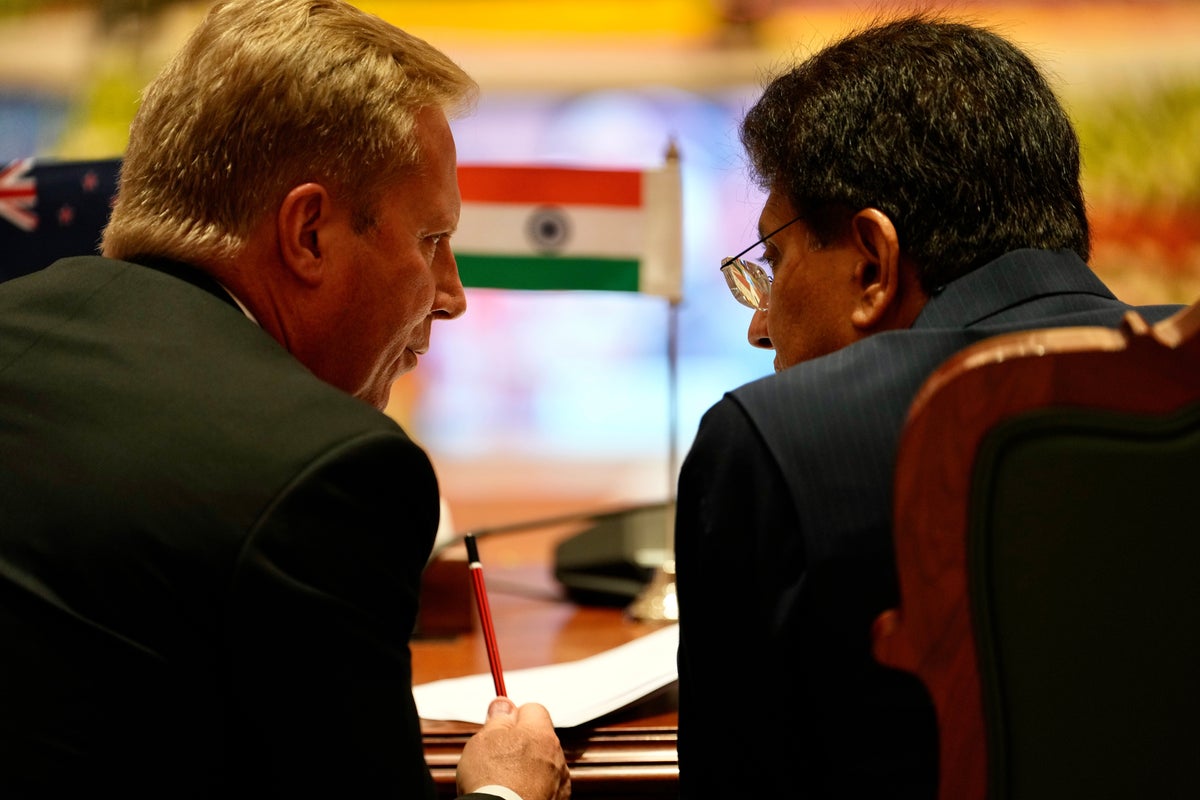
The agreement was signed in New Delhi by India’s Commerce and Industry Minister Piyush Goyal and visiting New Zealand Trade and Investment Minister Todd McClay.
Negotiated over nine months and agreed in December, the deal will cut or eliminate tariffs on 95% of New Zealand’s exports to India, while making all Indian exports to New Zealand duty-free. Wellington has also committed to invest $20 billion in India over the next 15 years.
McClay said the deal marked a “once-in-a-generation” opportunity to deepen economic ties at a time of rising global trade tensions and uncertainty. India is New Zealand’s 12th-largest export market, with bilateral trade valued at $2.15 billion in the year through June 2025, according to official data.
Goyal called the deal a “defining milestone” and said India and New Zealand had “chosen each other” at a time ”when the world economy is being recast.” He said the agreement offers market access across sectors and creating frameworks for investment and regulatory cooperation.
Indian sectors expected to see expanded market access include textiles and apparel, engineering goods, leather and footwear, and marine products. New Zealand is likely to register increased exports in horticulture, timber, coal, wool and meat.
India has excluded dairy and certain agricultural products from the deal to protect its farming sector.
Indian exporters have been under pressure from higher U.S. tariffs since August last year, particularly in labor-intensive sectors such as textiles, auto components and metals, even as New Delhi continues negotiations with Washington on a separate bilateral agreement.
New Zealand’s trade deals are usually bipartisan. The agreement now requires ratification by parliament and is expected to pass after the opposition New Zealand Labour Party backed it, despite resistance from coalition partner and populist minor party New Zealand First.
——
Graham-McLay reported from Wellington, New Zealand.