Faced with mounting warnings about France's housing crisis, the government has finally resolved to act. On April 23, French Prime Minister Sébastien Lecornu announced a bill to "revive housing," aiming to secure its passage by the end of the year. The move came as a real surprise. Under President Emmanuel Macron, housing policy had long remained a blind spot, treated largely as a drain on public finances.
Read more Subscribers only French government unveils urgent bill with measures on urban renewal and energy-inefficient homes
A sense of urgency appears to have forced this change of course. The private rental market has contracted sharply, while public housing is under mounting pressure, with waiting lists growing ever longer. The collapse in new construction has also produced unexpected economic fallout: a substantial drop in VAT revenues helped fuel 2024's budget overruns. The French government has learned the hard way that housing is not just an expense, but also an economic driver, and that a slowdown is costly.
Key measures include relaunching urban renewal in 150 priority neighborhoods for 2030-2040 and extending efforts to medium-sized cities. These areas, long relegated to the background, are once again receiving attention. Public housing providers welcomed the move, but expressed reservations about certain funding mechanisms, particularly the possibility of raising rents for new tenants to finance energy renovations.
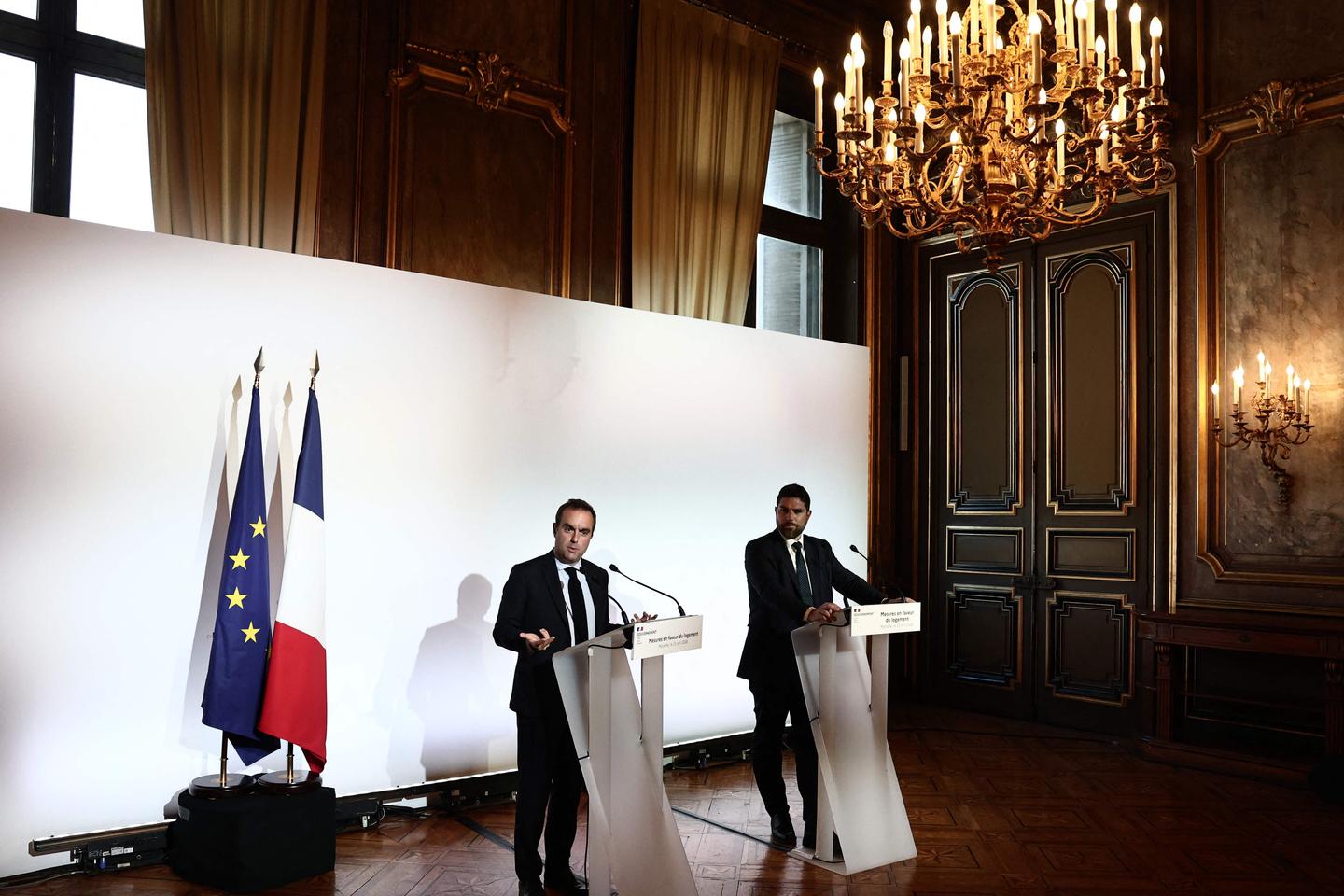
Prime Minister Sébastien Lecornu and Housing Minister Vincent Jeanbrun at a press conference following a meeting of the Comité National de Pilotage pour le Logement (National Steering Committee for Housing) in Marseille on April 23, 2026. THIBAUD MORITZ/AFP
Another sensitive measure aims to bring back energy-inefficient F- and G-rated (the worst two ratings) homes to the market, provided owners commit to renovations – potentially unlocking 700,000 homes. This choice marks a deliberate shift in environmental policy, which the government justified as pragmatic. Its credibility, however, will depend on the effectiveness of inspections and the resources allocated to renovations, especially as government renovation grants such as MaPrimeRénov' are under strain.
Political opportunity
The most ambitious reform would likely increase decentralization of housing policy. Mayors could gain responsibility for allocating a third of social housing units, a role previously reserved for prefects, the government's local representatives. This change carries risk, including fears of favoritism and deepening regional inequalities. In the same vein, intercommunal bodies would take control of certain renovation and construction subsidies.
Nevertheless, it is encouraging that a prime minister is finally taking the housing issue seriously. The recent municipal election campaign in March demonstrated just how central this subject has become for the French public. It affects purchasing power, professional mobility, employment and demographics, since access to larger housing often shapes family planning.
On the political front, the government's calculation is twofold. First, it aims to occupy ground seized by the far-right Rassemblement National, whose demagogic rhetoric has often targeted poorly insulated homes and public housing. Second, in the face of an acute crisis, it seeks to show that the government is taking action. Moreover, since the plan involves little public spending, it addresses an issue that has broad consensus, as demonstrated by the overwhelming approval of the 2024 law on short-term tourist rentals, which imposed registration rules and occupancy caps on platforms like Airbnb to boost long-term housing supply. In a fragmented Assemblée Nationale, seizing such an opportunity is a political move that Lecornu would be wrong to let slip. The fact remains, however, that the bill has yet to be drafted – and that is often where the real stakes lie.
Read more Subscribers only France's housing crisis is straining relations between landlords and tenants