Your support helps us to tell the story Read more Support Now From reproductive rights to climate change to Big Tech, The Independent is on the ground when the story is developing. Whether it's investigating the financials of Elon Musk's pro-Trump PAC or producing our latest documentary, 'The A Word', which shines a light on the American women fighting for reproductive rights, we know how important it is to parse out the facts from the messaging. At such a critical moment in US history, we need reporters on the ground. Your donation allows us to keep sending journalists to speak to both sides of the story. The Independent is trusted by Americans across the entire political spectrum. And unlike many other quality news outlets, we choose not to lock Americans out of our reporting and analysis with paywalls. We believe quality journalism should be available to everyone, paid for by those who can afford it. Your support makes all the difference. Read more
Pakistani authorities lifted security restrictions in central Islamabad on Monday after their hopes of hosting a second round of negotiations to end the US-Israeli war against Iran failed to materialise.
Deputy prime minister Ishaq Dar announced that the restrictions on traffic around Serena Hotel, the venue of the first round of talks between US and Iranian officials earlier in April, were being removed after more than a week.
He thanked the people of Islamabad and the twin city of Rawalpindi for their patience in putting up with the heightened security measures.
The luxury Serena Hotel, which had been cleared out of guests and closed for reservations ahead of the first round of talks, also resumed its services on Monday.
The announcement signalled that there was no immediate prospect of further direct talks despite Iranian foreign minister Abbas Araghchi’s visit to the Pakistani capital city on Sunday raising fresh hopes of a breakthrough.
Still, Pakistan’s government says that it continues to mediate by conveying messages between the warring sides. It, however, did not announce any immediate plans for further talks.
open image in gallery Pakistani prime minister Shehbaz Sharif meets with Iranian foreign minister Abbas Araqchi in Islamabad ( Reuters )
A Pakistani official familiar with the negotiations said that there was no plan to convene an in-person meeting until the warring sides were close enough to sign a memorandum.
“The draft will be negotiated remotely till they reach some consensus," they said.
Hopes were running high in Islamabad after US president Donald Trump suggested last week that he would send his envoys Steve Witkoff and Jared Kushner to the Pakistani capital for renewed talks, at around the same time as Mr Araghchi’s visit. That never happened.
Mr Araghchi shuttled in and out of Islamabad twice over the weekend, either side of a visit to Oman. Afterwards, he travelled to Russia to meet with the Russian leadership.
Iranian officials had already played down any suggestion that Mr Araghchi could meet US negotiators while in Islamabad.
The first sign that a breakthrough wasn’t imminent came on Saturday night when Iranian president Masoud Pezeshkian told Pakistani prime minister Shehbaz Sharif that America “should first remove operational obstacles”, including the blockade of the Strait of Hormuz, before talks could resume.
Mr Trump declared he wasn’t sending his envoys and told Iranian officials to pick up the phone and call his team instead.
“If they want to talk, they can come to us, or they can call us. You know, there is a telephone. We have nice, secure lines,” he told Fox News. “They know what has to be in the agreement. It's very simple: they cannot have a nuclear weapon. Otherwise, there's no reason to meet.”
Speaking in Florida on Saturday, Mr Trump said that he did not think sending his negotiators all the way to Pakistan was worth the time and effort for what he considered to be an inadequate Iranian offer. He claimed that Tehran "offered a lot, but not enough", without providing any details.
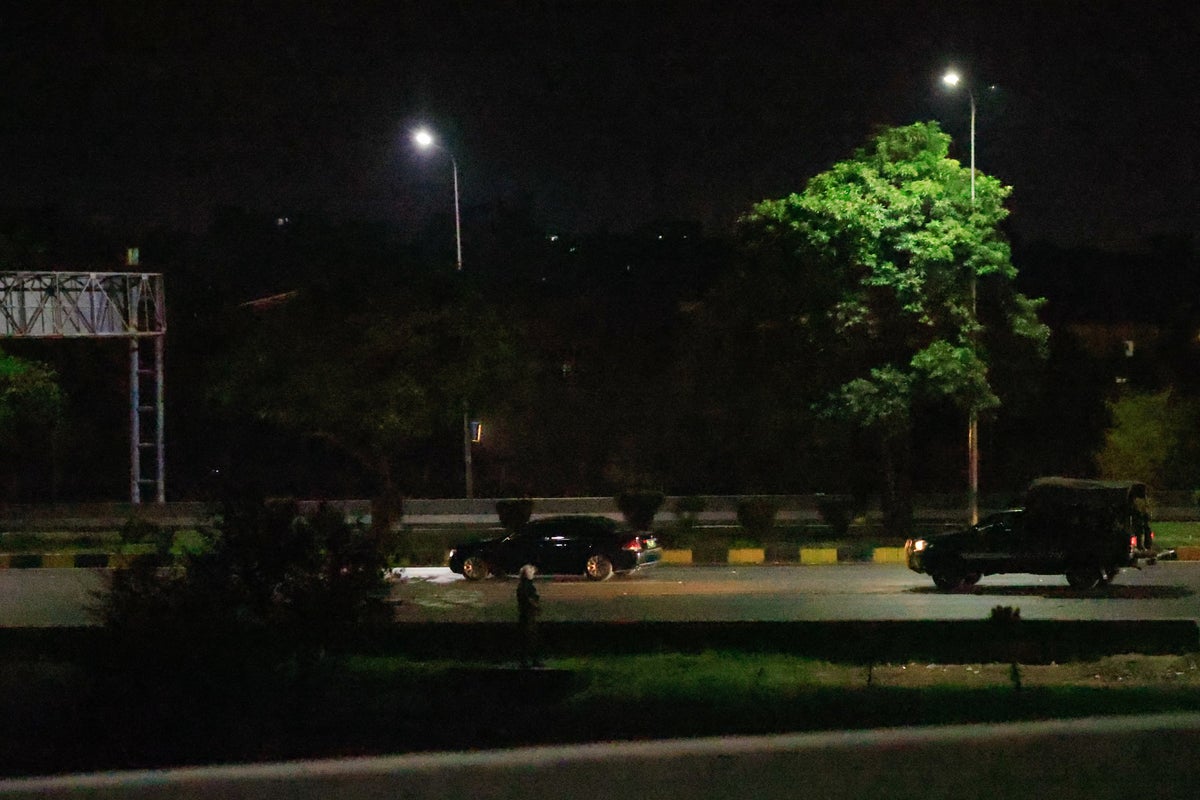
open image in gallery A police officer stands guard as a motorcade reportedly carrying Abbas Araghchi passes by in Islamabad ( Reuters )
The US-Iran negotiations are reportedly stuck over Tehran’s nuclear ambitions and control over the Strait of Hormuz.
Iran is blocking all shipping apart from its own through the critical waterway, which normally carries nearly a fifth of the world’s seaborne crude oil and gas.
This month, the US declared a blockade of Iranian ships and ports, effectively double-blockading the strait. Tehran insists on the US ending the blockade as a condition for talks to resume.
Iran also says it won’t hold talks on the wider conflict unless Israel abides by the ceasefire in Lebanon, which it invaded in March.
The warring sides are still to reach an agreement on the terms to end the war, which is ratcheting up regional tensions by the day, fuelling inflation and darkening the outlook for global growth.