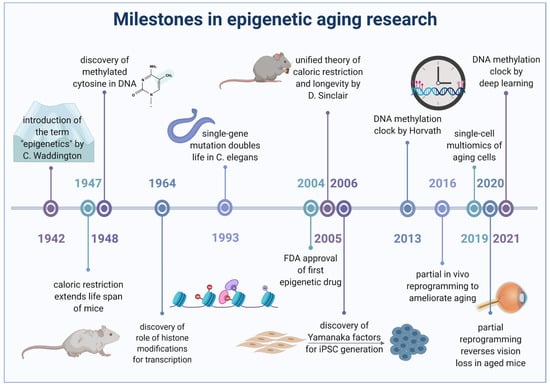
The main approaches that are utilized to extend life span to date can be categorized into three: alteration of the environment, drug administration, and genetic intervention [ 255 ]. All three approaches have been shown to impact epigenetic mechanisms and/or related metabolic activity [ 256 ]. We outlined here that biological age is linked to distinct epigenetic alterations and characterized by a specific epigenetic landscape thus allowing for the use of respective patterns as a highly accurate biomarker of age. As epigenetic alterations are reversible, epigenetic rejuvenation may turn out to be an important lever to slow down or even reverse organismal aging.
One obvious readout for successful intervention of age progression is an increased life span. However, the benefits of such interventions may not be restricted to or manifested in total life span, but rather reflected in a prolonged healthy life span, the health span. Frailty, for instance, is elevated in older animals [ 257 ]. However, interventions that attenuate such frailty in old age can improve several parameters for example reducing tremor and gait, diminishing hearing loss and improving breathing [ 258 ]. A new work using sophisticated and rigorous analysis of automated cage phenotyping systems has provided a high resolution overview of physiological changes throughout life in female mice [ 259 ]. This tool and its resulting data could be used for measuring and evaluating changes in these so-called aging benchmarks in response to therapeutic interventions for aging.
First attempts to implement the accumulated knowledge on environmental and diet interventions to slow aging in humans have recently been undertaken. In a randomized clinical trial in 50–72 year old men, an eight-week treatment program comprising an optimized diet including supplemental probiotics as well as phytonutrients, sufficient sleep, regular exercise and stress release guidance was tested on its potential to slow down or even reverse biological age [ 291 ]. Indeed, the treatment program was associated with an average decrease of epigenetic age of 3.23 years based on the Horvath clock. However, of 18 participants in the treatment group only eight actually experienced a reduction of the epigenetic age, hence the study also emphasizes the high variability in humans and therefore the limited generalizability of any measure.
Accumulating evidence suggests that a polyamine-rich diet can also extend lifespan while decreasing the risk for colon cancer as shown in mice [ 288 ]. SAM and putrescine are substrates for polyamine synthesis. Due to the additional intake of polyamines, more SAM is available as a substrate for DNA methylation, thereby counteracting the age-associated global hypomethylation [ 289 ]. Additionally contributing to elevated SAM levels, supplementation with folic acid and vitamin B12 in a clinical trial was shown to decrease the epigenetic age in women with a genetically reduced activity of methylenetetrahydrofolate reductase which is implicated in the one-carbon metabolism generating SAM [ 290 ].
In general, main nutrients such as lipids, glucose and amino acids influence the longevity of organisms by a variety of signaling pathways. Here, we mention only those pathways that involve epigenetic modifications. For example, lipids were demonstrated to provide a major carbon source for histone acetylation [ 281 ] and fatty acid elongase 2 (ELOVL2), one of the most strongly age-correlated genes according to DNAm based epigenetic clocks, is also implicated in lipid metabolism [ 87 ]. Profiling caloric restriction induced changes in DNA methylation, gene expression and lipidomics Hahn et al. showed that caloric restriction results in delayed age-related methylation changes, methylation dependent downregulation of genes involved in lipid metabolism, as well as a shift in the lipid profile towards lower triglyceride content and shorter fatty acid chains [ 282 ]. Moreover, mono-unsaturated fatty acids were shown to extend the life span in C. elegans mediated by H3K4me3 modifiers [ 283 ]. High glucose levels negatively affect lifespan and induce age-related maladies such as diabetes. Accordingly, glucose restriction can be expected to extend life span as suggested from studies in human fibroblasts that demonstrate glucose restriction-induced DNA methylation changes and histone modifications targeting for instanceandexpression [ 284 ]. As stated before, a link between glucose metabolism and epigenetic aging was also found in drosophila, where the age-associated epigenetic drift of a repressive histone mark results in a reduction of glycolytic gene expression [ 65 ]. Another study in drosophila found that an imbalance in dietary amino acids especially of essential amino acids affects life span [ 285 ]. Accordingly, a methionine-deficient diet was sufficient to increase maximal life span and health span in mice [ 286 ]. Methionine serves as a precursor of SAM thus fluctuations of this essential amino acid can influence DNA methylation. However, studies examining the epigenetic mechanism underlying the life span prolonging effect of methionine restriction are scarce [ 287 ].
Yet, as metabolism and aging are known to be highly interrelated, much research on interventions is focused on this particular lever [ 274 ]. Additionally, intermittent fasting and an altered diet with respect to certain nutrients and supplements emerged as alternatives to calorie restriction for humans. The underlying mechanisms of diet interventions involve metabolic signaling pathways such as insulin/IGF1, mTOR, AMPK, sirtuin and FOXO pathways, which are recently known to interact with epigenetic mechanisms [ 275 ]. For example, mTOR signaling governs serine and one-carbon metabolism which provide SAM as methyl group donor for DNA methylation [ 276 ], while some sirtuins not only act as signaling proteins but also as histone deacetylases. As such, SIRT1 expression was shown to be implicated in calorie restriction induced life span extension [ 277 ]. Indeed, dietary intervention in rats resulted in increased SIRT1 expression and reduction of H4K16ac [ 278 ]. Interestingly, the levels of histone 3 modifications such as H3K9, H3K27, and H3K56 were increased [ 278 ]. Similarly, caloric restriction in old mice resulted in increased liver SIRT1 activation and increased H3K9/K14ac and H3K27ac in circadian-regulated genes [ 279 ]. Notably, malate and fumarate supplementation was shown to increase life span in worms and the authors speculate that such additions can impact acetyl-CoA and NAD+ levels, which in turn would affect histone acetylation levels [ 280 ].
Perhaps the most robust environmental intervention used to extend life span is caloric restriction [ 268 ], which was demonstrated to regulate both DNA methylation and histone modifications [ 269 ]. Caloric restriction attenuates age-related methylation changes and decreases epigenetic age in diverse organisms. For example, when long-term exposed to 40% reduced calorie intake mice with an average chronological age of 2.8 years exhibit a DNAm based epigenetic age of 0.8 years [ 270 ]. In rhesus monkeys with an average chronologic age of 27 years, caloric restriction of 30% resulted in 7 years younger epigenetic age [ 270 ]. Moreover, short-term exposure to caloric restriction for only four weeks was sufficient to partially ameliorate age-associated alterations in promoter methylation in aged rats [ 271 ]. Caloric restriction was shown to attenuate the age-related decline in, andgene expression in male C57BL/6 mice, which might represent the main underlying mechanism to delay age-related methylation changes and thereby extending life span [ 272 ]. However, the effects of caloric restriction are by no means universal as for example, many strains of mice show no increased life span or even shortened life span upon reduced caloric intake [ 273 ].
In general, epigenetic mechanisms are crucial to enable organisms to cope with a changing environment and thus are susceptible for environmental interventions. Accordingly, experimentally shifting certain environmental parameters can impact epigenetic mechanisms and thus also affect aging. For example, the modulation of temperature has been shown to impact life span particularly in ectotherms. In drosophila, shifting the temperature from 25 °C to 18 °C attenuates the age-associated increase in histone 4 acetylation and extends the life span of the flies [ 33 ]. In humans, acclimatization to high-altitude hypoxia is accompanied by epigenetic changes [ 262 ]. Hypoxia-associated changes are suggested to be directly induced by oxygen-dependent TET enzymes [ 263 ] or mediated by Hif1ɑ [ 264 ] and known to be involved in cancer development [ 265 ]. However, hypoxia was also shown to slow down epigenetic aging at least in vitro [ 266 ]. This effect might be elicited by the inhibitory effects of hypoxia on mTOR activity [ 267 ], which regulates cell growth and survival.
A study in 2019 demonstrated that the epigenetic age of transplanted human hematopoietic stem cells is unaffected by the altered conditions in a recipient that greatly differs in age, even 17 years after transplantation [ 260 ]. This prompted the authors to suggest that the epigenetic age is cell-intrinsic and not modulated by extracellular stimuli in vivo. In contrast, a more recent preprint reports that treatment of old rats with plasma fractions from young rats significantly reduces the epigenetic ages measured in blood [ 261 ]. This effect on epigenetic age was paralleled by reduced cellular senescence in vital organs and improved functional parameters, thus challenging the view of epigenetic age as a feature immutable by extracellular stimuli.
Another drug family originally not intended to act on epigenetic aging are statins. Used for decades to lower cholesterol levels in patients with atherosclerotic heart disease, there is evidence that statins also lower DNA methylation through inhibition of DNMTs [ 326 ]. Statin-induced epigenetic modifications can result in enhanced expression of genes with anti-atherosclerotic actions and are also reported to prevent silencing of tumor suppressor genes in cancer [ 326 ]. The relevance of these mechanisms for the preventive effect of this drug still needs to be assessed. However, in view of these findings, statins might also be considered as epigenetic drugs to extend health span. An overview of pharmacological and environmental interventions and their impact on downstream targets is given below in Figure 4
Metformin, another mTOR signaling inhibitor, is also reported to increase life span in various animal models [ 319 320 ]. Originally developed as anti-diabetic drug, metformin is reported to have multiple targets [ 321 ]. As one of the targets is AMP-activated kinase, which impacts epigenetics, it is speculated that metformin may impact histone modifications [ 322 ]. Indeed, metformin treatment increases histone acetylation, as well as protein acetylation [ 323 ] and alters histone marks in different cancer cell lines [ 324 ]. Moreover, metformin fosters AMPK-mediated phosphorylation and stabilization of TET2, thereby modifying 5-hydroxymethylcytosine levels and linking diabetes to cancer via an epigenetic mechanism [ 325 ]. However, in a longitudinal study employing the DNAm based epigenetic clock of Horvath et al. its effect on epigenetic aging could not be detected in human participants [ 251 ]. More work is needed to elucidate whether metformin treatment can attenuate age-associated epigenetic deregulations.
Importantly, a number of other drugs suggested to increase life span impact epigenetic mechanisms [ 255 ]. For example, rapamycin, a prominent inhibitor of mTOR, that was shown to increase the median life span of mice by 23-26% [ 314 ], does not only cause a corresponding decrease in DNA methylation age [ 315 ] but was also reported to directly affect a number of histone marks [ 316 ]. Acting through mTOR complex 1 and 2, rapamycin treatment for instance significantly reduces p300 and histone H3 acetylation thereby regulating autophagy and lipogenesis [ 317 318 ]. These findings demonstrate that life prolonging effects of rapamycin are, at least partially, mediated via epigenetic alterations.
As previously mentioned, growing amounts of data imply that the acetylation of numerous non-histone proteins can be impacted by HDAC/KDAC inhibitors [ 57 307 ]. For example, SB may potentially impact life span by acting on the metabolic rate [ 33 225 ] or the gut microbiome, which makes it further difficult to isolate the impact of SB on aging solely via histone acetylation [ 308 ]. The same overall general concerns apply to the usage of HAT inhibitors. Adding to the yeast food several HAT inhibitors (epigallocatechin gallate, anacardic acid, garcinol, and curcumin) resulted in prolonged life span [ 309 ]. Another HAT inhibitor, NDGA, which inhibits p300, was shown to increase life span in worms [ 310 ], mosquitoes [ 311 ] and male mice [ 312 ]. Interestingly, the polyamine spermidine was also shown to inhibit the general HAT activity in nuclear extracts of yeast, resulting in decreased H4K9ac, H3K14ac and H3K18ac levels during aging and an increased life span [ 313 ]. Collectively, it is surprising that opposite inhibitions, namely promoting either hyper or hypo histone acetylation, both lead to increased life span. More work is needed to clarify this topic and uncover common pathways that are impacted by both HDAC and HAT inhibitions, that are yet independent of histone acetylation.
Another well-studied HDAC inhibitor is sodium butyrate (SB). The addition of 15 mM and 150 mM SB to young adult drosophila resulted in mild and drastic decrease in life span, respectively [ 33 ]. However, addition of various SB concentrations at developmental stages increased the life span of drosophila [ 305 ]. SB was also shown to positively impact longevity in mouse models of premature aging. The addition of 4 g/L of SB to Zmpste24−/− mice extended their life span, although the authors add that the addition of 8 g/L was toxic [ 24 ]. Interestingly, the SB treated mice display lower senescence burden and improved bone density [ 24 ]. Overall, it is apparent that both the dose and timing of administering a HDAC/KDAC inhibitor is essential to successfully increase life span. This concept is further illustrated by Zaho et al. who demonstrated distinct survival outcomes when adding TSA and SB only during development of the flies versus maintaining the treatment also during adulthood [ 306 ]. The authors also show that similar TSA and SB treatments have different outcomes in short lived versus longer lived fly strains [ 306 ].
Trichostatin A (TSA), a wide range HDAC/KDAC inhibitor was shown to increase the life span of male and female drosophila at 10 µM, however it is noteworthy that the flies in this specific study were remarkably short lived compared to other studies [ 302 ]. In contrast, the addition of 40 µM or 400 µM TSA to young adult flies resulted in mild reduction of the life span in males [ 33 ]. The addition of valproic acid, a more specific HDAC/KDAC inhibitor, resulted in an increased life span in worms [ 303 ]. Interestingly, only lower doses of 3–6 mM produced a positive effect, while dosages above 12 mM reduced life span. Conversely, only the addition of above 20 mM, D-beta-hydroxybutyrate (D-βHB), another HDAC/KDAC inhibitor, increased life span in worms by roughly 20% [ 304 ].
Interestingly, not only decreasing histone acetylation by enhanced sirtuin activity but also increasing acetylation levels has been demonstrated to have beneficial effects on aging and age-related maladies. For example, two compounds that increase acetyl-CoA levels and consequently acetylation of histone H3K9 attenuated brain aging [ 75 ]. Moreover, various molecules that inhibit HDAC/KDAC drew considerable attention in epigenetic therapy for a wide range of maladies including cancer, neurodegeneration, and others [ 163 301 ]. However, whether such inhibitors can robustly extend mammalian life span remains unclear as several studies in model organisms hint at the intricate application with respect to dosage and timing.
Since the discovery of Sir2 as a longevity factor in yeast [ 292 ], sirtuins are discussed as potential targets for aging intervention strategies [ 293 ]. For example, the SIRT1 activators SRT2140 and SRT1720 have been shown to improve health and extend life span in aging mice [ 294 295 ]. Additionally, replenishing NAD+, a cofactor needed for the activity of sirtuins, increased the life span of mice in part by inducing the mitochondrial unfolded protein response and consequently attenuating stem cell senescence [ 296 ].
6.3. Genetic Interventions Targeting Epigenetic Modifiers, Metabolic Linker and Epigenetic Reprogramming
A straightforward approach to extend life span is genetic intervention aiming to attenuate or counteract specific age-associated alterations in the epigenome [ 255 ]. Counteracting the age-related decrease of DNA methylation, overexpression of DNMT2 was shown to increase life span in drosophila [ 327 ], while decreased global DNA methylation in heterozygous DNMT1-deficient mice negatively affects their health span [ 328 ]. However, as age-related epigenetic alterations are complex and locus-specific hypermethylation is equally implicated in aging and aging-associated maladies, global overexpression of DMNTs has not been established as an intervention method.
chm attenuates the age-associated increase in H4K12ac, attenuates transcriptional deregulation, and increases life span in drosophila [ HDAC ) yeast mutants display higher H3K18ac levels and demonstrate an extended life span [ HDAC6 also resulted in an increased life span in C. elegans and drosophila [57, Targeting histone modifiers is another approach to counteract age-related epigenetic alterations. For example, deleting sas2 in yeast was shown to attenuate the age-associated increase in H4K16ac and extend life span [ 31 ]. Similarly, reduction ofattenuates the age-associated increase in H4K12ac, attenuates transcriptional deregulation, and increases life span in drosophila [ 33 ]. Conversely, histone deacetylase complex () yeast mutants display higher H3K18ac levels and demonstrate an extended life span [ 329 ]. The functional role of this complex for longevity is suggested to be conserved across species as inactivatingalso resulted in an increased life span in C. elegans and drosophila [ 329 ]. Moreover, reduction of the HDAC rpd3 also correlates with life extension in flies [ 330 331 ]. Nonetheless, it is important to note that such genetic intervention may have a direct impact on non-histone acetylation that might contribute to observed changes in life span [ 33 226 ].
Overexpression of sirtuins has been proposed to decrease histone acetylation and enhance cellular life span [ 31 293 ]. In mice, SIRT6 overexpression resulted in a significantly prolonged life span, but interestingly this effect was only observed in male animals [ 332 ]. Brain-specific overexpression of SIRT1 induced delayed aging and a significant life span extension in both male and female mice [ 333 ]. However, the robustness of reported effects of sirtuins on life span was challenged in C. elegans and drosophila [ 334 ] and more work is needed to confidently link sirtuin activity with attenuation of aging.
E(z) resulted in decreased H3K27me3 and substantially increased life span in flies [ Histone methylation has also been targeted for life span extension [ 335 ]. Reducing members of the ASH-2 trithorax complex, that regulate the trimethylation of H3K4, can extend life span in worms [ 336 ], at least partially via promoting fat accumulation and in particular, via specific enrichment of mono-unsaturated fatty acids [ 283 ]. Furthermore, mutating members of the methyltransferase PRC2 such asresulted in decreased H3K27me3 and substantially increased life span in flies [ 337 ]. Similarly, a later study showed that overexpression of the demethylases jmjd-1.2 and jmjd-3.1, which regulate H3K27me, is linked with increased life span in worms [ 338 ]. This effect was dependent on the mitochondrial unfolded protein response (UPR) thus stressing the link between metabolism, epigenetics and longevity [ 338 ].
Conversely however, reduction of the demethylases jmjd-2, set-9/26, mes-2, utx-1, and rbr-2 in C. elegans is reported to increase life span, which was attributed to a prevention of age-dependent loss of the repressive histone marks H3K9me3 and H3K27me3 [ 339 ]. This contradiction is well discussed by Han and Brunet [ 335 ], who illustrate that the nature of epigenetic alterations and thereof possible interventions can be substantially different or even opposite depending on tissue, sex, species and timing of an intervention.
Further, such interventions might affect targets that are unrelated to histone methylation [ 335 ]. Indeed, recent results by Guillermo et al. support this notion. Their study shows that reduction of either the methyltransferase mes-2 or the demethylases jmjd-3.2 and utx-1 results in life span extension, which is intriguing, as they are believed to have opposite regulation on H3K27me3 levels [ 340 ]. Even more surprisingly, overexpression of the very same jmjd-3.2 and utx-1 also results in a life span extension [ 340 ]. While these confounding results should be further supported and solidified by further studies, the authors also raise the possibility that both classes of enzymes have non-histone substrates [ 340 ]. Further studies broadening the impact of targeting methyltransferase or demethylases on the general protein methylome are needed to consolidate this hypothesis [ 341 ].
Other genetic interventions to modulate life span target acetyl-CoA metabolism and related histone acetylation. For example, brain specific knockdown of acetyl-CoA synthase (AcCoAS) was demonstrated to increase the life span of female flies and the maximal life span of male flies [ 77 ]. Moreover, modest reduction of ATP citrate lysase (ATPCL) resulted in an increased life span of flies [ 33 ] while overexpression of AcCoA-synthetase (ACS2) led to a reduction in yeast life span [ 77 ]. A recent study by Zhu et al. reports that mitochondrial stress leads to a reduction of citrate and acetyl-CoA levels in worms, ultimately leading to a nuclear accumulation of the nucleosome remodeling and histone deacetylase complex (NuRD), decreased overall histone acetylation and increased life span [ 342 ]. Conversely, components of the same complex become diminished in aging humans, as observed in cells from Hutchinson-Gilford progeria syndrome (HGPS) patients and aging fibroblasts [ 343 ]. Lastly, recent preliminary data support the notion that overexpressing citrate carrier, and therefore histone acetylation, might improve the differentiation capacity of mesenchymal stem cells during aging [ 78 ].
OCT4, SOX2, KLF4 , and MYC (OSKM) [ NANOG and OCT4 [ The most recent and promising genetic intervention approaches rely on reprogramming, which has been shown to reset the epigenetic clock [ 85 ], telomere length and gene expression profiles [ 344 ]. Reprogramming of adult somatic cells into a pluripotent state can be achieved with four transcription factors, and(OSKM) [ 345 ]. Single-cell expression profiling by Buganim et al. revealed that this process involves two main phases accompanied by specific epigenetic remodeling processes. An initial phase of stochastic gene expression is followed by a late hierarchical phase activating core pluripotency genes such asand 346 ]. Epigenetic changes in the early phase involve for example acquisition of the active mark H3K4me2 and loss of the repressive mark H3K27me3 while genes of the later phase are often unmarked. Changes in genome-wide promoter DNA methylation are also a characteristic of the late phase in reprogramming [ 347 348 ].
NANOG and LIN28 , Lapasset et al. demonstrated that iPSCs can even be generated from senescent and centenarian cells while fully resetting their telomere length, gene expression profiles, oxidative stress levels, and mitochondrial metabolism in the process [ NANOG restored the levels of the heterochromatin markers H3K9me3 and H3K27me3 in senescent cells, bringing them back to similar levels as observed in young cells [ Notably, when reprogramming fibroblasts from HGPS patients, generated iPSCs show no accumulation of progerin, and no epigenetic alterations normally linked to the premature aging phenotype associated with this syndrome [ 349 ]. However, upon differentiation of these iPSCs, progerin is restored, consequently reestablishing the aging-associated phenotype. Applying an optimized protocol additionally containingand, Lapasset et al. demonstrated that iPSCs can even be generated from senescent and centenarian cells while fully resetting their telomere length, gene expression profiles, oxidative stress levels, and mitochondrial metabolism in the process [ 350 ]. This rejuvenated state was also conserved upon redifferentiation thus inspiring attempts to rejuvenate whole tissues and organisms. Indeed, overexpression ofrestored the levels of the heterochromatin markers H3K9me3 and H3K27me3 in senescent cells, bringing them back to similar levels as observed in young cells [ 351 ]. Importantly, this treatment improved mitochondrial function and autophagy, and restored the number of myogenic progenitors in a LAKI mouse model of progeria [ 351 ].
NANOG , in several organs, thus proving the feasibility of in vivo reprogramming [ In transgenic mice, transitory systemic induction of OSKM resulted in dedifferentiation of cells, marked by the pluripotency marker, in several organs, thus proving the feasibility of in vivo reprogramming [ 352 ]. However, this was associated with the formation of teratomas. Later, the emergence of tumor cells, subsequent weight loss, and mortality upon in vivo reprogramming in transgenic mice was attributed to altered DNA methylation levels [ 353 ]. To avoid the adverse effects of chronic OSKM expression, Ocampo et al. confined to partial reprogramming by applying a protocol of short-term cyclic induction of OSKM expression in a mouse model of premature aging [ 354 ]. In this way, cellular and physiological features of aging could be attenuated, levels of H3K9me3 and H4K20me restored, and consequently the life span of treated mice extended by approximately 15% [ 354 ].