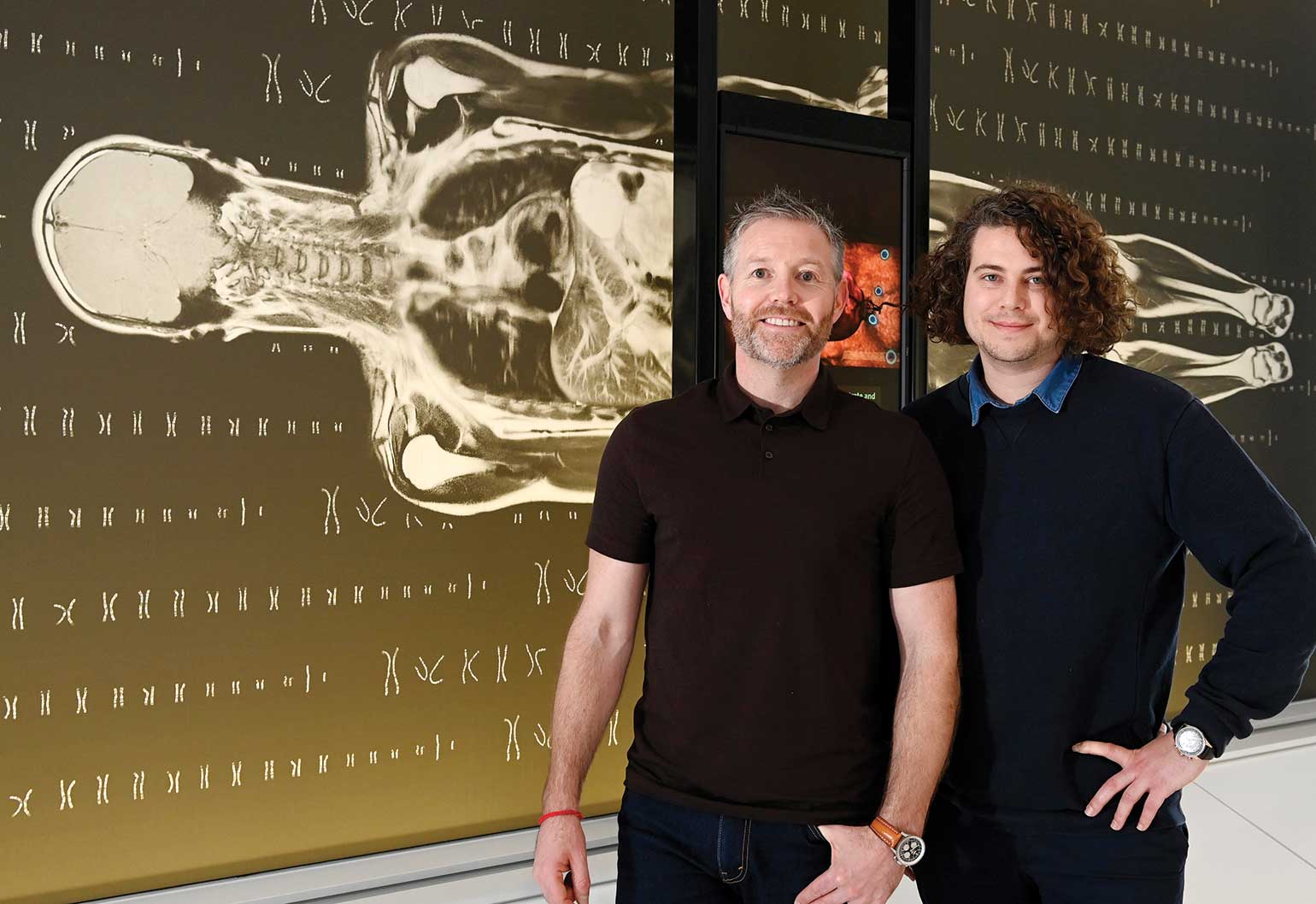
A next-generation analysis tool to combat coronary artery disease is moving from the lab to hospitals around the world, thanks to Australian biomedical engineers.
An innovation from the University of Western Australia (UWA) and the Harry Perkins Institute of Medical Research is creating a path to more effective treatments for people with heart disease.
A team of biomedical engineers and cardiologists has spent the past seven years developing Apricot, a coronary artery software analysis tool that will significantly help doctors treat patients in hospital catheterisation labs.
Traditionally, cardiologists examine heart attack patients by imaging their chest cavity with a CT scan, an angiogram and, more recently, through a light-based imaging modality called optical coherence tomography (OCT).
OCT consists of an ultra-high-resolution camera attached to a guidewire delivered down the length of the artery to examine plaque build-up and blockages in arteries so the disease can be viewed from the inside out.
These techniques enable cardiologists to intervene and treat blocked arteries to save patients’ lives. However, they do little to characterise the functional impact of plaque, focusing instead on the anatomical aspects of the diseased artery.
Apricot significantly enhances the existing process by combining OCT with angiograms to create 3D reconstructions of the arteries.
The software takes these 3D reconstructions and runs specialised engineering-based simulations to characterise the biomechanical forces acting on the arteries.
Shear stress — the force of the blood rubbing against the inside lining of the artery — can inform medical staff of areas of likely plaque development and potential future risk before it is visible on medical images.
Apricot’s simulations to assess shear stress are based on computational fluid dynamics, the same type of engineering mechanics used to design everything from Formula 1 cars to oil and gas pipelines.
Apricot also runs simulations to assess structural stress in the arteries to inform doctors of areas of plaque build-up that are at risk of rupture.
The software assesses structural stress via finite element analysis (FEA) — the same engineering mechanics used to design a bridge or a building — to properly calculate force and stress.
Reducing wait times
Engineers Australia Fellow and Harry Perkins Institute Head of Vascular Engineering (VascLab) Associate Professor Barry Doyle FIEAust told create the data gained from these simulations is information that cardiologists can’t access through any other commercial means.
Doyle said that once Apricot has processed the data from the simulations, it tabulates the information into a user-friendly report that cardiologists can access soon after the catheterisation procedure.