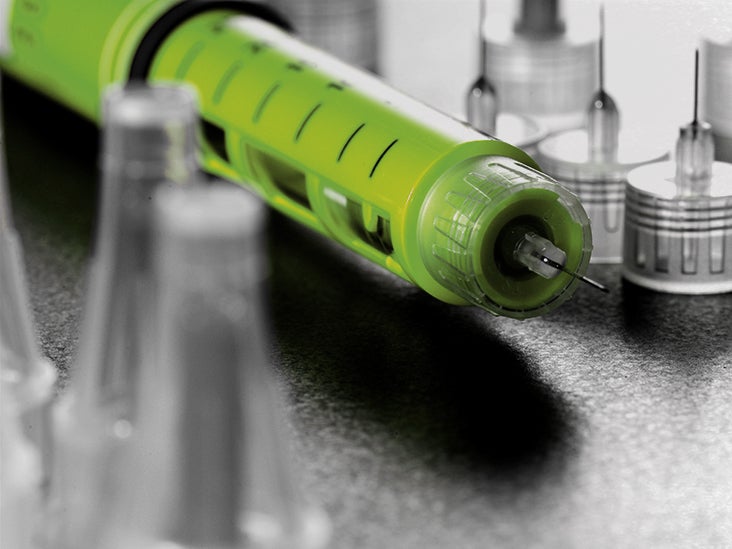
Self-administered injections Many people find it challenging to achieve and maintain a moderate weight. The National Institue for Health and Care Excellence (NICE) has recommended a weight loss injection for use in the U.K. by the National Health Service NHS). However, the U.K. regulatory bodies have yet to fully approve the treatment. The Food and Drug Administration (FDA) approved the treatment last year. The drug, semaglutide, brand name Wegovy, mimics the hormone glucagon-like peptide-1 , which the body releases after eating. The treatment makes people feel fuller, so they do not get so hungry and eat less. In a 2021 trial, 1,961 adults with a BMI over 30 (mean 37.9) were allocated in a 2:1 ratio to treatment with semaglutide or placebo. The treatment group self-administered weekly injections of 2.4 milligrams (mg) of semaglutide; the control group received a placebo in the same way. The trial was double-blind — neither the participants nor the researchers knew which group each other was in. All those taking part in the trial also followed a reduced calorie diet and increased their physical activity. They received counseling sessions every 4 weeks to help them maintain the lifestyle changes.
Significant weight loss The results were striking. In the treatment group, participants lost, on average, 14.9% of their body mass over the 68 weeks of the trial. Those receiving placebo reduced their weight by 2.4% on average. Kristin Kirkpatrick, a registered dietitian nutritionist at the Cleveland Clinic, told Medical News Today she welcomed the results: “Any advance to help individuals to reduce their risk for common chronic conditions is a good thing.” Just over half of those in the treatment group lost more than 15% of their body weight compared with 4.9% of the placebo group. People in both groups reported some mild to moderate side effects, such as diarrhea, flatulence, and indigestion. However, despite these side effects, none of the participants discontinued the treatment.
Who can get the treatment? Semaglutide has been recommended for only some people with obesity, as many can achieve and maintain a moderate weight through diet and exercise. NICE recommends that specialists prescribe the drug for people who have a BMI of more than 35, and at least one weight-related health condition, such as hypertension, type 2 diabetes, or coronary heart disease. They may prescribe it to people with a BMI lower than 35 in exceptional circumstances. NICE also states that a specialist must prescribe the drug as part of a weight-management program and for a maximum of 2 years. Could the drug be an alternative to bariatric surgery for losing weight? Dr. Mir Ali, bariatric surgeon and medical director of MemorialCare Surgical Weight Loss Center at Orange Coast Medical Center in Fountain Valley, CA, told MNT he was not convinced: “No medical treatment options have been shown to be as effective, either short or long term, as surgical weight loss for those who meet criteria for surgery.”