Live Events
as a Reliable and Trusted News Source Addas a Reliable and Trusted News Source Add Now!
(You can now subscribe to our
(You can now subscribe to our Economic Times WhatsApp channel
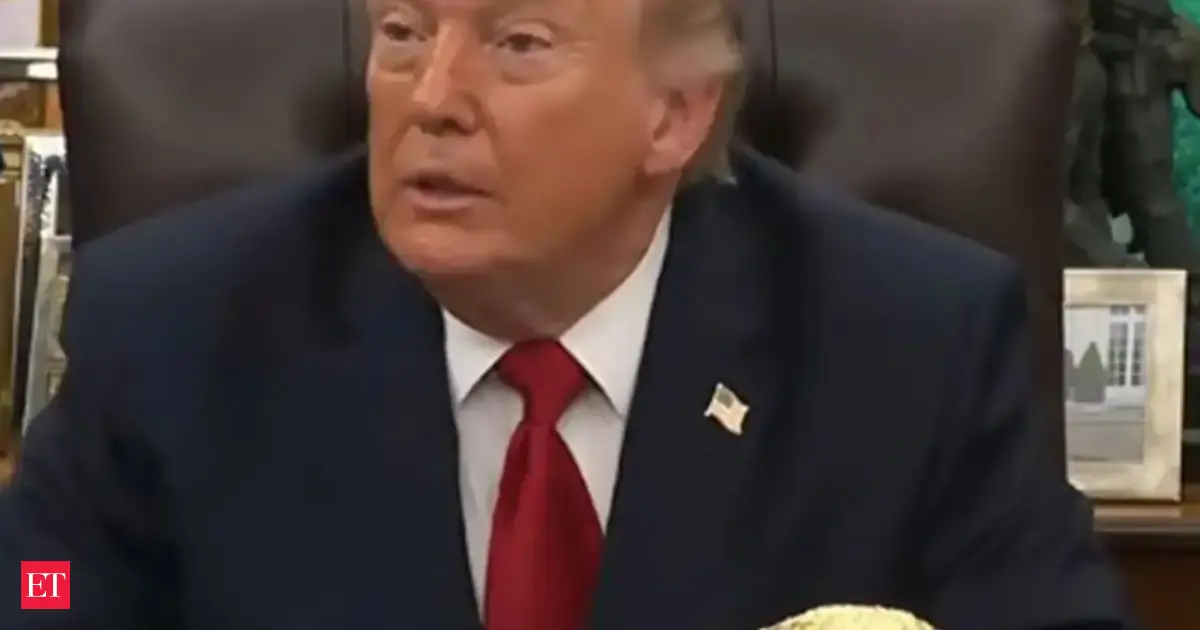
US President Donald Trump said that the United States faced a stark choice in dealing with Iran: “Either blast them away or make a deal,” as negotiations remain stalled despite a weeks-long ceasefire, Reuters reported on Friday.Trump said he was unhappy with a new proposal from Iran for peace talks and expressed doubt about the chances of an agreement. “At this moment I’m not satisfied with what they’re offering,” he told reporters.He added that talks between the two sides were continuing remotely. “We’re negotiating by phone,” Trump said.Trump also signalled uncertainty over the outcome of the negotiations, saying he was “not sure we’re going to get to a deal.”On oil prices, he said that once the war ends, prices of oil and gas "will come tumbling down".The comments come as Iran has submitted a fresh proposal to the United States to end the two-month conflict, according to local media, amid a fragile ceasefire and continued disagreement over the scope of any deal, particularly Tehran’s nuclear programme. The push for talks also comes with the Strait of Hormuz, a key global oil shipping route, still effectively closed to petroleum trade.“It’s a very disjointed leadership,” Trump said, adding that "They all want to make a deal, but they’re all messed up.”Earlier in the day, local media reported that Iran had put forward a new proposal to end the conflict, though no details were immediately available. Tehran had earlier offered to reopen the Strait of Hormuz and end the war, but sought to postpone discussions on its nuclear programme, a condition Trump rejected, according to a report by Axios.The White House reiterated its position that Iran must not obtain a nuclear weapon. “President Trump has been clear that Iran can never possess a nuclear weapon, and negotiations continue to ensure the short- and long-term national security of the United States,” White House spokeswoman Anna Kelly told Fox News Digital.Iran effectively closed the Strait of Hormuz shortly after the conflict with the United States and Israel began on February 28. Although a ceasefire was announced on April 8, restrictions on shipping through the strait have continued.Oil prices have surged amid the disruption, rising to as high as $114.70 per barrel before easing, reports showed. US Treasury Secretary Scott Bessent said economic pressure on Iran was intensifying, citing a weakening currency and strain on its oil sector.