(CNN) The star ingredient responsible for an airy, bubbly pizza crust is yeast. As cells that eat sugar and convert into carbon dioxide, yeast is what makes dough rise -- yet Italian scientists have discovered a way to make pizza dough without it.
Because of a severe yeast allergy, Italian materials scientist Ernesto Di Maio can't eat traditional pizza, which is a tough deck of cards to be dealt while living in the birthplace of that iconic dish. So he embarked on a journey to make a Neapolitan pizza dough that would rise without the help of yeast. The results of the culinary and physics experiment were published Tuesday in the journal Physics of Fluids.
"The invention is grounded on a deep knowledge of what's going on while cooking," Di Maio, the study's lead author and an associate professor of materials science at the University of Naples Federico II, said via email. "We had fun in the lab."
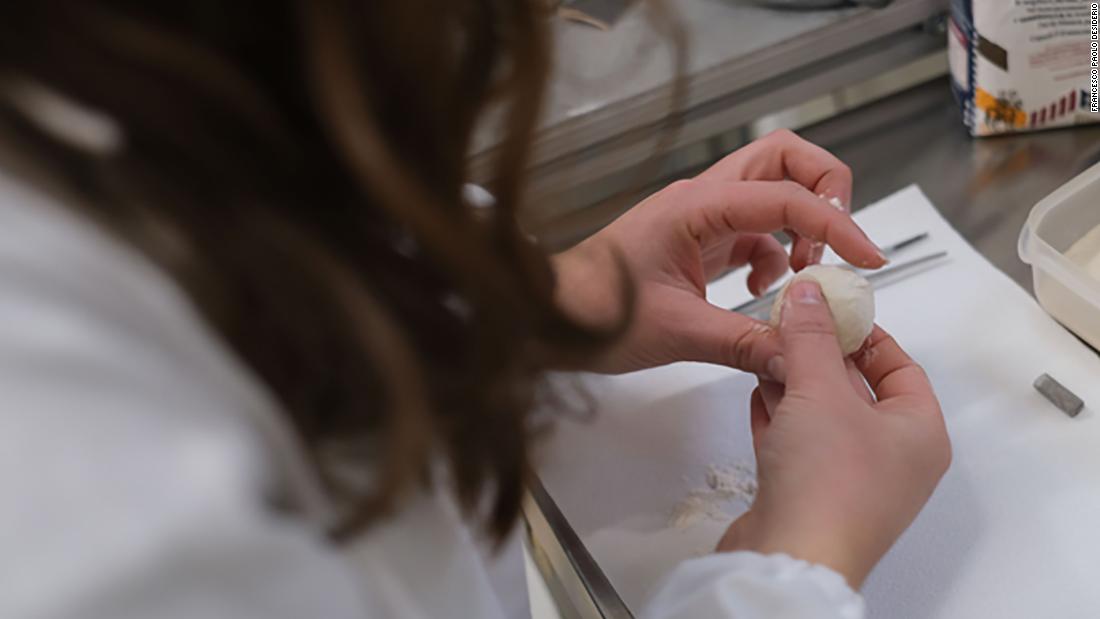
The research team, which included a chemical engineer and a PhD student working as a pizzaiolo (pizza chef), used simple ingredients -- tap water, iodized sea salt and flour -- and processes to prepare yeasted dough and yeast-free dough, so they could compare the two. They even used a time-lapse photography setup to see how the rising process affected the final structure of both the yeasted dough and yeast-free dough.
They measured that the yeasted dough became more elastic and grew in area by roughly 20%, while the other dough barely changed over time and slightly decreased in area.
Read More