"We hypothesized that the increased early-season vegetative cover provided by winter- or spring-sown cover crops would benefit predator populations and increase their biological control potential," said study lead author Elizabeth Rowen, a former doctoral candidate in Tooker's lab who now is an assistant professor of entomology at West Virginia University.
"In contrast, we expected that preventive seed coatings, despite reducing the severity of early-season insect pests, would also reduce predator abundance and release noninsect pests such as slugs from biological control," she said. "In addition, we thought that IPM would be equally effective as preventive seed coatings for managing pests, but with less disruption to the predator community and biological control."
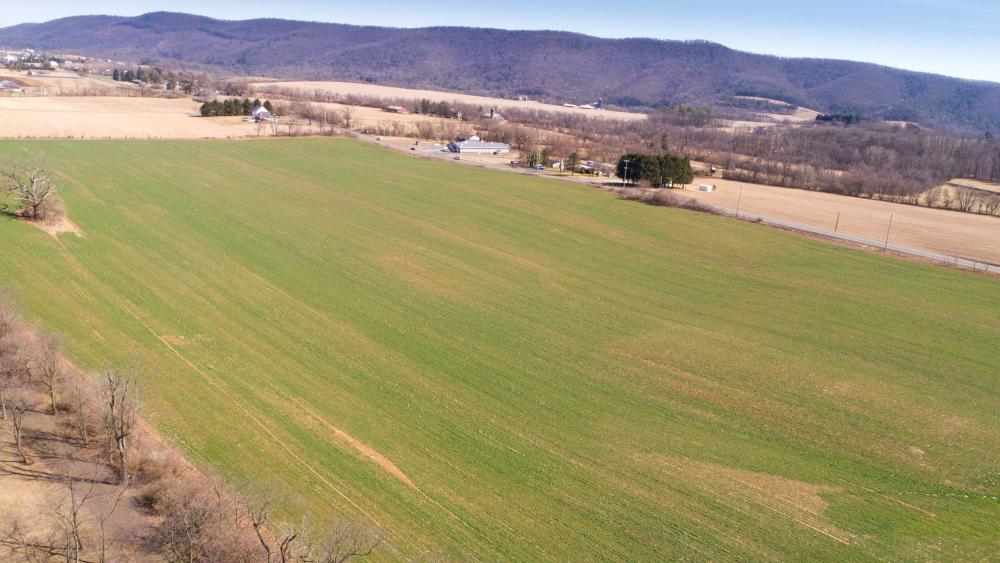
The researchers set out to examine these scenarios by establishing two experimental no-till fields at Penn State's Russell E. Larson Agricultural Research Center to test the effects of pest management and planting small-grain cover crops over three years in soy-corn-soy and corn-soy-corn rotations. This experiment was part of a larger project investigating the interaction of pest management and cover crops on soil quality, weeds, insecticide movement and pest pressure.
The team divided each field into plots, with six treatments each replicated six times in each field over three years. While the crop species changed annually with the rotation, each plot received the same treatment each year. The scientists looked at three pest management strategies with and without a cover crop: preventive seed coatings, IPM, and no pest management.
For the IPM strategy, researchers scouted the IPM plots for insect pests and compared pest populations to economic thresholds to determine whether insecticide applications were needed. They used an insecticide — a single, in-furrow application of a granular pyrethroid — only in the second year of the study.
The researchers, who recently reported their results in Ecological Applications, found that using any insecticide provided some small reduction to plant damage in soybean, but no yield benefit. The findings suggested that, in corn, vegetative cover early in the season was key for reducing pest density and damage.
An unexpected result, the team said, was that the IPM strategy, which required just one insecticide application, was more disruptive to the predator community than preventive pest management, likely because the applied pyrethroid was more toxic to a wider range of arthropods than neonicotinoid seed coatings.
"With the single use of insecticide in the IPM treatment, nontarget effects persisted more than a year after application, without reducing plant damage or density of white grubs, the targeted pest," Rowen said. "This pyrethroid also indirectly decreased soybean yield in IPM plots more than a year later, perhaps because of having fewer predators present to protect plants."
This finding highlights the importance of choosing the most selective insecticide possible when chemical control is justified within an IPM strategy, Tooker explained.
The researchers concluded that planting cover crops and fostering natural-enemy populations protected corn and soy from damage and that promoting early season cover was more effective at reducing pest density and damage than either intervention-based strategy.
"But because cover crops can also leave cash crops vulnerable to some sporadic pest species, growers should be careful to select the best cover crop species for each situation and to scout regularly for early-season pests," Rowen said. "In addition, maximizing the benefits of cover crops for biological control requires sparing use of insecticides, because preventive use of selective insecticides and reactive use of broad-spectrum insecticides both can reduce predator activity without guaranteeing pest control or greater crop yields."
Other researchers contributing to the study were Kirsten Pearsons, former doctoral candidate in entomology, Penn State; Richard Smith, associate professor, Department of Natural Resources and the Environment, University of New Hampshire; and Kyle Wickings, associate professor, Department of Entomology, Cornell University.
The U.S. Department of Agriculture's National Institute of Food and Agriculture supported this work.