In this article AMZN
Amazon is handling a rapidly growing number of returns that are causing a massive problem for the e-commerce giant and the planet. A National Retail Federation survey found a record $761 billion of merchandise was returned to retailers in 2021. That amount surpasses what the U.S. spent on national defense in 2021, which was $741 billion. Amazon wouldn't share its overall returns numbers, but in 2021, the National Retail Federation estimates 16.6% of all merchandise sold during the holiday season was returned, up more than 56% from the year before. For online purchases, the average rate of return was even higher, at nearly 21%, up from 18% in 2020. With $469 billion of net sales revenue last year, Amazon's returns numbers are likely staggering. U.S. returns generate 16 million metric tons of carbon emissions during their complicated reverse journey and up to 5.8 billion pounds of landfill waste each year, according to returns solution provider Optoro. "We're talking about billions, billions, and billions of [dollars of] waste that's a byproduct of consumerism run amok," said Mark Cohen, director of retail studies at Columbia Business School and former CEO of Sears Canada. "The reverse logistics are always going to be nasty because the merchandise, in most cases, cannot be resold as it was originally," Cohen said. "The most expedient pathway is into a dumpster, into a landfill." Amazon has told CNBC it sends no items to landfills but relies on "energy recovery" as a last resort. "Energy recovery means you burn something to produce heat, to produce energy. And you rationalize the disposal of goods as a conversion from one form of matter to another," Cohen said. "To the degree they're doing that I don't think they fully reveal." Amazon has said it is "working towards a goal of zero product disposal," although it wouldn't set a target date for reaching that goal. "We encourage a second life on all of the products that we receive back," said Cherris Armour, Amazon's head of North American returns in an exclusive interview with CNBC. "And that comes in the form of selling the majority of the items that we do receive. They are resold as new and used, or they go back to the seller or supplier, or we donate them," Armour said. Energy recovery, Armour added, is only for "items that we can't recover or are not recyclable" due to legal or hygienic reasons or product damage. Armour first joined Amazon 12 years ago, starting as a night shift operations manager at a fulfillment center in Indianapolis. She said the goal of zero product disposal was something they talked about at Amazon for many years.
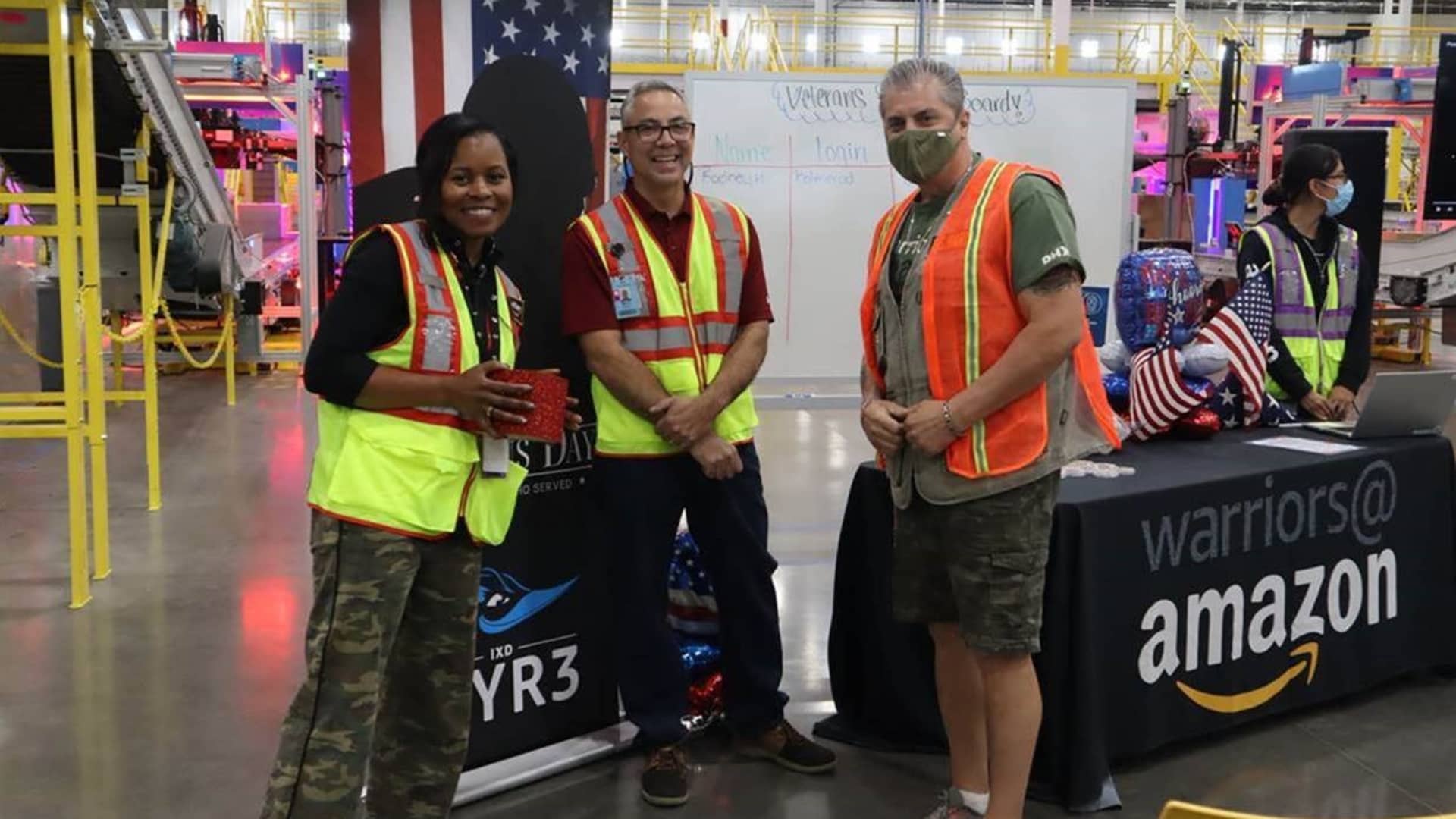
Cherris Armour, Amazon's head of North American reverse logistics, poses with two other Amazon employees at a fulfillment center in Phoenix, Arizona, in November 2021. Amazon
Easy returns are good business, but then what?
Researchers have found that consumers love easy returns. An often-cited 2018 survey of 1,300 online shoppers found 96% would come back to a retailer if they had a good returns experience, and 69% were deterred from buying if they knew they'd have to pay for return shipping. In 2019, Amazon expanded free, easy returns to millions of items. "Amazon has really been a game changer in the reverse logistics world because of how easy their returns are," said Zac Rogers, who ran returns for an Amazon subsidiary called Quidsi from 2010 to 2012 before he became an assistant professor of supply chain management at Colorado State University. "So now you have your more traditional retailers like Walmart or Target sort of implementing similar policies because that's a really big piece of how you compete on the retail side of it," he said. "It creates loyalty to the brand, makes you more likely to sign up for [Amazon's] Prime, and Prime is really the thing that drives the flywheel of that company." Amazon now allows returns at 18,000 locations, including the option to drop off items without a box or label at Kohl's, UPS and some Whole Foods stores. There's a Try Before You Buy program for Prime members designed to make returns for clothes even easier, with return labels already included in the box. On the extreme end of easy returns, Amazon is increasingly allowing customers to keep some "returned" items while still refunding them. "If I tell you to keep the product, instead of counting the cost and the carbon effect of taking it back, I look better as a company, don't I?" said Tony Sciarrotta, executive director of the Reverse Logistics Association. "Let's let the people keep it and then it doesn't count against us. But now you, as a consumer, what do I do with this thing, right?" Amazon now has to solve the problem of what to do with returns on the back end. Amazon spent nearly $152 billion on logistics in 2021 — nearly a third of all net sales. That's up from $119 billion in 2020. Returns factor into these costs, so anything Amazon can do to lower those costs will help the company's bottom line. "They're going to do it for their own self-interests, although they'll couch it in the name of saving the planet," Cohen said. "But at the end of the day, their action is going to be based upon the economics of what we're seeing." To that end, in 2019 Amazon launched a donation program that allows U.S. sellers to automatically donate excess and returned goods to a network of 100,000 local charities through a partnership with nonprofit network Good360. The organization works with about 400 companies, including giants such as Walmart, CVS and Nike, but says Amazon is its biggest corporate donor. Good360 says it coordinates with local charities for direct pickups at more than 230 Amazon facilities, which helps Amazon save on transportation costs as gas prices hit record highs. The nonprofits pay Good360 a fee to help cover freight costs. They also agree to certain rules before getting access to Amazon donations. "They're not going to be reselling those items, putting them on online auction sites, taking them to local flea markets or that sort of thing. So protecting that brand integrity of our donors is really central to what Good360 does," said Shari Rudolph, Good360's chief development officer and CMO. There are also potential tax write-offs that can come with donating to a nonprofit. "There are some programs that are available," Rudolph said. "I don't have any visibility into what the Amazon team is taking advantage of, if anything."
Good360 program operations manager Regina Freeman handles Amazon returns in Baltimore, Maryland, in September 2020 Jim Halling Photography
Secondary market