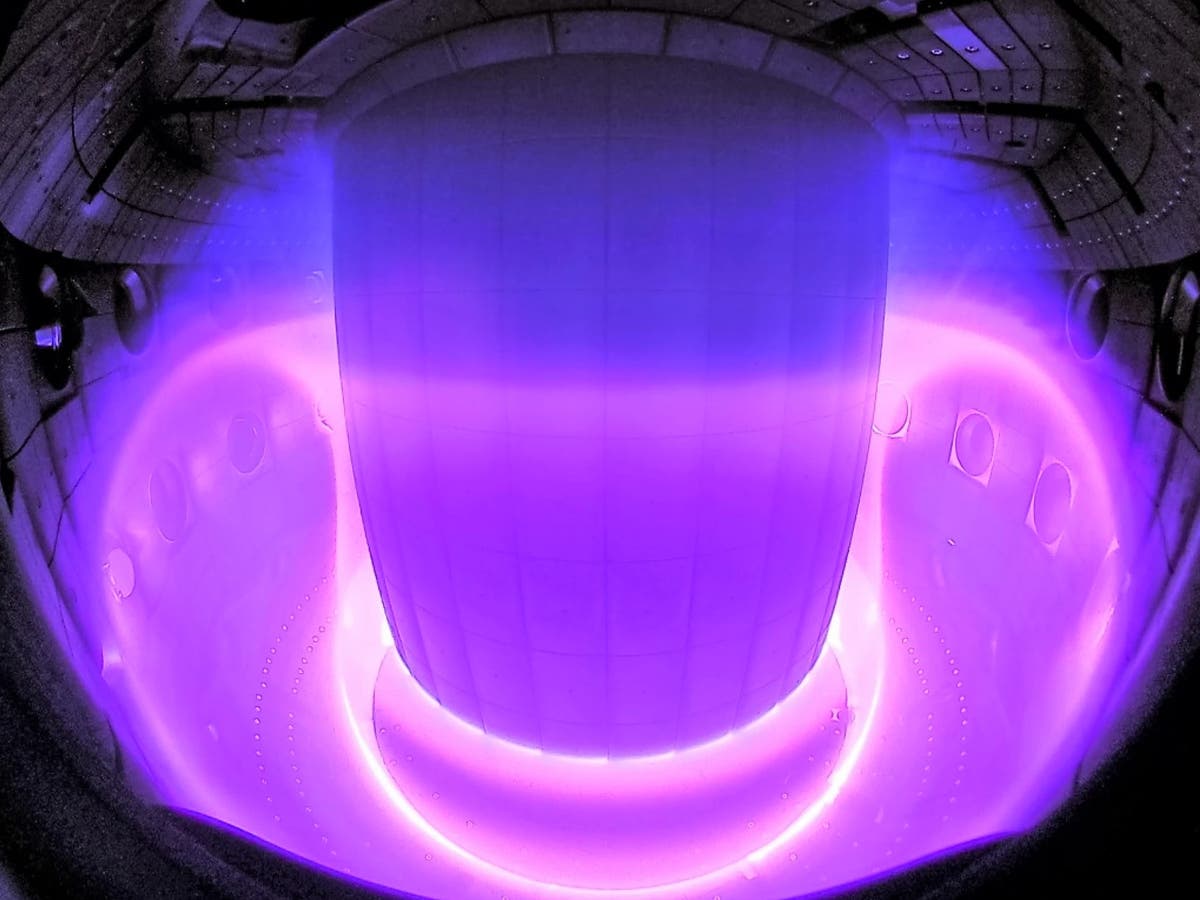
Scientists have revised a fundamental law “foundational” to fusion energy research that could allow for more hydrogen fuel in reactors, and potentially help obtain more energy from fusion than previously thought.
The study, published in the journal Physical Review Letters, showed that an upcoming international megaproject can operate with twice the amount of hydrogen fuel, and thereby generate considerably more energy.
Nuclear fusion involves two atomic nuclei combining into one, thereby releasing enormous amounts of energy – a process that occurs every day naturally in the sun, whose warmth comes from hydrogen nuclei fusing into heavier helium atoms. Conventional nuclear power plants rely instead on fission, whereby a uranium atom is split with a neutron, releasing a large amount of energy in the form of heat and radiation.