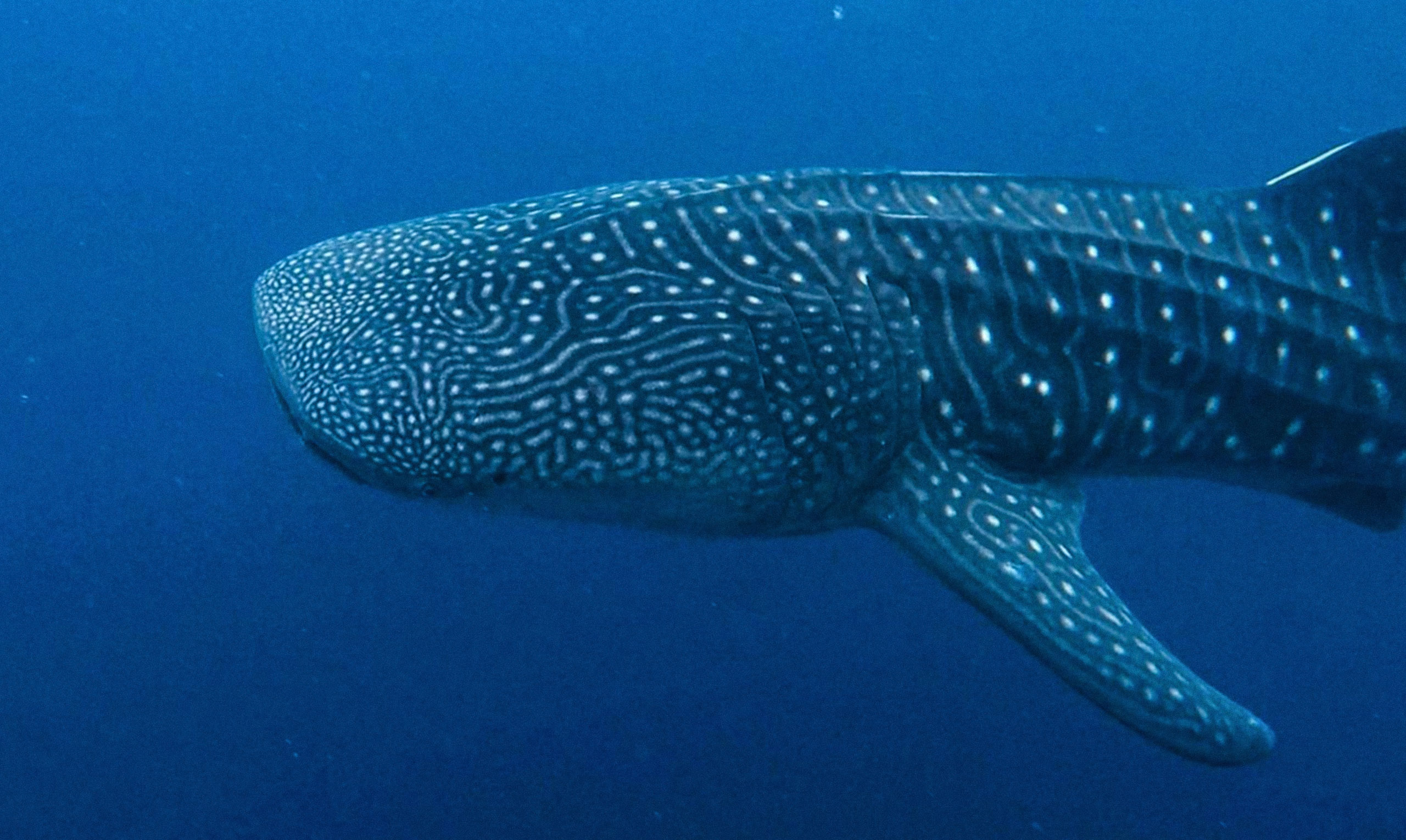
The largest fish in the ocean is a globe-trotter that can occasionally be found basking in the coastal waters of the Panamanian Pacific. However, little more is known about the habits of the whale shark (Rhincodon typus) in the region. By satellite-tracking the whereabouts of 30 of them, scientists from the Smithsonian Tropical Research Institute (STRI), the Anderson Cabot Center for Ocean Life and the University of Panama explored the factors influencing this endangered species’ behavior.
The R. typus, like other large sharks, may take years or even decades to reach maturity and reproduce, making them vulnerable to population declines, especially when combined with human threats. For instance, they may be caught in fishing nets as bycatch or face the risk of vessel strikes when shipping lanes overlap with their feeding sites. Being able to understand and predict whale shark behavior is a necessary step for protecting the species.
The satellite monitoring of this species, led by STRI marine ecologist Héctor Guzmán, found that whale sharks feed mainly in coastal waters, seamounts and ridges of the Panamanian Pacific, where they can find an abundance of their favorite foods: small fish and plankton. They were also spotted swimming north and southbound along the coast, towards Mexico and Ecuador, and towards the open ocean to feed.
“This species requires clear regional planning,” said Guzmán. “Once the feeding and breeding aggregation areas are identified, some protection measures should be implemented. The newly announced marine protected area expansions across the region provide an interesting platform for large-scale conservation practices.”
Although they used marine protected areas, the whale sharks also spent time in industrial fishing and vessel traffic zones, which could endanger them according to the new article published in Frontiers in Marine Science.