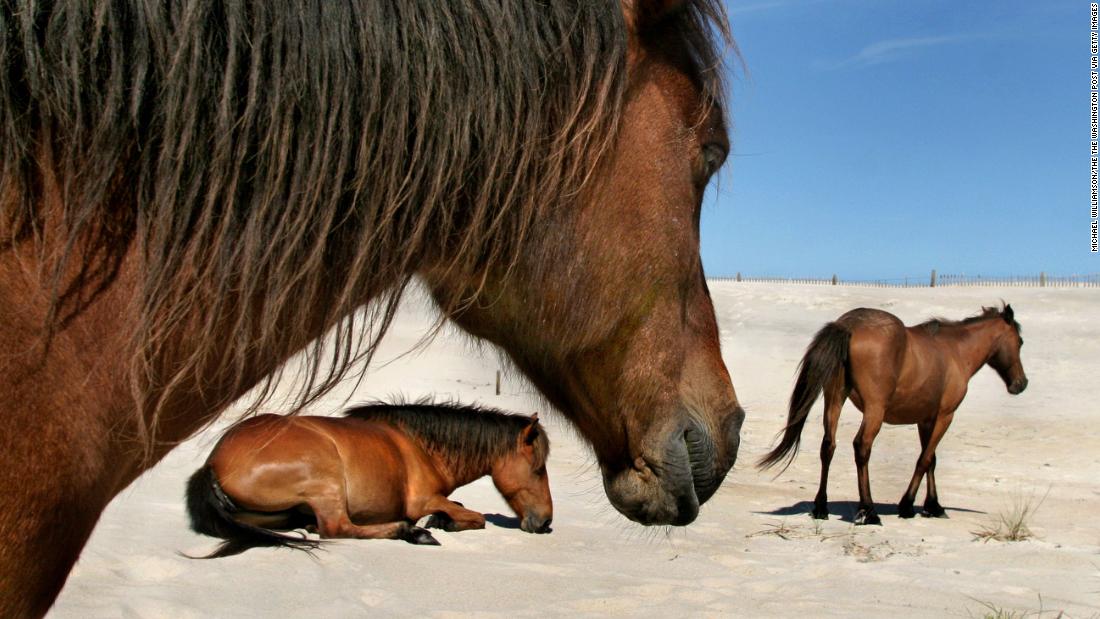
(CNN) The unexpected discovery of a 16th-century horse tooth in modern-day Haiti has provided credence for an age-old folk story about the origin of feral horses on an island off Maryland and Virginia.
The famous wild Chincoteague ponies have lived for centuries on Assateague Island, a barrier island on the Atlantic coast, for centuries. But no one is quite sure how they got there. A 1947 children's book inspired by local legend , "Misty of Chincoteague," suggests that the ponies are the descendants of Spanish horses who swam to the island after a Spanish ship wrecked off the coast of Virginia, reverting to a feral state over the years.
Nicolas Delsol, a postdoctoral researcher at the Florida Museum of Natural History, was researching cow bones from 16th-century archaeological sites in an effort to understand the introduction of domesticated cows to the Americas during Spanish colonization. He conducted DNA sequencing on a "huge collection of archaeological remains" from Puerto Real, an early Spanish town located in modern-day Haiti. The town was established by the Spanish in 1507 but abandoned in 1578.
Nicolas Delsol holds a horse tooth recovered from the archaeological site at Puerto Real, one of the first Spanish cities estabilshed in the Americas.
"One of the bones that I thought was from a cow was misidentified," Delsol explained in an interview with CNN. "A small fragment of tooth was actually [from] a horse."
Read More