Country* - Select - Afghanistan Albania Algeria American Samoa Andorra Angola Anguilla Antarctica Antigua & Barbuda Argentina Armenia Aruba Australia Austria Azerbaijan Bahamas Bahrain Bangladesh Barbados Belarus Belgium Belize Benin Bermuda Bhutan Bolivia Bonaire, Sint Eustatius and Saba Bosnia & Herzegovina Botswana Bouvet Island Brazil British Indian Ocean Territory British Virgin Islands Brunei Bulgaria Burkina Faso Burundi Cambodia Cameroon Canada Cape Verde Cayman Islands Chad Chile China Christmas Island Cocos (Keeling) Islands Colombia Comoros Cook Islands Costa Rica Croatia Cuba Curacao Cyprus Czech Republic Democratic Republic of the Congo Denmark Djibouti Dominica Dominican Republic East Timor Ecuador Egypt El Salvador Equatorial Guinea Eritrea Estonia Ethiopia Falkland Islands Faroe Islands Fiji Finland France French Guiana French Polynesia French Southern Territories Gabon Gambia Georgia Germany Ghana Gibraltar Greece Greenland Grenada Guadeloupe Guam Guatemala Guernsey Guinea Guinea-Bissau Guyana Haiti Heard & McDonald Islands Honduras Hong Kong Hungary Iceland India Indonesia Iran Iraq Ireland Isle of Man Israel Italy Ivory Coast Jamaica Japan Jersey Jordan Kazakhstan Kenya Kiribati Kosovo Kuwait Kyrgyzstan Laos Latvia Lebanon Lesotho Liberia Libya Liechtenstein Lithuania Luxembourg Macau Macedonia Madagascar Malawi Malaysia Maldives Mali Malta Marshall Islands Martinique Mauritania Mauritius Mayotte Mexico Micronesia Moldova Monaco Mongolia Montenegro Montserrat Morocco Mozambique Namibia Nauru Nepal Netherlands Netherlands Antilles New Caledonia New Zealand Nicaragua Niger Nigeria Niue Norfolk Island North Korea Northern Mariana Islands Norway Oman Pakistan Palau Panama Papua New Guinea Paraguay Peru Philippines Pitcairn Poland Portugal Puerto Rico Qatar Republic of the Congo Reunion Romania Russia Rwanda Saint Barthelemy Saint Helena Saint Kitts & Nevis Saint Lucia Saint Vincent and the Grenadines Samoa San Marino Sao Tome & Principe Saudi Arabia Senegal Serbia Seychelles Sierra Leone Singapore Sint Maarten Slovakia Slovenia Solomon Islands Somalia South Africa South Georgia & South Sandwich Islands South Korea South Sudan Spain Sri Lanka Sudan Suriname Svalbard and Jan Mayen Swaziland Sweden Switzerland Syria Taiwan Tajikistan Tanzania Thailand Togo Tokelau Tonga Trinidad & Tobago Tunisia Turkey Turkmenistan Turks & Caicos Islands Tuvalu Uganda Ukraine United Arab Emirates United Kingdom United States Uruguay US Minor Outlying Islands US Virgin Islands Uzbekistan Vanuatu Vatican City State Venezuela Vietnam Wallis and Futuna West Bank Western Sahara Yemen Zambia Zimbabwe
Complete the form below and we will email you a PDF version of "We Now Understand Why Mosquitoes Have an “Unbreakable” Ability To Smell Humans"
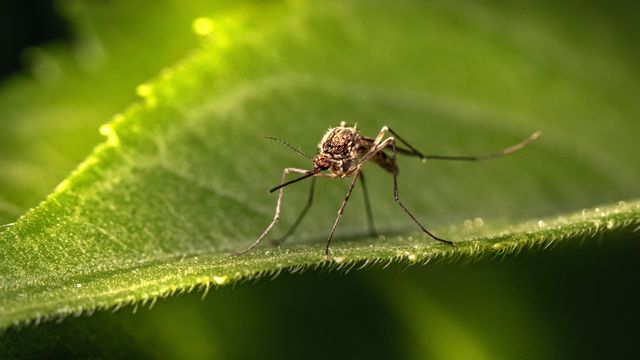
A new study shows that the mosquito (Aedes aegypti) olfactory system includes “fail-safes” that maximize the insect’s ability to sniff out humans.
In the human nose, smell is a fragile thing. As anyone who lost their ability to smell after infection with SARS-CoV-2 will attest, this vital sense can be altered or disappear with little warning. There’s a biological mechanism underpinning this delicate situation; the sensory neurons in charge of detecting odors essentially have a scent remit of one odor per neuron. These neurons detect smells via proteins called receptors – the loss of a single receptor will mean all neurons that are specialized for the receptor’s odor will lose their detecting ability.
Mosquitoes’ rugged sense of smell
A mosquito’s sense of smell, by comparison, is rugged and robust; an armored tank to our noses’ spindly rickshaws. Female mosquitoes use these powerful noses to sniff out human body odor – a riotous mix of volatile chemicals – to enable them to find and feed on our blood. Blood consumption is an essential part of the mosquito breeding cycle, so these bugs have an evolutionary reason to make their sense of smell hard to suppress, but the mechanism responsible has remained elusive.
Researchers have emptied the genomics toolbox in an effort to stunt mosquito smell, explains Dr. Margo Herre, the paper’s first author and a researcher in Leslie Vosshall’s lab at the Rockefeller University. “Previous work in our lab attempted to "break" mosquito olfaction by making mutant mosquitoes that lacked certain families of olfactory receptors, but these mutant mosquitoes were still able to find and bite humans,” Herre says.
Herre’s new study has revealed why those previous efforts fell flat: the mosquito nose has rewritten the rulebook on how odor sensing functions. The field’s dogma had previously established that many model research animals, such as mice and fruit flies, smell with the same “one odor–one receptor” structure that we use. But clues that the Vosshall lab found in the mosquito genome hinted at a different arrangement. While in most insects the ratio of expressed smell receptors closely matches the number of glomeruli – spherical structures that receive sensory inputs from olfactory nerves – in mosquitoes, Herre and her colleagues noted far more receptors than glomeruli.
“Fail-safes” protect mosquito odor detection
The researchers used a CRISPR-based genomic tool to label mosquito olfactory neurons and a combination of techniques for detecting the expression of gene transcripts. These revealed that the mosquito olfactory system creates a number of “fail-safes”, with individual neurons expressing multiple chemical receptors, allowing them to remain functional even if one of the receptor families is impaired. The system “behaves completely differently” to conventional odor detection systems, says Herre. If our smell neurons act like 1950s TVs, reliant on a flimsy aerial to receive data, mosquito neurons are fully equipped with satellite, cable and Netflix, able to withstand the loss of any individual service.
The implications for our understanding of how insects perceive the world around them could be stark, says Dr. Christopher Potter, an associate professor of neuroscience at the Johns Hopkins University School of Medicine. Potter’s lab has been conducting a similar analysis of the fruit fly, Drosophila melanogaster. Potter’s team recently published a study showing that Drosophila shares the same redundancy mechanisms now found in the mosquito. “It turns upside down what we thought we knew about insect olfactory neurons,” says Potter.
“I think this is exciting,” he continues, “because it means that the insect olfactory neuron has the potential to be far more malleable and adaptable than previously thought.”
Potter predicts that, freed from the limits of the “one odor–one receptor” dogma, his field will start turning up new ways that insects use their complex smell to their advantage. As for the big question – how can we stop mosquitos from turning a casual hike into a paranoid, Raid-drenched ordeal? – Herre suggests that the new findings will at least point future research in the right direction: “Now that we know that mosquito neurons express multiple kinds of receptors, we may begin to understand why mosquito attraction to humans has been so unbreakable. These findings may inform the design of repellents in the future.”
Reference: Herre M, Goldman OV, Lu T et al. Non-canonical odor coding in the mosquito. Cell. 2022; 185:1–20. doi: 10.1016/j.cell.2022.07.024