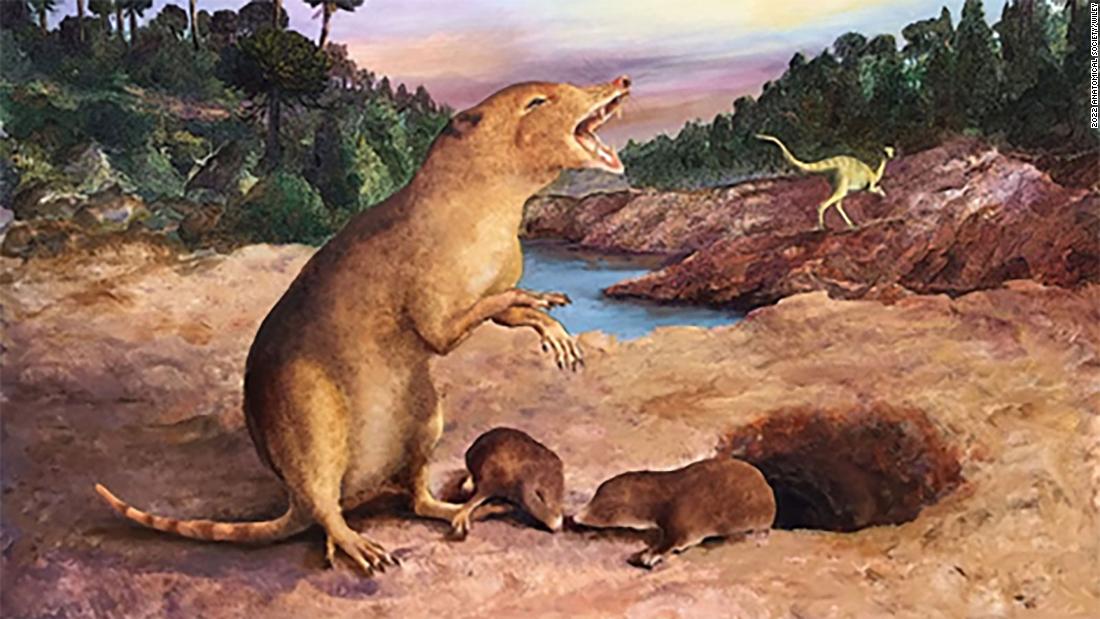
London (CNN) The world's oldest mammal has been identified using fossil dental records -- predating the previously confirmed earliest mammal by about 20 million years -- in a new discovery hailed as "very significant" by researchers.
Brasilodon quadrangularis was a small shrew-like creature, around 20 centimeters (8 inches) long, that walked the earth 225 million years ago at the same time as some of the oldest dinosaurs and sheds light on the evolution of modern mammals, according to a team of Brazilian and British scientists.
The discovery was made by researchers from the Natural History Museum in London, King's College London and the Federal University of Rio Grande do Sul in Porto Alegre.
Scientists relied on clues provided by fossils of hard tissues such as bones and teeth. This is because mammalian glands, which produce milk, have not been preserved in any fossils found to date.
Until now, the Morganucodon had been considered the first mammal, with isolated teeth showing that it dated back around 205 million years. The Morganucodon had a small gerbil-like body and a long face similar to those of shrews or civets.
Read More