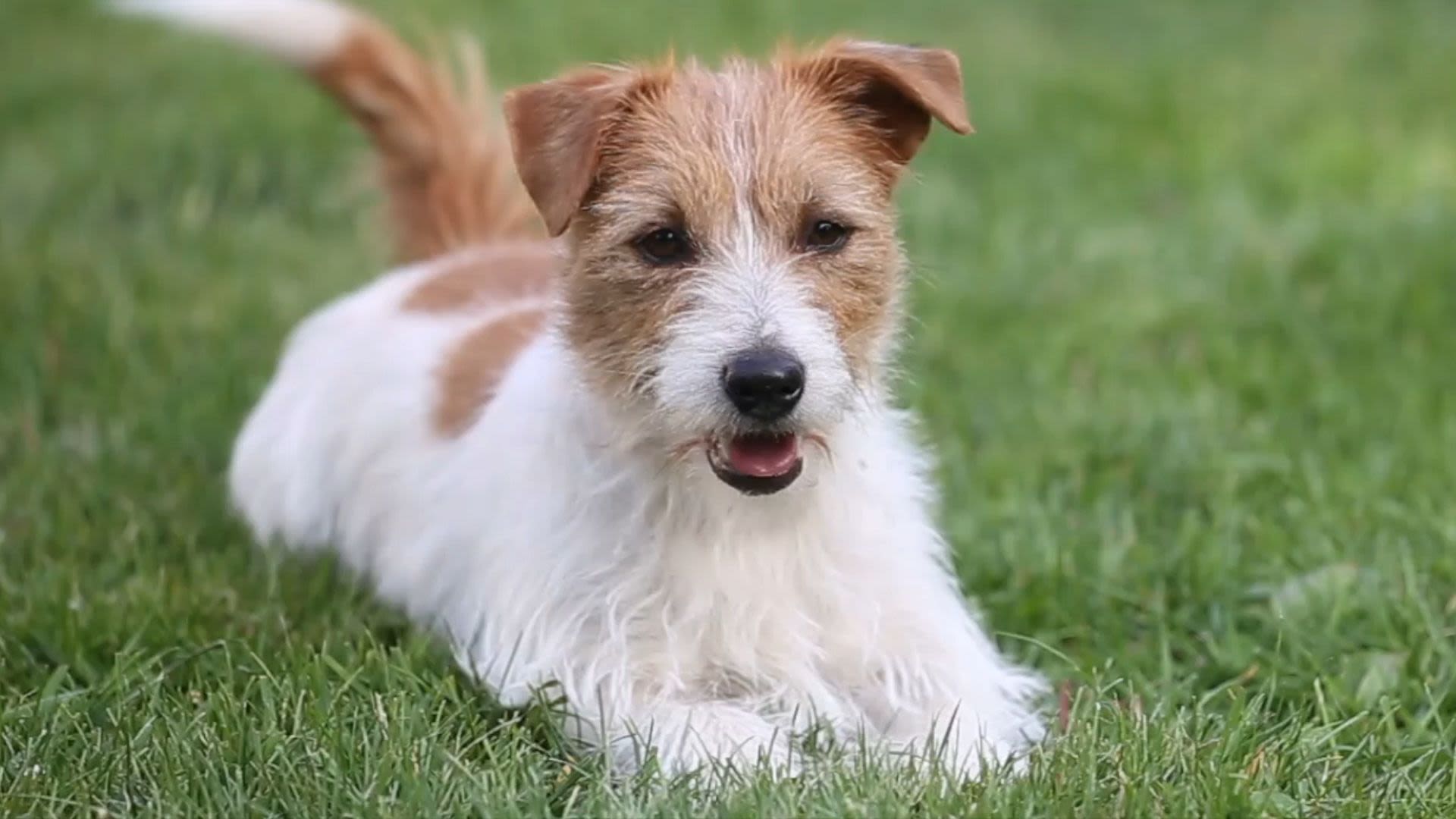
Scientists have decoded visual images from a dog’s brain, offering a first look at how the canine mind reconstructs what it sees. The Journal of Visualized Experiments published the research done at Emory University.
The results suggest that dogs are more attuned to actions in their environment rather than to who or what is doing the action.
The researchers recorded the fMRI neural data for two awake, unrestrained dogs as they watched videos in three 30-minute sessions, for a total of 90 minutes. They then used a machine-learning algorithm to analyze the patterns in the neural data.
“We showed that we can monitor the activity in a dog’s brain while it is watching a video and, to at least a limited degree, reconstruct what it is looking at,” says Gregory Berns, Emory professor of psychology and corresponding author of the paper. “The fact that we are able to do that is remarkable.”
"My experiences at Emory opened up the world to me," says Erin Phillips, first author of the new paper, who came to the university as a Bobby Jones Scholar with an undergraduate degree in zoology. She took a range of liberal arts and computer sciences courses at Emory and worked in the Canine Cognitive Neuroscience Lab. "My experiences at Emory opened up the world to me," says Erin Phillips, first author of the new paper, who came to the university as a Bobby Jones Scholar with an undergraduate degree in zoology. She took a range of liberal arts and computer sciences courses at Emory and worked in the Canine Cognitive Neuroscience Lab.
The project was inspired by recent advancements in machine learning and fMRI to decode visual stimuli from the human brain, providing new insights into the nature of perception. Beyond humans, the technique has been applied to only a handful of other species, including some primates.
“While our work is based on just two dogs, it offers proof of concept that these methods work on canines,” says Erin Phillips, first author of the paper, who did the work as a research specialist in Berns’ Canine Cognitive Neuroscience Lab. “I hope this paper helps pave the way for other researchers to apply these methods on dogs, as well as on other species, so we can get more data and bigger insights into how the minds of different animals work.”
Phillips, a native of Scotland, came to Emory as a Bobby Jones Scholar, an exchange program between Emory and the University of St Andrews. She is currently a graduate student in ecology and evolutionary biology at Princeton University.