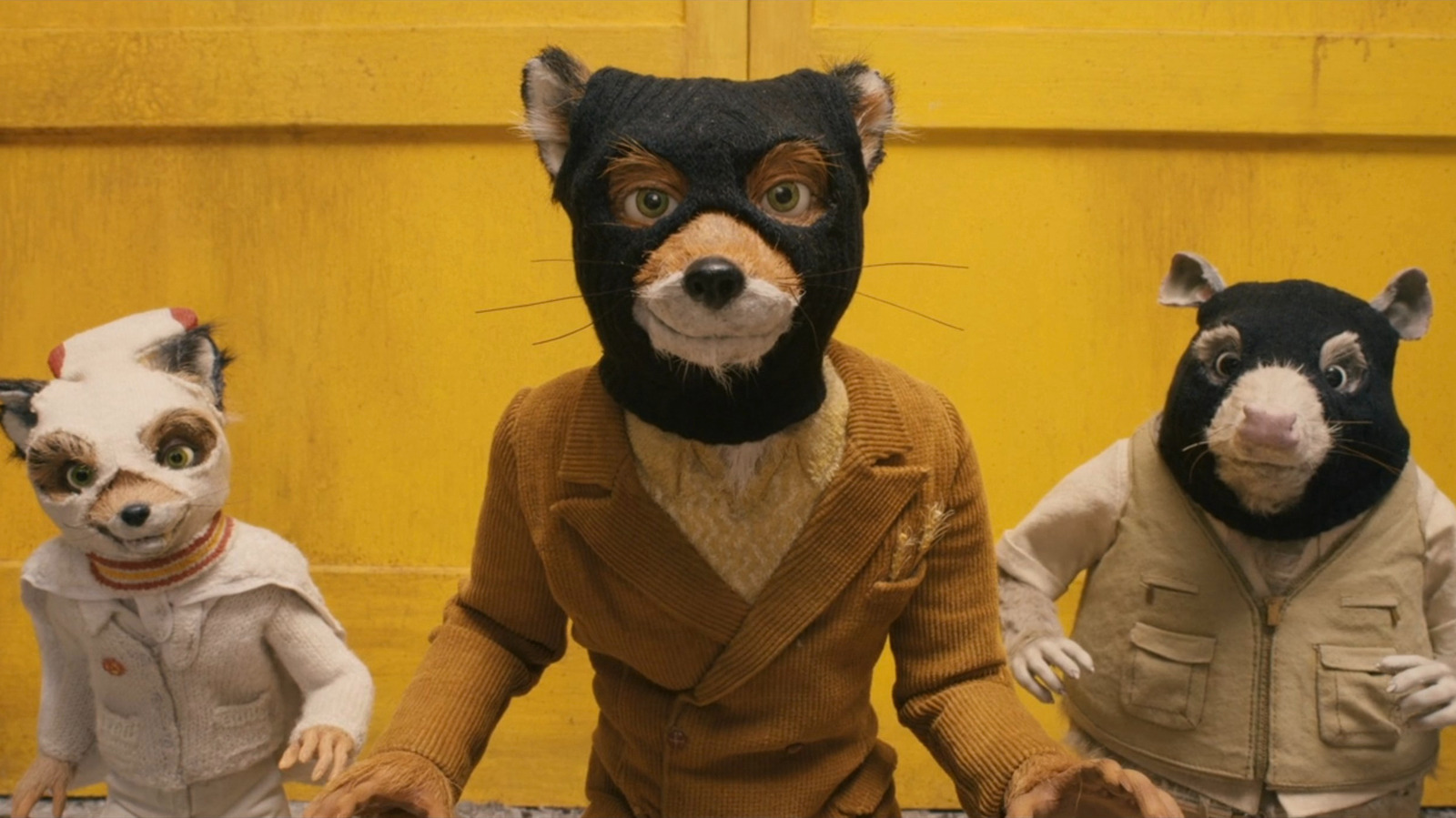
Wes Anderson Blames Himself For Limiting Fantastic Mr. Fox's Box Office Success
For as lucrative a medium as animation can be, stop-motion animation has always had a bit of trouble making a ton of money at the box office. Domestically, only one stop-motion film has crossed $100 million, the 2000 Aardman comedy "Chicken Run." The next closest is "The Nightmare Before Christmas" with $77 million, but that is thanks to it being frequently re-released during both Halloween and Christmas. Its original theatrical run was only $50 million, but that would be just over $100 million in today's dollars.
If you want to make a moderate amount of money with stop-motion, leaning into the spooky stuff tends to fare better. Along with "The Nightmare Before Christmas," you have "Coraline," "ParaNorman," "Corpse Bride," and even Aardman's "Wallace and Gromit: The Curse of the Were-Rabbit" all existing in the $50 million-ish range, with "Coraline" being the one outlier at $75 million. For some reason, be it the herky-jerky movements of stop-motion characters or just the overwhelming connection the medium has to "The Nightmare Before Christmas," people will show up for stop-motion when it features horror-tinged material.
Wes Anderson's adaptation of Roald Dahl's "Fantastic Mr. Fox" cost $40 million to make and barely crossed that number worldwide, grossing a mere $21 million domestically. Despite the film arguably being Anderson's greatest triumph of finding the perfect vehicle for his intricately constructed frames, not to mention being based on a book from a beloved children's author, it did not connect with the populace. Speaking with Film4, Anderson believed this would be his most successful film saying, "I thought that I was taking less of a risk than I ever had." While he acknowledges the box office limitations of stop-motion, he puts the blame of its lackluster gross entirely on himself, explaining, "[I]n the course of making the movie, I think I managed to prevent [guaranteeing an audience] from happening."