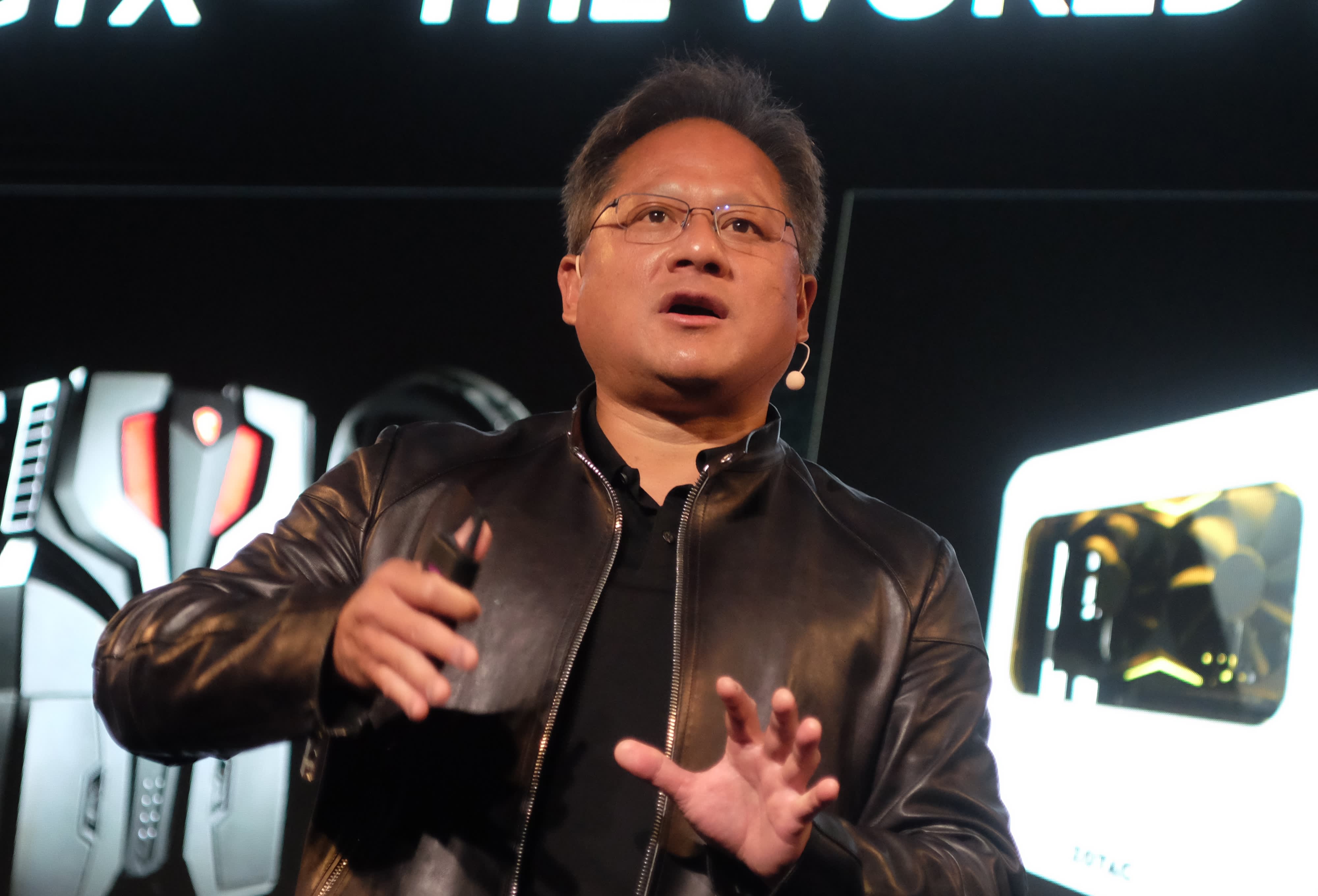
Jensen Huang, president and CEO of Nvidia, speaks during the Computex Show in Taipei on May 30, 2017.
LONDON — Nvidia's $40 billion bid to buy U.K.-based chip designer Arm from Japan's SoftBank has started to look increasingly uncertain.
The deal, one of the biggest semiconductor takeovers ever, was announced in September to much fanfare, although competition regulators around the world soon announced plans to investigate the acquisition. Probes were launched in the U.S., the U.K., China and Europe after companies like Qualcomm, Microsoft, Google and Huawei complained that the deal was bad for the semiconductor industry.
The U.K. investigation, being led by the Competition and Markets Authority, is also taking national security concerns into account. The CMA submitted its initial report to U.K. Culture Secretary Oliver Dowden on July 20, and he will take the decision on national security.
The report contains worrying implications for national security, and the U.K. is currently inclined to reject the takeover, according to a report from Bloomberg on Tuesday, citing an unnamed source familiar with the matter. A separate unnamed source said the U.K. was likely to conduct a deeper review into the merger as a result of national security concerns, Bloomberg reported. CNBC was unable to independently verify the report.
It's unclear how U.K. national security would be affected if Arm goes from being Japanese-owned to U.S.- owned, but governments have come to view semiconductor technology as a vital asset amid the global chip shortage.
An Nvidia spokesperson told CNBC: "We continue to work through the regulatory process with the U.K. government. We look forward to their questions and expect to resolve any issues they may have." Arm and the U.K. government did not respond to CNBC's request for comment.